A dropped signal during the evening news or a fuzzy picture during the big game can make cord-cutting feel like more trouble than it is worth. The right antenna services remove that uncertainty. Instead of guessing which antenna to buy, where to mount it, or why one TV receives more channels than another, you get a television setup designed around your home, local broadcast signals, and the way your household watches.
Over-the-air television is not a step backward. Local broadcasters transmit major network programming, news, weather, live events, and more in high definition. A professionally installed antenna system helps you receive those broadcasts with a clear, dependable picture while giving you more control over your TV setup.
What Professional Antenna Services Actually Do
An antenna installation is more than attaching equipment to a roof or wall. Reception depends on several factors working together: your distance from broadcast towers, the terrain around your property, nearby buildings and trees, the construction of your home, and the number of TVs that need a signal.
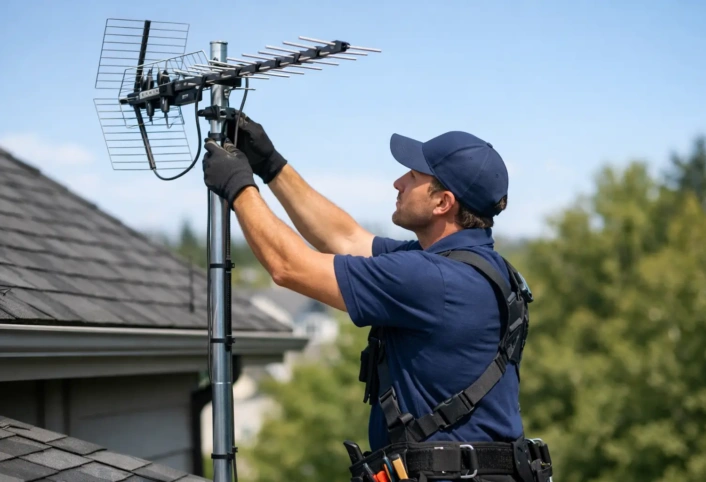
A trained technician starts by evaluating the available broadcast signals at your address. That information helps determine the type of antenna, the best placement, and whether the system needs additional components to distribute reception throughout the home. A compact indoor antenna may be enough in a few locations, but it is not the right answer for every house. Outdoor and attic-mounted options often provide stronger, more consistent results when conditions call for them.
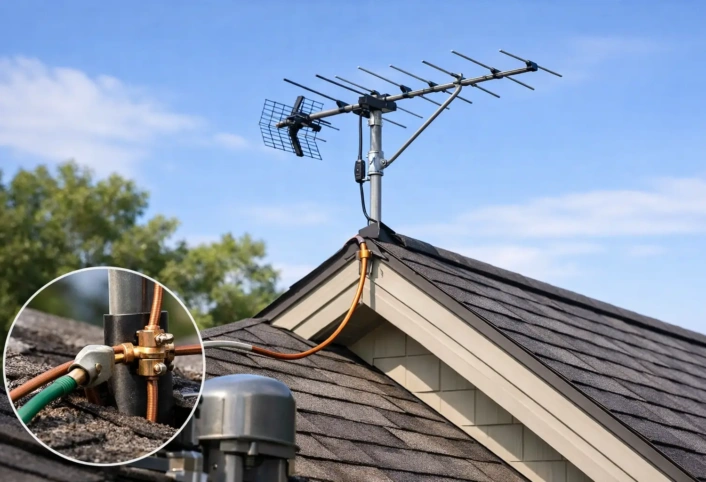
Professional service also includes the details that make a system usable after installation. That can mean securely mounting the antenna, routing and protecting coaxial cable, connecting multiple televisions, configuring equipment, and confirming that each TV can scan and receive available channels. The goal is not simply to install an antenna. It is to leave you with a working television solution you can enjoy right away.
Why Placement Is the Difference Between Channels and Frustration
Two homes on the same street can have very different antenna results. Roof height, direction, metal roofing, thick walls, tall trees, and even nearby high-rise buildings can affect signal paths. This is why an antenna that performs well in a neighbor’s home may not deliver the same results in yours.
Placement is a technical decision, not just a matter of convenience. Higher is often helpful, but the highest possible location is not automatically best. The antenna needs a clear path toward the strongest available broadcast signals, a secure mounting point, and cable routing that supports reliable performance. In some homes, an attic installation makes sense. In others, an exterior mount provides a better opportunity for dependable reception.
A professional technician can assess these trade-offs before committing to an installation. That saves homeowners from trying multiple retail antennas, moving equipment from room to room, and still wondering whether the issue is the antenna, the cable, or the location.
Indoor, Attic, and Outdoor Antennas Have Different Jobs
Indoor antennas can be convenient and discreet, especially when strong broadcast signals are nearby. Their limitation is that walls, electronics, and building materials can weaken reception. They are often best for simple setups where signal conditions are favorable.
Attic antennas offer more protection from weather and can be a good choice when the attic has a suitable signal path. However, insulation barriers, radiant foil, ductwork, and certain roofing materials may interfere with performance. An attic is not automatically a better location just because it is elevated.
Outdoor antennas are often the strongest option for homes that need greater signal reach or consistency. They can be positioned for a clearer path to broadcast towers, but they must be securely installed and properly connected. The right choice depends on what the signal evaluation shows, not on a one-size-fits-all recommendation.
A Complete System Should Work on Every TV You Use
Many cord-cutting households want local channels in the living room, bedrooms, kitchen, or patio. That is where a complete antenna system matters. Sending one antenna signal to several televisions requires the right distribution plan. Simply adding splitters without considering cable runs and signal strength can lead to weak reception on one or more TVs.
A properly designed system accounts for the number of televisions, the condition of existing wiring, and the distance the signal must travel. In some cases, existing coaxial cable can be used effectively. In others, damaged connectors, older cable, or poor routing can limit what a good antenna can do.
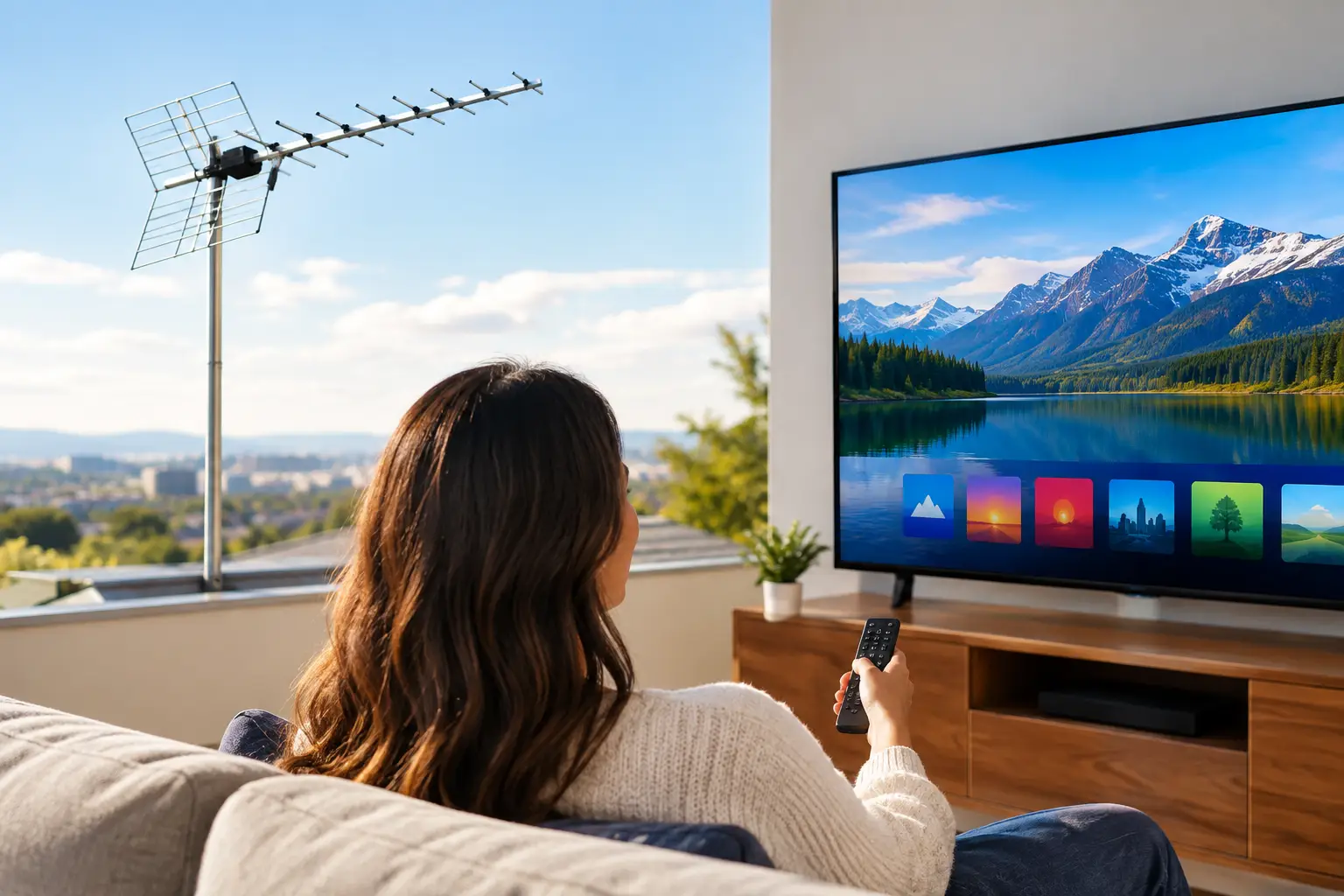
This is also the point where professional setup makes television easier for everyone in the house. Each TV needs to be connected correctly and scanned for channels. If you use streaming devices alongside broadcast TV, the system can support a practical viewing routine: local live channels through the antenna, and on-demand entertainment through the services you choose.
When an Antenna Is a Smart Fit for Your Home
An antenna is especially useful for viewers who want dependable access to local broadcast programming without relying entirely on a paid TV package. Network shows, local news, weather alerts, and many live sports broadcasts are commonly available over the air, depending on your location and station coverage.
It is also a strong choice for households that want a backup source of television during internet interruptions. Streaming is convenient, but it depends on a working connection and the availability of the service carrying the program you want. Broadcast television arrives directly through the antenna system, giving you another way to stay connected to local information and entertainment.
Still, an antenna is not meant to replace every type of content for every viewer. If your household follows channels that are not broadcast locally, you may want to pair antenna TV with selected streaming services. That combination lets you keep the live local programming that matters while choosing other entertainment based on your preferences.
Signs You Need Antenna Service or Support
If you already have an antenna, inconsistent reception does not always mean you need to replace everything. Signal issues may come from a loose connector, worn cable, an improperly aimed antenna, a damaged splitter, or changes around the property that now obstruct reception.
A service visit can be helpful when channels disappear, the picture breaks up in certain weather, one television works while another does not, or a recent move has changed your setup. It is also worth having your system evaluated if you have added TVs, remodeled your home, or are ready to move from a temporary indoor antenna to a more permanent solution.
For homes and businesses in Miami-Dade, Broward, and Monroe County, local conditions can make professional assessment particularly valuable. Coastal weather, dense development, and property-specific obstructions can all affect antenna placement and long-term performance.
Choose Service Based on Results, Not a Box on a Shelf
Retail antenna packaging can make reception sound simple: plug it in, scan for channels, and start watching. Sometimes that works. But when it does not, the time spent experimenting can quickly outweigh the convenience of a do-it-yourself purchase.
Look for antenna services that begin with your reception conditions and viewing goals. A qualified provider should explain the recommended system in plain language, install it carefully, test the results, and make sure you know how to use it. Certified technicians bring current installation practices and a clearer understanding of the variables that affect broadcast reception.
Antenna Master approaches each project as a home television solution, not a product sale. That means helping you move from uncertainty about cord-cutting to a setup that supports the local programming your household wants to watch.
A better TV setup starts with knowing what your home can receive and building around that reality. Requesting a professional estimate is a practical next step when you want clear local HD television, fewer setup headaches, and an antenna system made to work where you live.