A TV antenna can be a simple path to free local broadcast channels, but the results depend on far more than the antenna box. In the choice between professional installation versus DIY, the real question is whether your home, signal environment, and TV setup are ready to deliver dependable HD reception.
For some households, a do-it-yourself antenna works well on the first try. For others, a promising cord-cutting project turns into pixelated channels, missed local stations, awkward cables, and repeated trips up a ladder. Knowing where the difference comes from helps you make a confident decision.
What Makes TV Antenna Reception Different From House to House?
Broadcast signals do not arrive at every home with the same strength. Your distance from local transmission towers matters, but so do nearby buildings, trees, elevation, roof materials, and the construction of your home. A station that comes in clearly at one address may be unreliable just a few blocks away.
The antenna itself is only one part of the system. Placement, direction, mounting height, cable condition, splitters, grounding, and the number of TVs connected all affect the final picture. That is why an indoor antenna near a window can be enough for one household, while another needs a properly mounted outdoor antenna and a carefully configured signal path.
A good setup is not about installing the largest antenna available. It is about choosing equipment that matches the available signals and installing it where it can perform as intended.
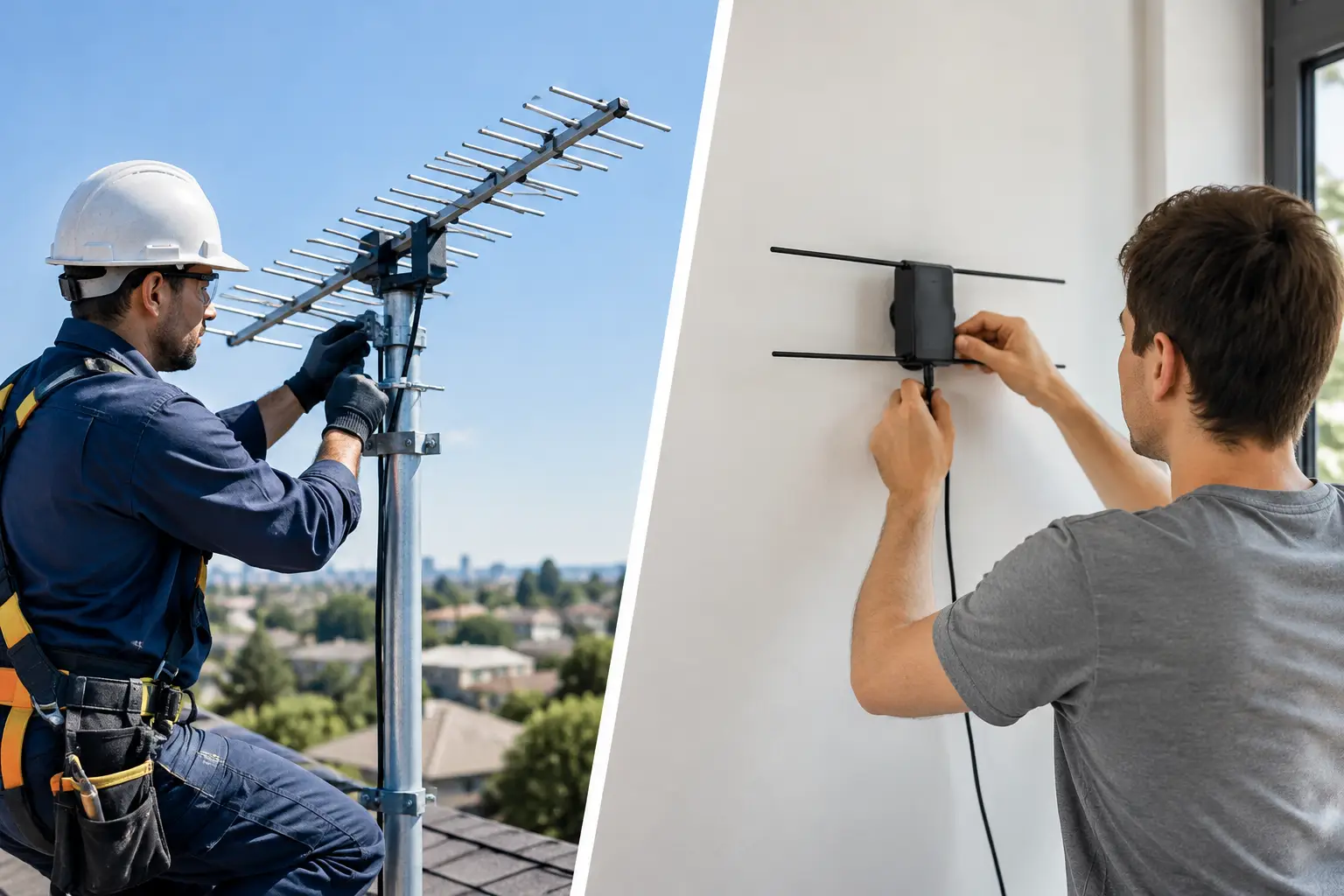
Professional Installation Versus DIY: The Practical Difference
DIY installation gives you control over the project and can be a reasonable option when reception conditions are straightforward. If you live close to broadcast towers, need service on one TV, and have a safe, accessible location for an antenna, a basic setup may deliver the local channels you want.
The challenge is that early success can be misleading. You may receive a channel during a manual scan, then lose it when weather changes or find that it breaks up during the evening. Moving an antenna a few feet, changing its direction, or replacing an old cable can make a major difference, but those adjustments are difficult to diagnose without experience and the right testing process.
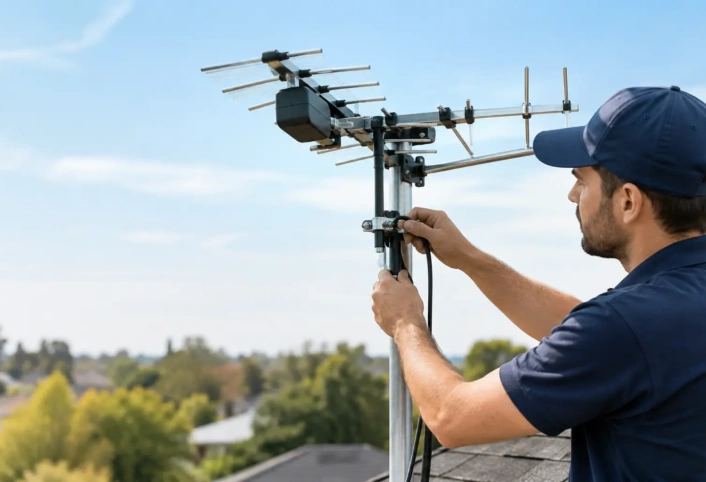
Professional installation is designed to remove that guesswork. A trained technician evaluates the reception conditions at the property, selects an appropriate antenna location, aligns the system for usable signals, and verifies performance at the television. The goal is not merely to find channels. It is to create a dependable system your household can use every day.
A DIY Setup Often Starts With Trial and Error
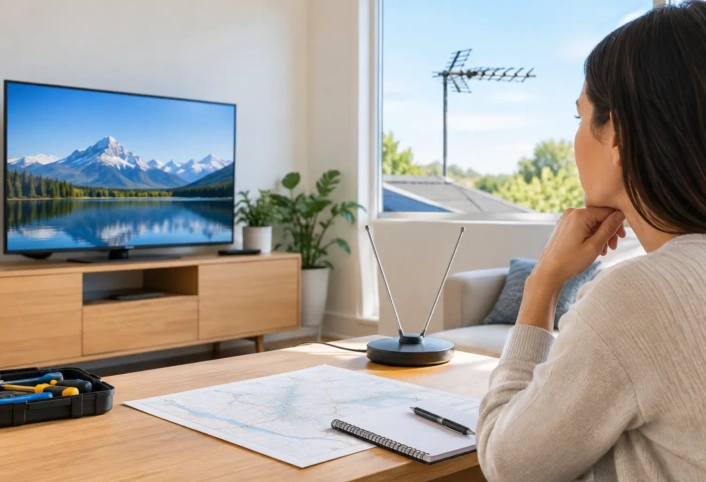
There is nothing wrong with trying an antenna yourself. Many cord-cutters start with an indoor model to see which stations are available. The trouble begins when the setup does not meet expectations and there is no clear reason why.
Is the antenna in the wrong location? Is a nearby wall blocking a signal? Is the coaxial cable damaged? Is a splitter reducing signal strength? Is the television using the correct antenna input and channel scan settings? Each possibility can look like the same problem: missing or unstable channels.
A professional installer works through those variables in a more deliberate order. That saves homeowners from buying multiple antennas, relocating equipment repeatedly, or assuming over-the-air TV simply will not work at their address.
Professional Work Addresses the Entire Signal Path
A professionally installed antenna system considers what happens between the antenna and every TV in the home. This includes secure mounting, outdoor-rated connections where needed, cable routing, signal distribution, and proper grounding practices.
That full-system approach matters when you want to watch local news in the living room, network programming in a bedroom, and live sports in another area of the house. Connecting more televisions can change the signal available at each one. An experienced technician can configure the system around how your household actually watches TV rather than leaving you with one strong connection and several weak ones.
When DIY Makes Sense
DIY can be a good fit for a limited, low-risk project. An indoor antenna may be worth trying if you only need one television connected, local stations are readily available, and you have a clear place to test reception without drilling, climbing, or running cable through the home.
It also suits homeowners who are comfortable reading signal information, rescanning channels, troubleshooting coaxial connections, and accepting that results may vary. Patience is part of the project. The first placement rarely has to be the final placement.
Keep safety in the decision. Roof work, exterior mounting, electrical grounding, and tall-ladder use are not casual weekend tasks. If the best antenna location is difficult to reach or close to electrical hazards, bringing in a trained professional is the smarter move.
When Professional Installation Is the Better Choice
Professional help is especially valuable when your reception is challenging or your goals are bigger than a single indoor antenna. This may include homes with several TVs, metal roofs, dense surrounding development, heavy tree cover, long cable runs, or inconsistent reception from existing equipment.
It is also the better route when you are ready to cut the cord but want a system that feels simple after installation. You should not have to move furniture or adjust an antenna every time you want to watch a local game, weather coverage, or breaking news. A properly planned system gives you a clearer starting point and support when questions come up later.
For homeowners in Miami-Dade, Broward County, and Monroe County, local conditions can vary dramatically by neighborhood and property type. A reception plan that works in one location may not be the right answer somewhere else. An on-site assessment accounts for those differences instead of relying on a one-size-fits-all recommendation.
Better Reception Is About Placement, Not Hype
Antenna marketing can make the decision seem easy: choose a model, connect it, and enjoy hundreds of channels. In reality, available broadcast channels are determined by your location and reception environment. More advertised range does not automatically mean more reliable local stations at your home.
Placement is usually the deciding factor. Higher is often helpful, but only when the location is safe, stable, and has a favorable path to broadcast signals. Direction matters for many antenna types, while some situations call for a different design to receive stations arriving from multiple directions.
Professionals rely on practical reception knowledge rather than packaging claims. They can identify a placement that balances signal performance, safe installation, clean cable routing, and the appearance of your home.
Think Beyond the First Channel Scan
The best antenna decision is not always the one that produces the fastest initial channel scan. Consider what you expect from the system six months from now. Will it support the TVs you use most? Will connections remain protected outdoors? Will the antenna stay secure through changing weather? Can you get help if a television is replaced or a room is added to the setup?
DIY projects can be satisfying when the conditions are right. Professional installation is an investment in avoiding the common problems that make people give up on antenna TV before seeing what it can do. Both options can support cord-cutting, but they serve different needs and different comfort levels.
If local channels, live sports, network shows, and emergency news matter in your household, start by looking at your property rather than the antenna aisle. A qualified antenna assessment can turn uncertainty into a clear plan for dependable HD television.