A cable bill can make local television feel like a premium feature. It is not. Local broadcast channel availability gives many households access to major network programming, local news, weather coverage, live sports, and popular shows without another monthly TV contract. The question is not whether local stations are free to receive. The question is which stations your home can receive reliably and what it takes to get them clearly.
For homeowners considering an antenna, the answer is more personal than a simple channel list. Your address, nearby terrain, home construction, antenna location, and the equipment connected to it all affect the result. A professional antenna system is designed around those real-world conditions, so you can cut the cord with confidence rather than gamble on an indoor antenna from a retail shelf.
What Local Broadcast Channel Availability Means
Local broadcast channels are television stations that transmit free signals over the air. Depending on your market, they may include affiliates for ABC, CBS, NBC, FOX, PBS, The CW, independent stations, and several additional subchannels. One physical station can carry multiple programming streams, which can expand the number of channels available to your household.
An antenna receives these signals and sends them to your television. There is no monthly charge for the broadcast itself, no data cap, and no long-term pay-TV agreement. You will need a television with a built-in digital tuner or a compatible converter box, but most modern TVs already have the tuner required for over-the-air reception.
Availability does not mean every channel in the region will arrive at your TV with the same strength. A station may be listed as serving your market but still be difficult to receive at your specific home. That distinction matters when choosing an antenna system.
Why Channel Availability Changes From Home to Home
Two homes a few miles apart can have very different reception. Broadcast signals travel through the air, but they are influenced by distance and obstacles along the way. A house with a clear, elevated path toward local transmission towers may receive a broad selection of stations. Another house may need a higher outdoor antenna, a different antenna type, or more careful system design to reach the same goal.
Distance and tower direction
Stations are typically transmitted from designated tower locations, often clustered in one part of a metro area. The farther your home is from those towers, the weaker the signal may become. Direction matters too. If desired stations come from several different directions, an antenna may need a broader reception pattern or a configuration that accounts for those locations.
This is why an antenna marketed with a dramatic mileage claim is not a guarantee. Advertised range does not account for hills, trees, buildings, electrical interference, or the exact direction of local towers. It is one factor, not a promise.
Terrain, trees, and surrounding structures
Hills, ridgelines, dense tree cover, tall buildings, and neighboring homes can block or weaken broadcast signals. Even seasonal changes can affect reception when leafy trees create more signal obstruction in summer.
Roof materials can also matter. Metal roofing, solar panels, stucco mesh, and certain insulation materials can make indoor or attic placement less effective. An outdoor installation is often the best option because it places the antenna above many of the barriers that limit signal strength inside the home. Still, every property is different, and the right placement should balance performance, safety, appearance, and access for future service.
Your home’s wiring and television setup
Receiving a strong signal at the antenna is only part of the job. That signal must travel through coaxial cable, splitters, wall outlets, and sometimes multiple televisions. Older cabling, unnecessary splitters, poor connections, or the wrong amplifier can reduce a good signal before it reaches the screen.
A well-designed system considers the entire path. If one TV is connected, the setup may be straightforward. If you want reliable local channels at several TVs, the system may require distribution equipment selected for the number of televisions and cable runs in the home. More equipment is not automatically better. An amplifier can help in the right situation, but it can also overload a strong signal or amplify unwanted noise when used incorrectly.
How to Find Out What Your Home Can Receive
The best starting point is a reception evaluation based on your address. This identifies nearby broadcast stations, their signal direction, and their estimated strength. It provides a useful picture of potential local broadcast channel availability, but it should not be treated as a final guarantee.
A site visit adds the details that address-based estimates cannot see. A trained technician can assess roof height, line-of-sight obstacles, practical mounting locations, existing wiring, and the number of TVs you want to serve. They can then recommend an antenna and system layout suited to your home instead of selling a one-size-fits-all package.
Before requesting an estimate, think about which channels matter most. Some households mainly want local network affiliates for live sports and prime-time programming. Others depend on local news, weather alerts, PBS, or Spanish-language broadcasts. Priorities matter because the best system is not necessarily the one chasing every distant station. It is the one built to deliver the channels you will actually watch with dependable picture quality.
What You Can Expect From Over-the-Air TV
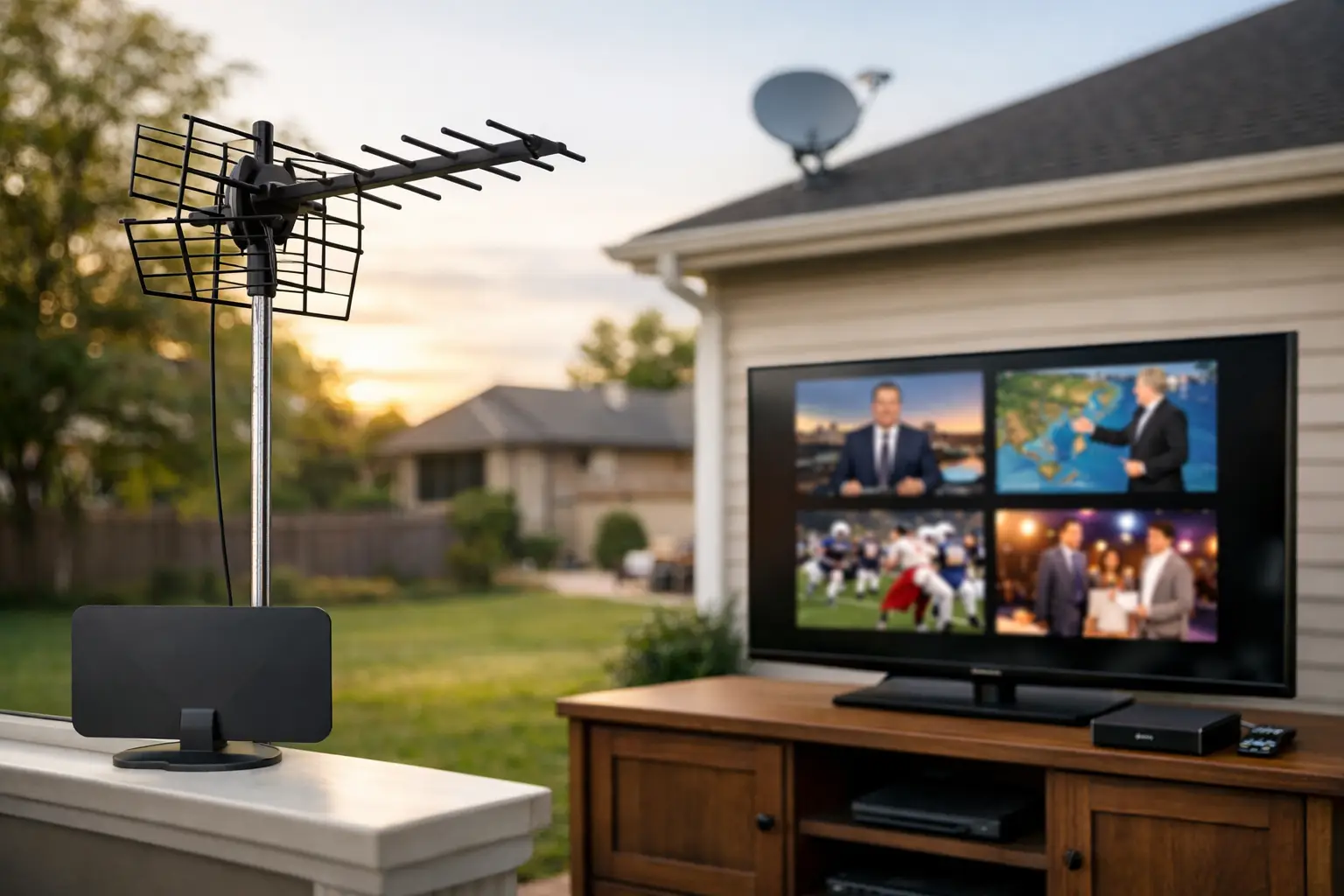
When reception is strong, over-the-air television can look excellent. Local stations commonly broadcast in HD, and because the signal is not being heavily compressed by a cable or satellite provider, many viewers find the picture crisp and detailed. You can watch live programming as it airs, including local news, network events, and many major sports broadcasts available in your market.
There are trade-offs. An antenna does not replace every cable channel, and it does not provide the on-demand libraries included with streaming services. Some games, specialty networks, and regional sports programming may still require a separate service. For many households, that is a worthwhile exchange: free local television through an antenna paired with only the streaming subscriptions they truly use.
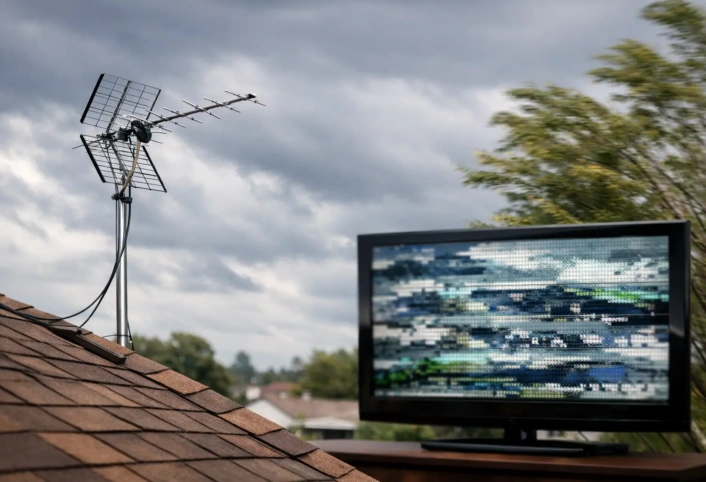
Weather can occasionally affect reception, especially when a signal is already marginal. Unlike analog TV, which faded into snow, digital TV can pixelate or drop out once signal quality falls below a threshold. Proper antenna selection, placement, grounding, quality cabling, and system testing help reduce those issues and improve day-to-day reliability.
Why Professional Installation Makes a Difference
DIY antennas can work well in favorable locations. If you live close to transmission towers with a clear signal path and only need one TV, a basic setup may be enough. But when reception is inconsistent, several TVs need service, or the installation requires roof work, professional help can save time and prevent expensive trial and error.
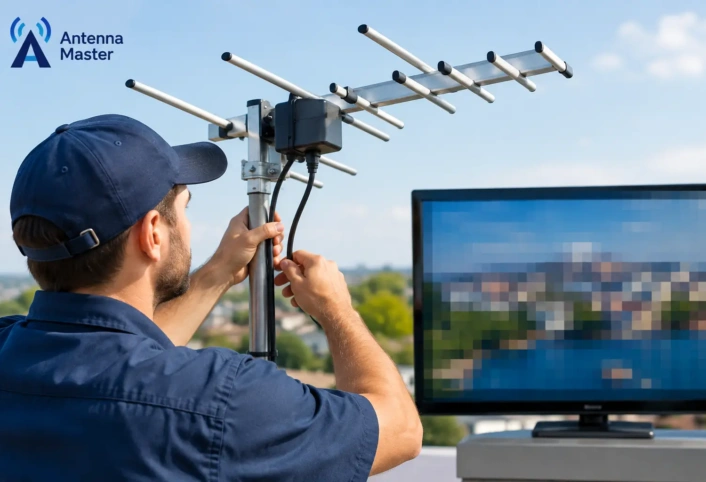
A professional installation focuses on more than mounting hardware. The technician identifies the best available signal path, securely installs the antenna, routes and terminates cabling correctly, tests reception, and configures the system for your televisions. Proper grounding and weather-conscious installation practices are also part of building a system that belongs on your home, not just one that works temporarily.
For homeowners who want to reduce cable or satellite costs without losing the local programming they rely on, Antenna Master provides a practical path forward. A customized estimate gives you a clear recommendation based on your property, viewing needs, and existing setup.
Get More Value From the Channels You Already Have
Local television is still one of the most useful parts of a home entertainment setup. It keeps you connected to your community during breaking news and severe weather, puts major live events within reach, and gives your household dependable programming without a recurring channel fee.
The right question is not, “Will any antenna work?” Ask which antenna system gives your home the strongest, most reliable access to the local stations that matter to you. A thoughtful evaluation can turn that answer into a clearer picture, fewer monthly bills, and a TV setup that works on your terms.