A low monthly bill is a great reason to cut cable, but only if you can still count on the local channels your household watches. When homeowners search for over the air tv reception in my area, they usually want a clear answer: Can I get ABC, CBS, FOX, NBC, PBS, and other local stations reliably at home?
The honest answer is that reception depends on more than your ZIP code. Your distance from broadcast towers matters, but so do hills, trees, nearby buildings, construction materials, antenna placement, and the wiring already in your home. A good antenna system is not a one-size-fits-all purchase. It is a home reception solution designed around the signals available where you live.
What Determines Over-the-Air TV Reception in Your Area?
Broadcast television is free to receive, but the signal still has to travel from a local station’s tower to your antenna. Homes closer to the towers often have more options and can sometimes use a smaller antenna. Homes farther away, in valleys, or behind dense development may need a larger outdoor antenna, better placement, or equipment that manages signal loss.
Location is the starting point, not the final answer. Two homes in the same neighborhood can have very different results. One may have a clear path toward the towers, while another sits behind tall trees or has a metal roof that weakens indoor reception.
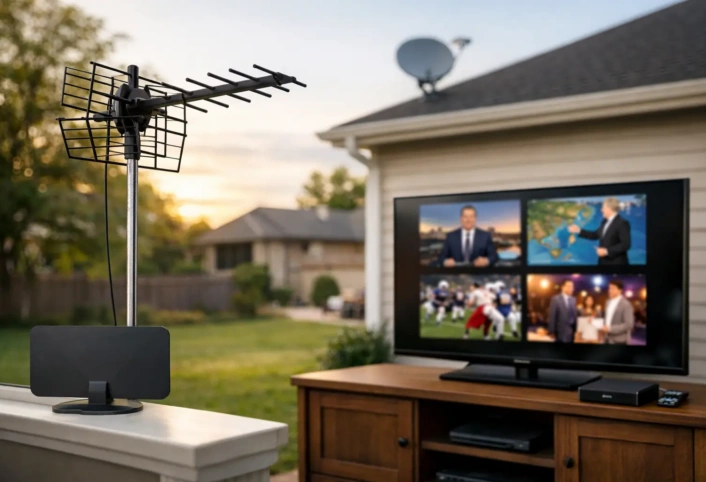
Your television setup also affects the outcome. A modern TV may have a built-in digital tuner, but the antenna, coaxial cable, splitters, and connectors all play a part in signal quality. If one antenna feeds several televisions, the signal must be distributed correctly so one room does not get strong channels while another loses them.
Why a Channel List Does Not Tell the Whole Story
Online reception tools can provide a useful estimate of nearby stations, their tower locations, and their likely signal strength. They are helpful for setting expectations, especially when you want to know whether major network affiliates are within reach.
Still, a channel list cannot see your roofline. It cannot account for a mature oak tree between your home and a broadcast tower, the reflective surfaces of nearby buildings, or the condition of the cable runs inside your walls. It also cannot tell you whether a station that appears available on paper will remain stable during bad weather or seasonal changes in foliage.
That is why an antenna installation should focus on dependable viewing, not simply the highest number of channels from a scan. A station that comes in occasionally is not as valuable as the local news, live sports, network shows, and weather coverage your family can watch every day.
Signal Strength and Signal Quality Are Different
A stronger signal is usually helpful, but quality matters just as much. Digital television tends to look excellent when the signal is stable. When it is not, the picture may freeze, break into blocks, lose sound, or disappear altogether.
Interference, poor cabling, weak connections, and improperly placed equipment can all reduce quality. In some situations, adding an amplifier helps. In others, an amplifier can overload an already strong signal and create new problems. The right choice depends on the home and the station mix, which is why professional assessment can save time and frustration.
Choosing the Right Antenna for Your Home
The best antenna is not automatically the biggest model on the shelf. The right antenna matches your reception conditions and your goals. If you want a few nearby network stations, the solution may be straightforward. If you want to receive stations from different directions, connect multiple TVs, or reach more distant towers, the system may require a more careful design.
Indoor antennas can work well in select locations, particularly when towers are nearby and the home has minimal obstruction. They are convenient, but they are also more exposed to interference from walls, appliances, electronics, and household movement. Moving an indoor antenna a few feet can change results dramatically.
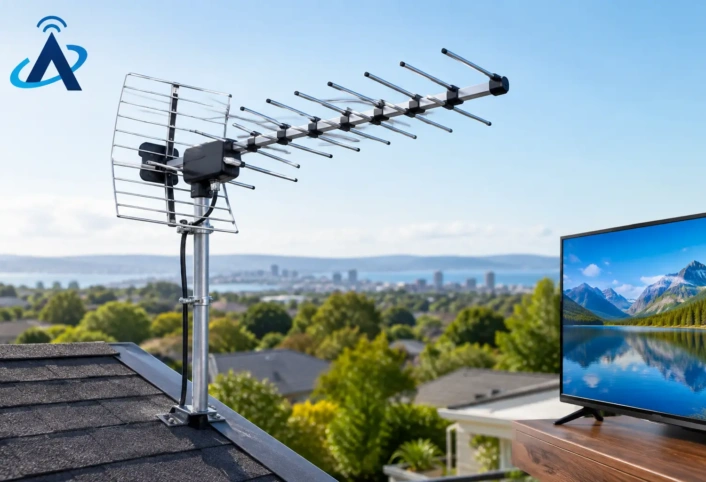
Outdoor antennas are often the more reliable choice because they are placed higher and outside many of the materials that block or weaken signals. Roof, attic, and exterior mounting options each have trade-offs. An attic installation may offer a cleaner appearance, but roof decking, insulation, radiant barriers, and nearby materials can reduce reception. An exterior or roof-mounted antenna can deliver better access to the signal, provided it is installed safely and positioned correctly.
How to Check Over-the-Air TV Reception in My Area Before Cutting Cable
Start by identifying the local stations that matter most to your household. For many families, that means the major network affiliates, PBS, local news, weather, and live sports carried on broadcast television. Make a short list of must-have channels before comparing antenna options.
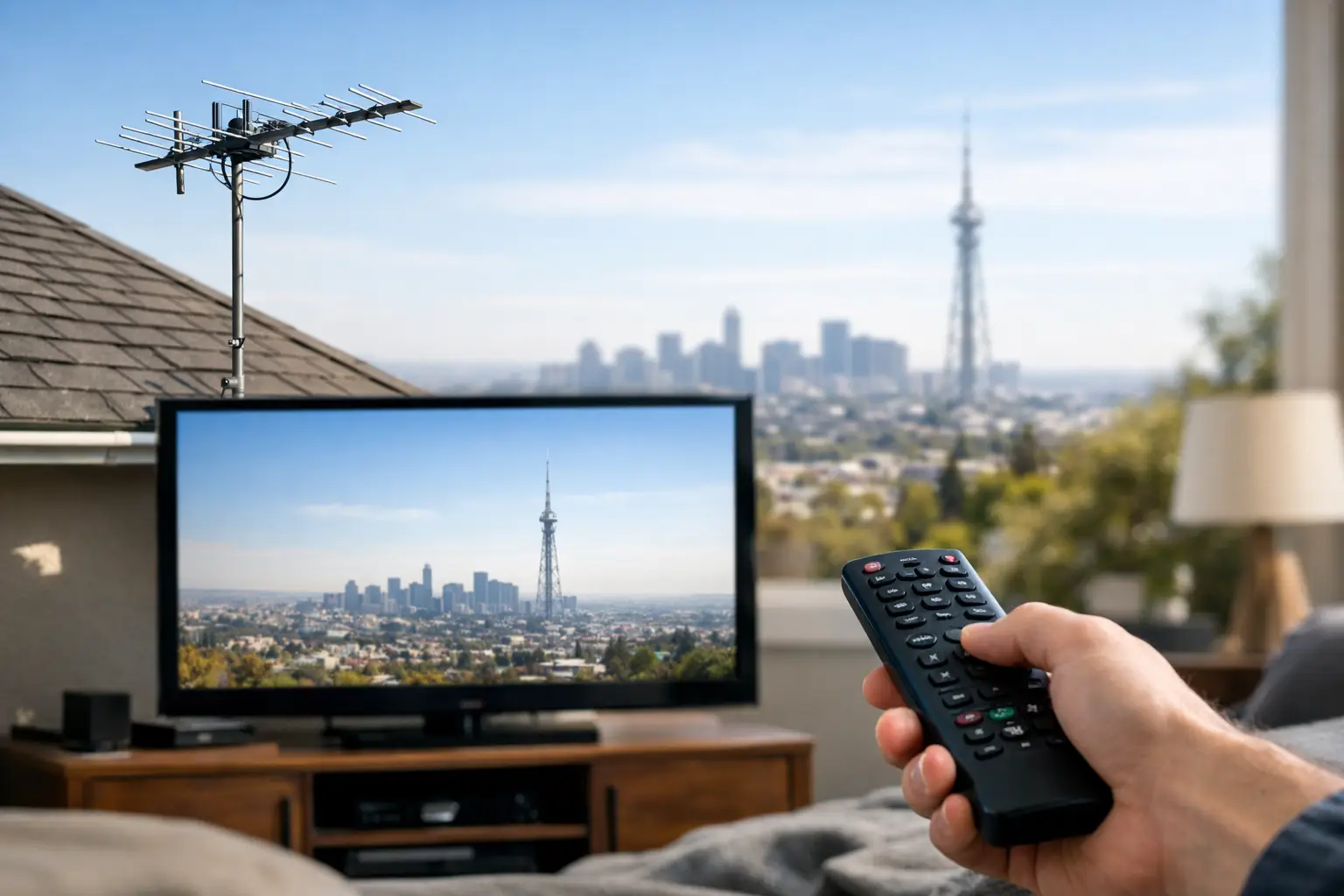
Next, consider where the broadcast towers are located relative to your home. Stations clustered in one direction are generally easier to receive than stations spread across multiple directions. A directional antenna may offer better performance for towers in one area, while a multi-directional setup may be useful when signals come from different locations.
Then look at your home itself. Consider the height of the roof, surrounding trees, nearby hills, exterior materials, and how many televisions you plan to connect. A single-TV setup and a whole-home antenna system have different requirements.
Finally, remember that your reception needs may be different from a neighbor’s. Their antenna may be older, mounted higher, aimed differently, or connected to a completely different type of wiring. It is useful to ask about their results, but it is not a substitute for evaluating your own property.
Common Problems That Affect Reception
Many reception issues are not caused by the antenna alone. A loose connector, weathered coaxial cable, unnecessary splitter, or poorly routed wire can undermine an otherwise capable system. Older homes may also have legacy cable or satellite wiring that needs to be inspected before it is reused.
Placement is another common issue. An antenna installed too low, pointed in the wrong direction, or blocked by a chimney can miss channels that should be available. Even a small adjustment in height or direction can make a noticeable difference.
Weather can expose weak spots in a system. Heavy rain, wind, and changing tree cover may affect marginal signals. A properly designed installation aims for enough signal margin that your viewing remains dependable instead of becoming a daily troubleshooting project.
When Professional Installation Is Worth It
DIY antennas can be a reasonable first try for homes with very strong, nearby signals and one television. But if you are trying to replace cable service, feed multiple rooms, receive stations at a distance, or stop dealing with picture dropouts, professional installation offers a more reliable path.
A trained technician can assess signal conditions, recommend the right antenna type, select a mounting location, aim the equipment, test channels, and configure the system for your televisions. That work helps avoid common mistakes such as buying equipment that is too weak, too powerful, or simply wrong for the stations you want.
Antenna Master provides professionally installed antenna systems for homeowners who want to cut the cord without guessing their way through reception problems. The goal is simple: dependable local HD television and fewer recurring pay-TV costs.
Keep Your Expectations Practical
An antenna can deliver a sharp HD picture and access to local broadcast programming without a cable or satellite subscription. It does not replace every paid channel, streaming service, or specialty sports package. What it can do is give you a strong foundation for live local television while allowing you to choose which paid services, if any, are worth keeping.
Before canceling pay TV, make sure the channels you rely on are available and stable at your home. A system built for your location turns cord-cutting from a gamble into a practical household upgrade – one that keeps local TV where it belongs: easy to watch and easier to afford.