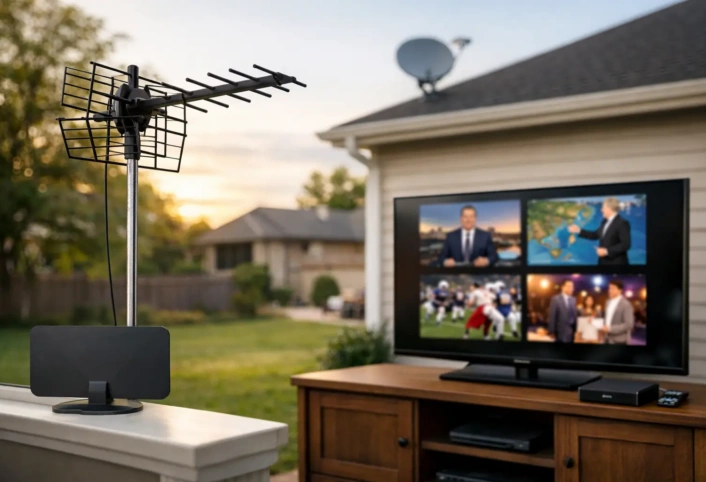
A picture that freezes during the evening news is frustrating. But buying the best over-the-air TV signal amplifier is not always the fix. An amplifier can strengthen a weak signal that is already reaching your antenna. It cannot pull in stations your antenna cannot receive, repair damaged cable, or overcome a poor installation location.
For homeowners cutting the cord, the goal is simple: dependable local channels in clear HD, without another monthly TV bill. The right amplifier can support that goal, especially when one antenna serves several televisions or cable runs are long. The wrong one can make reception worse. Here is how to tell the difference before you spend money on equipment that may not solve the real problem.
What a TV Signal Amplifier Actually Does
An over-the-air TV amplifier boosts the electrical signal traveling from your antenna through the coaxial cable to your television or tuner. This added gain can help compensate for signal loss caused by long cable runs, splitters, wall plates, and multiple TVs.
Think of it as preserving a usable signal, not creating one. If an outdoor antenna receives a clean but modest signal, an amplifier may help that signal arrive at each television with enough strength for reliable viewing. If the antenna receives mostly interference, the amplifier boosts that interference too.
That distinction matters because digital television has a cliff effect. With analog TV, a weak signal often produced a snowy picture. Digital TV usually looks perfect until the signal falls below a usable threshold, then the picture pixelates, audio cuts out, or the channel disappears altogether.
Best Over-the-Air TV Signal Amplifier: Start With the System
The best over-the-air TV signal amplifier for one home may be the wrong choice for another. Signal strength varies by neighborhood, terrain, nearby buildings, broadcast tower distance, and antenna placement. A home close to broadcast towers can have strong signals that overload an amplifier. A rural home with a rooftop antenna and three TVs may benefit substantially from one.
Before choosing an amplifier, look at the entire path between the antenna and your televisions. Antenna type and location come first. An attic antenna may work well in one home but lose valuable signal through roofing materials, insulation, solar panels, or nearby trees. An outdoor antenna mounted at the right height generally has a clearer path to local broadcast towers.
Then consider the cable path. Every splitter reduces available signal. Long coaxial runs add loss, particularly with older or lower-quality cable. Loose connectors, corroded outdoor fittings, and a poorly installed splitter can cause the same symptoms as weak reception. Replacing those parts may deliver a better result than adding gain.
Preamplifiers for weak signals at the antenna
A preamplifier installs near the antenna, before a long cable run has a chance to weaken the signal. It is commonly used when the antenna is far from the television, local stations are distant, or the system needs to overcome meaningful cable loss.
Because it boosts the signal early, a preamplifier can be effective for homes with genuinely weak reception. It needs a power supply indoors, with power sent through the coaxial cable. The outdoor connection should be weather-protected, and the system should be properly grounded for safety.
A preamplifier is not automatically better because it has a high gain number. Excessive gain can overload the tuner, especially where strong local stations are present. Low-noise performance and the ability to handle strong signals are often more useful than chasing the largest number on the box.
Distribution amplifiers for multiple TVs
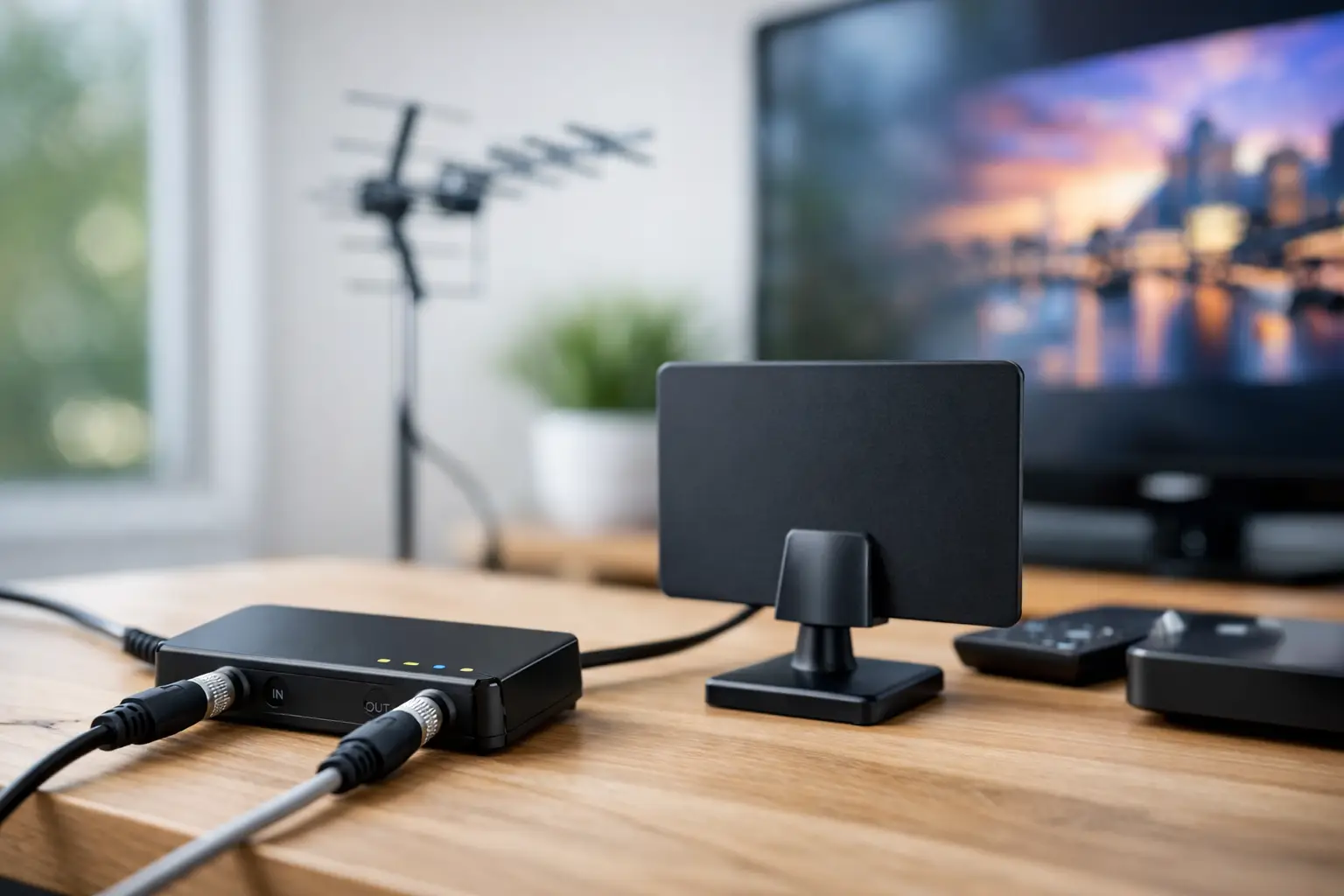
A distribution amplifier is usually installed indoors where the antenna feed splits to serve multiple televisions. It combines a splitter and amplifier in one device, helping offset the signal loss that occurs when one antenna feeds two, three, or four TV locations.
This option makes sense when reception is solid at one television but becomes unreliable after adding more sets. For example, if the main living room gets all local channels clearly while bedrooms lose a few stations, the issue may be splitting loss rather than the antenna itself.
Distribution amplification is typically less helpful when a single television already has weak or inconsistent reception. In that case, begin with antenna location, aim, cable condition, and station availability.
Signs an Amplifier May Help
A signal amplifier is worth considering when there is a clear reason for signal loss after the antenna. The following situations are good candidates:
- One antenna serves several televisions through a splitter.
- The coaxial cable run from antenna to TV is long.
- Reception is reliable on one direct connection but weakens after splitting the signal.
- The antenna is correctly aimed and placed, but distant stations remain marginal.
These signs point to a system that may have enough signal at the antenna but not enough left at the television. A properly matched amplifier can provide the margin needed to keep channels stable during normal weather changes.
When an Amplifier Will Not Fix Reception
Amplifiers are often sold as universal reception fixes, but several common problems require a different solution. If channels are missing, intermittent, or weak on every television, an amplifier may simply magnify the problem.
Start by checking whether the antenna is designed for the channels you want. Most local stations broadcast on UHF, but some markets still use VHF channels. A small indoor antenna that performs well for UHF may struggle with high-VHF stations unless it is designed to receive them.
Antenna direction is equally important. Broadcast towers are not always in the same direction, and a few degrees of adjustment can change results. Nearby hills, mature trees, apartment buildings, and metal roofing can also block or reflect signals. These reflections can create multipath interference, where the TV receives delayed versions of the same broadcast.
Overload is another concern. If you live near powerful transmitters, adding amplification can produce worse reception, not better. Symptoms can include channels that disappear after the amplifier is installed or reception that improves when the amplifier is removed. An amplifier with adjustable gain, or no amplifier at all, may be the better answer.
Features That Matter More Than Big Gain Numbers
When comparing amplifiers, focus on compatibility and control rather than marketing claims. The most useful unit is one that fits your antenna system and local signal conditions.
Look for an amplifier designed for over-the-air television frequencies and one that includes filtering for cellular interference where needed. Modern cell signals can interfere with TV reception in certain locations, particularly when the antenna system is already dealing with weak stations. A built-in filter can reduce that unwanted noise.
Adjustable gain is valuable because it lets you add only as much amplification as the system needs. This is especially helpful in suburban areas where some stations are strong and others are weaker. Fixed, high-gain equipment can leave you with little room to correct overload.
Also pay attention to the number of outputs. A two-output distribution amplifier is appropriate for two TV locations, while a larger home may need four outputs. Avoid adding extra splitters after an amplifier when possible. Each additional connection creates another potential point of signal loss or failure.
Test Before You Commit
A simple test can prevent an unnecessary purchase. Connect one television as directly as possible to the antenna feed, bypassing splitters and existing amplifiers. Run a channel scan and note which stations come in clearly. Then reconnect the normal system and compare the results.
If the direct connection is much better, distribution loss or cable condition is likely part of the problem. If the direct connection is still poor, focus on antenna selection, height, placement, and direction before adding amplification.
Check connectors while you test. Coaxial fittings should be tight but not overtightened, with no bent center pins or visible corrosion. Outdoor connections need weather protection, and old cable should be replaced if the jacket is cracked or damaged. These are small details, but they have a major effect on a system that is already near the edge of usable signal.
Get a Signal Plan Built for Your Home
A reliable antenna system is not just an antenna and a booster. It is a matched setup: the right antenna for local broadcast conditions, installed in the best practical location, connected with quality cable, and amplified only when the measurements support it.
That is why professional installation can save time and avoid repeated trial-and-error purchases. A trained technician can evaluate available stations, test signal conditions, determine whether a preamplifier or distribution amplifier is appropriate, and set up each TV for dependable local HD channels. Antenna Master helps homeowners make that transition from expensive pay TV to a reception system built around their home.
Before buying an amplifier, give your antenna system the attention it deserves. A better location, a cleaner cable path, or the right antenna may be the upgrade that keeps local news, live sports, and network programming on your screen when you want it.