A low monthly TV bill should not mean giving up local news, live sports, major network shows, or clear HD picture quality. Professional TV antenna installation gives your household a practical way to receive free over-the-air broadcasts while reducing reliance on costly cable or satellite packages.
The difference is not simply mounting an antenna and connecting a cable. Reliable reception depends on your location, nearby broadcast towers, building materials, antenna placement, signal strength, and the number of TVs in your home. A professionally planned system accounts for those details before they become frustrating picture dropouts or missing channels.
What Professional TV Antenna Installation Solves
Retail antennas can look simple on the shelf, but every home receives signals differently. An indoor antenna may work well in one room and fail just a few feet away. A larger outdoor antenna is not automatically the right answer either. It needs to be matched to the available broadcast signals and installed where it can perform safely and effectively.
A professional installation starts with the goal: dependable access to the local channels your family actually watches. That may include network affiliates, local news, weather, live events, public television, and additional broadcast subchannels. Your technician evaluates the reception conditions around your home and recommends equipment based on expected performance, not packaging claims.
This approach also helps avoid the common cord-cutting problem of buying multiple antennas, amplifiers, and splitters without improving the picture. The right system is usually simpler than a trial-and-error setup because each component has a purpose.
The Signal Matters More Than the Antenna Box
Broadcast TV signals travel through the air, but they do not arrive at every house with equal strength. Distance from transmission towers is one factor. Hills, tall buildings, dense trees, weather patterns, and even the construction of your home can affect what reaches the antenna.
Placement is often the biggest performance decision. In many cases, a roof-mounted or attic-mounted antenna provides a better path to available signals than an antenna near a television. But it depends on the property. An attic can protect equipment from the elements, for example, while roofing materials, insulation, or metal barriers may weaken reception. An exterior installation may deliver stronger results, but it requires proper mounting, grounding, weatherproofing, and cable routing.
A trained technician can identify the trade-offs before installation. Rather than promising every channel in every condition, the goal is to build the best practical setup for your address and viewing needs.
Antenna Size and Type Are Not One-Size-Fits-All
Some households are close enough to local towers that a compact antenna can deliver excellent results. Others need a larger directional antenna to focus on stations from one primary direction. Homes receiving channels from different directions may need a different design or carefully selected equipment.
Amplifiers also require judgment. They can help compensate for signal loss over longer cable runs or across several TVs. However, an amplifier cannot create a usable signal where none exists, and too much amplification can cause its own reception issues. Professional selection and configuration prevent an unnecessary device from becoming another point of failure.
A System Built for the TVs You Use
An antenna system should fit the way your household watches television. If you only need service at one TV, the installation may be straightforward. If you want broadcast channels available in a family room, bedrooms, a kitchen, or a home office, the system needs to distribute the signal without creating avoidable loss.
Professional TV antenna installation can use existing coaxial wiring when it is in good condition and appropriate for the system. That can reduce disruption and keep the setup clean. When existing wiring is damaged, outdated, or poorly routed, replacing or correcting it may be the better long-term choice.
Technicians also configure the final connection and scan for available channels at your televisions. That last step matters. A properly installed antenna is only useful when the TV is set to receive over-the-air channels and the available stations are confirmed.
For households using streaming services alongside an antenna, this creates a practical mix: local live programming through the antenna and on-demand entertainment through the subscriptions you choose to keep. You are not forced into an expensive package just to watch the evening news or a network game.
What to Expect From the Installation Process
A quality installation should feel clear, not technical or confusing. After you request an estimate, the discussion should center on your home, your current TV setup, and what you want to receive. A technician can then recommend an antenna solution based on reception conditions and the scope of the work.
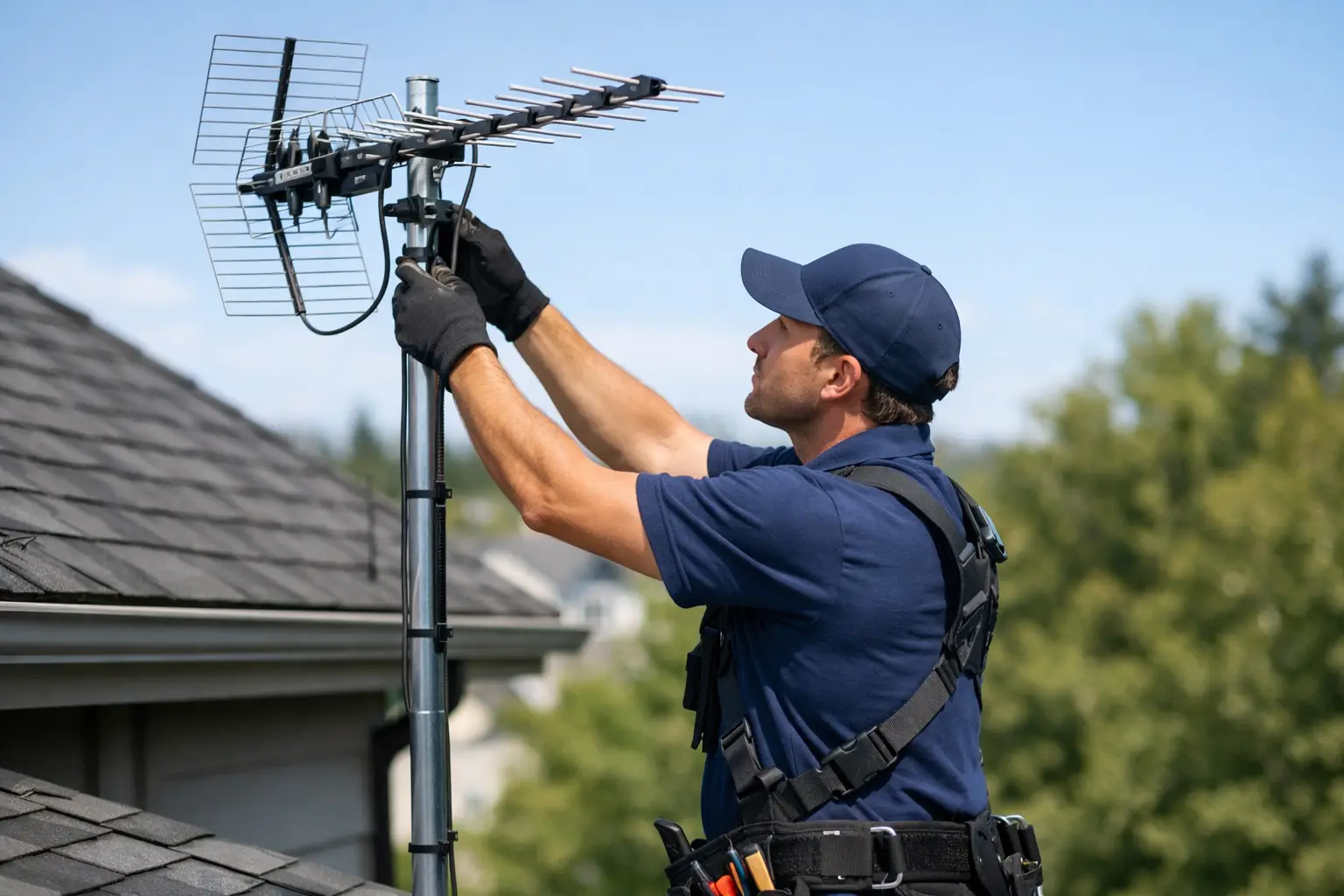
On installation day, the process generally includes selecting the most suitable mounting location, securing the antenna, running and protecting coaxial cable, connecting the system to the appropriate TVs, and testing reception. Exterior work should be performed with attention to secure mounting and weather-resistant connections. Grounding should be handled correctly as part of a safe, professional installation.
The final result should look as good as it performs. Clean cable routing, stable mounting, and a system that is easy to understand are all part of the service. You should know how to rescan channels if needed and whom to contact if you have questions later.
When a Professional Installation Is Worth It
DIY can make sense for a homeowner with strong nearby signals, one television, easy indoor placement, and patience for testing. It may also be a reasonable first step for someone who wants to see what is available before making changes to a larger TV setup.
Professional help becomes especially valuable when reception is inconsistent, multiple TVs need service, an outdoor or attic installation is needed, or you are tired of guessing which equipment to buy. It is also the practical choice when you want the work completed safely and want confidence that the system has been tested at the televisions where it will be used.
The cost should be weighed against the recurring expense of pay TV. Canceling or reducing a cable or satellite package can create monthly savings that continue long after the installation is complete. The exact payoff depends on your current bill and the services you choose to keep, but many homeowners value the control as much as the savings.
Get More From Free Local HD Television
Over-the-air television is not a replacement for every entertainment option. Streaming libraries, premium channels, and specialty programming may still be part of your household plan. What an antenna does well is give you dependable access to live local broadcasts without another monthly TV charge.
That makes it an effective foundation for cord-cutting. You can keep the services you enjoy, remove the ones you do not, and still have local HD channels available when news breaks, weather turns severe, or a live game is on.
Antenna Master helps homeowners make that change with trained technicians, customized recommendations, and a system built around the way each home receives television. A simple estimate is the right place to start when you want clear answers about what your home can receive and what it will take to get it working well.
The best antenna setup is not the largest one or the most expensive one. It is the one that gives your household a clear, dependable picture and more control over what you pay for TV each month.