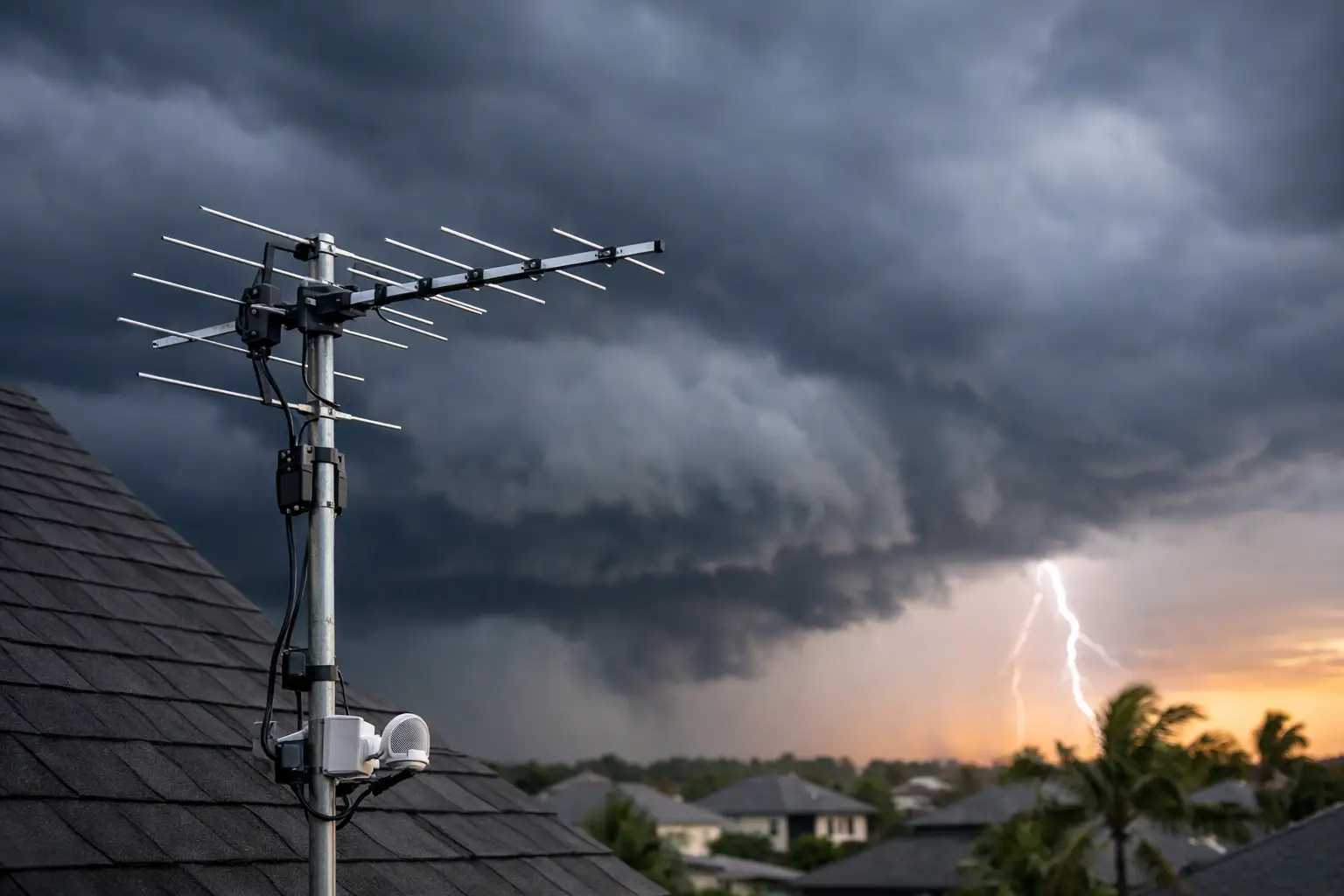
A hurricane watch is not the time to climb onto the roof, tighten a loose bolt, or disconnect equipment in the rain. The safest way to prepare tv antenna for hurricane conditions is to protect the indoor equipment early, leave roof work to trained professionals, and know what to inspect once the storm has passed. A properly installed outdoor antenna can withstand normal weather, but high winds, flying debris, water intrusion, and lightning can affect any rooftop system.
For homeowners who depend on local broadcast TV for weather alerts, news, and live programming, a little preparation helps protect both your antenna system and your household. The goal is not to take unnecessary risks to save the antenna. It is to make smart decisions before the wind arrives and restore service safely afterward.
Prepare Your TV Antenna for a Hurricane Before the Storm
Start your preparations as soon as a hurricane watch is issued, while conditions are still dry and safe. If your antenna has been professionally mounted and secured to the roof, chimney, eave, or side of the home, it is usually best to leave it in place. Attempting to remove an outdoor antenna can create a larger problem if the mount, mast, or cable is damaged in the process.
Instead, focus on the parts of the system you can safely access from inside your home. Turn off the television, antenna amplifier, distribution amplifier, and any connected recording device. Unplug them from their electrical outlets. If your antenna system uses a power inserter or preamplifier, disconnect its power supply as well.
You can also disconnect the coaxial cable from the back of the television or tuner if it is easy to reach. Keep the cable end away from electronics and moisture. This step may help reduce the chance that a power surge travels through connected equipment during a lightning event.
Do not handle antenna wiring if water is entering the home, if an outlet is wet, or if lightning is active nearby. Electrical safety comes first, every time.
Secure what is within reach
If you have an indoor antenna near a window, move it away from the glass and place it in a dry, protected location. For attic antennas, there is usually nothing to remove before a storm, but it is still wise to unplug any powered amplifier connected to the system.
For outdoor antenna systems, walk around the property from the ground. Look for visibly loose coaxial cable, dangling conduit, or tree branches hanging close to the antenna or service entrance. Do not use a ladder or access the roof. If a branch can be safely moved from the ground, do so. If not, make a note to have it addressed after the storm.
Why You Should Not DIY Roof Repairs Before a Hurricane
A loose antenna mount is worth repairing, but not when winds are building or rain is expected. Ladders become unstable quickly, roof surfaces get slippery, and even a moderate gust can turn a simple adjustment into a serious fall hazard. There is also a chance of contacting overhead power lines or damaging roof flashing while trying to work quickly.
A rooftop antenna system is more than the antenna itself. It includes a mast, mounting brackets, fasteners, coaxial cable, grounding components, splitters, amplifiers, and connections that may run through the attic or exterior wall. One weak point can affect reception or create an entry point for water.
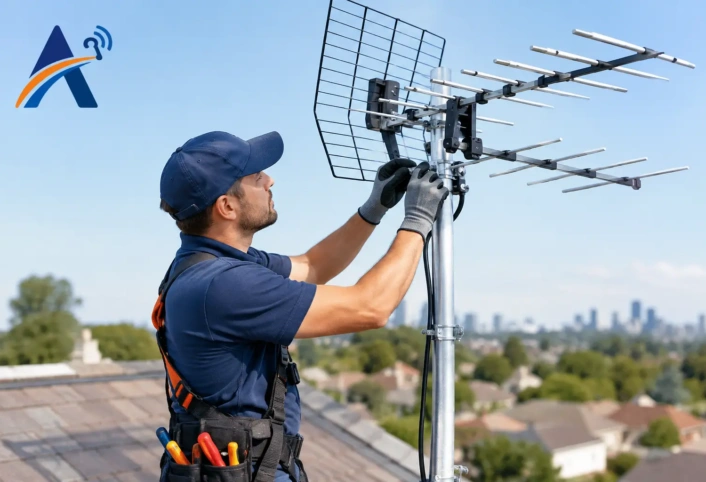
If you notice a leaning mast, corroded hardware, loose cable, or a mount pulling away from the structure before a storm, contact a qualified antenna technician as soon as conditions allow. A professional can assess whether the system should be reinforced, repaired, or removed safely. That is a better investment than risking personal injury or an avoidable roof repair.
Protect the Rest of Your TV Setup
Your television may be indoors, but it can still be vulnerable during a hurricane. A quality surge protector can help with ordinary power fluctuations, though it cannot guarantee protection from a direct lightning strike. For that reason, unplugging sensitive electronics before severe weather is the strongest practical step when time permits.
Keep the television and connected equipment elevated if flooding is possible in your home. Move receivers, routers, streaming devices, and power strips off the floor. If your antenna feed enters through a lower wall or crawlspace, check for water only when it is safe to do so.
It also helps to keep a battery-powered radio, charged phone, backup batteries, and local emergency information available. Over-the-air TV is valuable for local coverage, but a hurricane can interrupt electrical service and broadcast reception. Plan for more than one way to receive official alerts.
What to Check After the Hurricane
Wait until local authorities say it is safe to go outside. Stay clear of downed utility lines, damaged trees, standing water near electrical equipment, and any antenna that has fallen or is hanging from the roof. Treat every downed line as energized and report it to the utility company.
Once the area is safe, inspect the antenna system only from the ground. Look for a bent mast, tilted antenna, missing elements, loose mounting hardware, torn coaxial cable, or branches resting on the system. Check the exterior wall where the cable enters the house for damage or water intrusion.
Before reconnecting indoor equipment, look for signs of moisture around coaxial connections, power supplies, amplifiers, and wall plates. If anything is wet, burned, cracked, or smells unusual, do not plug it in. Let it dry completely and have damaged components evaluated or replaced.
Restore service one step at a time
If the antenna appears intact and there is no visible damage to the cable or connections, reconnect the system after power is stable. Start with the antenna amplifier or power inserter, if your setup uses one, then reconnect the television. Run a channel scan to see whether your local stations return.
Reception may be temporarily different after a major storm. Wind can shift an antenna slightly, rain can affect signal conditions, and nearby trees or debris may block part of the signal path. A missing channel does not always mean the antenna has failed. However, pixelation, repeated signal loss, or a major drop in available channels can point to a damaged cable, amplifier, connector, or antenna alignment issue.
Avoid repeatedly plugging and unplugging equipment if reception does not return. That can make troubleshooting harder and may expose electronics to unstable power. A technician can test the signal at the antenna, cable run, splitter, and television connection to find the actual cause.
When Professional Antenna Service Makes Sense
Call for professional help if your antenna is visibly damaged, the mast is leaning, the mounting point has shifted, or you suspect a lightning surge. You should also schedule service if the roof was damaged, since antenna hardware and cable penetrations need to remain properly sealed against future rain.
A trained technician can safely inspect the mounting location, confirm that the antenna is aimed correctly, replace weather-damaged coaxial cable and connectors, and verify grounding. If your system was marginal before the storm, this can also be a good opportunity to improve signal reliability with the right antenna, amplifier, or distribution setup for your home.
Antenna Master helps homeowners get dependable local HD television without the burden of expensive pay-TV contracts. After severe weather, a professional inspection can give you a clear answer: repair the existing system, replace damaged components, or make targeted improvements that support stronger reception.
A Better Plan for the Next Storm
The best time to strengthen a TV antenna system is during calm weather. Have loose hardware corrected, aging cable replaced, and grounding reviewed before hurricane season reaches your area. A secure installation will not make a home storm-proof, but it can reduce preventable antenna damage and help make post-storm recovery easier.
When the forecast turns serious, protect your family first, unplug what you can safely reach, and leave rooftop work for safe conditions and trained hands. Your local channels will be far more useful once the storm has passed if the system behind them has been handled with care.