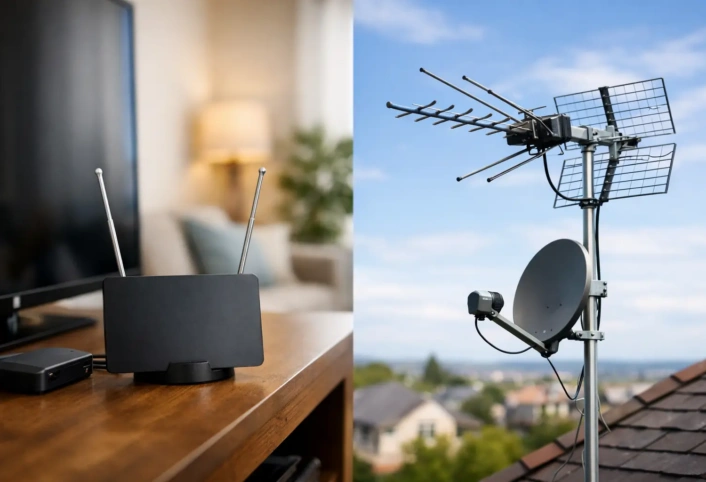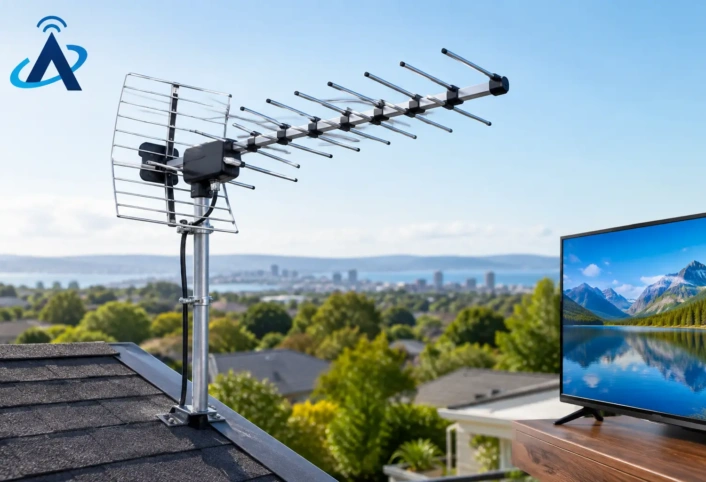
An outdoor antenna can deliver local news, live sports, network shows, and high-definition TV without another monthly cable bill. But before the first channel scan, TV antenna grounding requirements need to be part of the installation plan. Proper grounding helps protect your home, your television equipment, and the people using it when electrical faults or nearby lightning events occur.
Grounding is not a cosmetic extra or a shortcut you can replace with a surge strip behind the TV. It is a specific part of a properly installed antenna system, and the right approach depends on your home’s existing electrical service, the antenna location, and local code requirements.
Why antenna grounding matters
An outdoor antenna is mounted above or along your home, where it can be exposed to wind, rain, static buildup, and electrical activity. A grounding system provides a controlled path for certain unwanted electrical energy to reach the home’s grounding system rather than traveling down the coaxial cable toward your TV, tuner, amplifier, or other connected equipment.
This does not mean a grounded antenna makes a home immune to a direct lightning strike. No residential antenna installation can promise that. A direct strike carries enormous energy and can cause severe damage even when a system is installed correctly. Grounding is still essential because it reduces risks from static charge, induced voltage from nearby lightning, and electrical potential differences between the antenna system and the home’s electrical system.
For homeowners, the benefit is straightforward: a properly planned installation supports dependable over-the-air TV while avoiding a preventable weak point in the system.
The two grounding jobs in an antenna system
People often use the word “grounding” as if it means one wire attached anywhere convenient. In a typical residential antenna installation, there are two related but different jobs: grounding the antenna mast and grounding the coaxial cable entry point.
Grounding the antenna mast
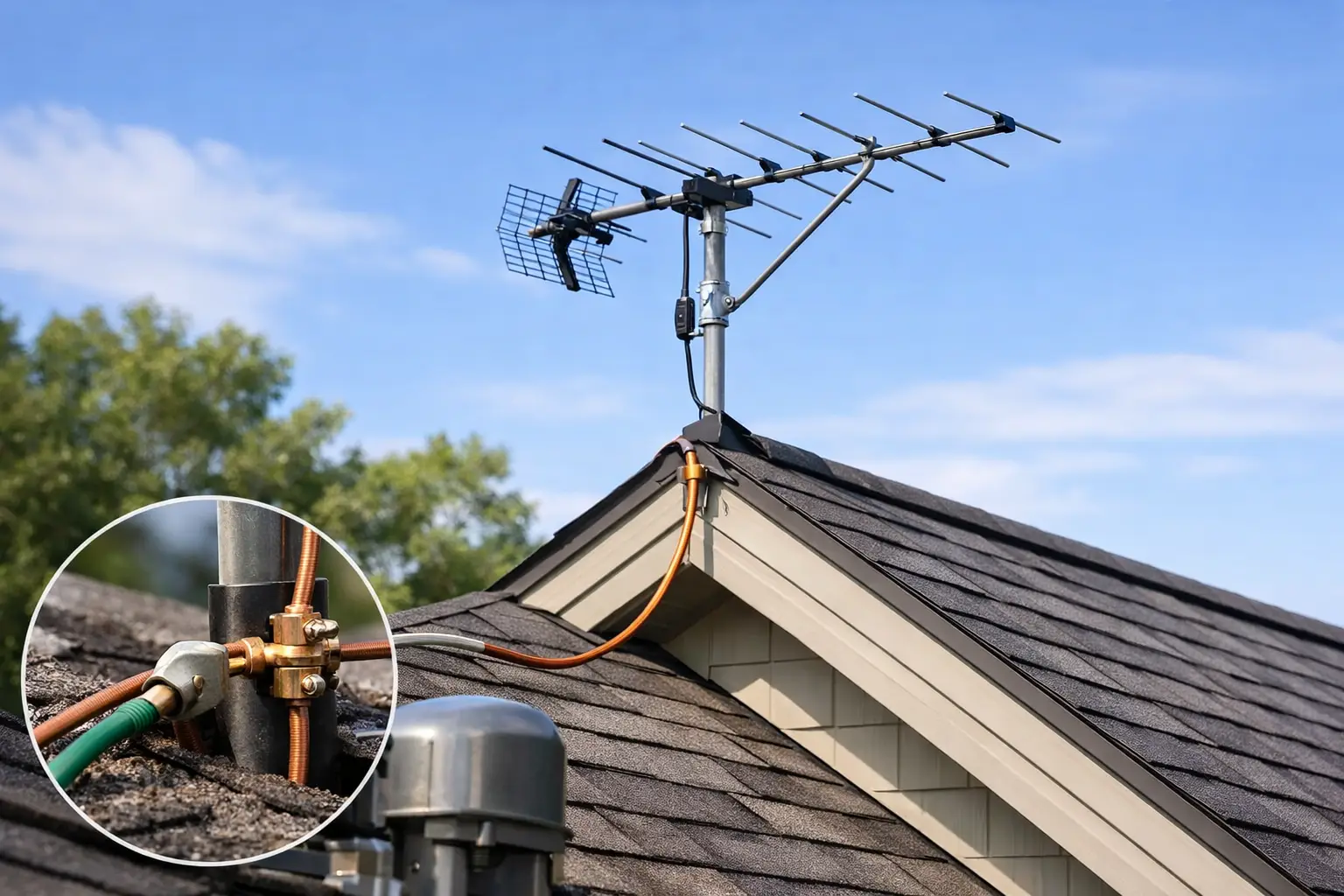
The mast is the metal pipe or structure supporting the antenna. It is generally bonded with an approved grounding conductor to the home’s grounding electrode system. This helps keep the mast at the same electrical potential as the house grounding system and provides a path for accumulated static charge.
The conductor must be suitable for the job, installed securely, and routed in a practical path. A loose wire, undersized material, or connection to an isolated piece of metal does not provide the protection a proper bonding connection is intended to provide.
Grounding the coaxial cable
The coaxial cable that carries TV signal indoors should pass through a grounding block or antenna discharge unit before it enters the home. This component is installed outside, close to where the cable enters the building, and bonded to the same grounding electrode system.
A grounding block gives unwanted electrical energy on the cable shield a path to ground before that energy reaches indoor devices. This is particularly important when the cable run connects directly to a television, splitter, amplifier, network tuner, or whole-home distribution system.
Both parts matter. Grounding only the mast leaves the coaxial path unaddressed. Grounding only the coaxial cable does not properly bond the exposed metal mast.
Where the ground connection should go
TV antenna grounding requirements generally call for bonding to the building’s established grounding electrode system. Depending on the home, that may involve the service grounding electrode conductor, a grounding electrode, an approved intersystem bonding termination, or another code-compliant connection point near the electrical service.
What it should not involve is choosing the nearest metal object. A water pipe, gas pipe, exterior spigot, fence post, or random ground rod may seem convenient, but convenience is not the standard. An improper connection can create differences in electrical potential and introduce safety concerns rather than solve them.
A separate ground rod is sometimes considered for an antenna, especially when the antenna is mounted far from the electrical service. However, a separate rod usually must be bonded back to the home’s grounding electrode system according to applicable code. Installing a standalone rod without that bond can create a dangerous voltage difference during an electrical event.
This is where a professional site review is valuable. The best ground path is not always obvious from the outside of the house.
The installation details that make a difference
A grounding system works best when it is planned with the full antenna layout in mind. The route from antenna to TV should be as clean and protected as possible, not just the shortest route someone can reach with a ladder.
The grounding conductor should follow a direct path with gentle turns rather than sharp bends, unnecessary loops, or long detours. Connections need to be secure, corrosion-resistant, and accessible for inspection. Outdoor components should be rated for exterior use, because water intrusion and corrosion can compromise signal quality and grounding performance over time.
The coaxial cable should also be supported properly and protected where it passes into the home. Avoid pinching it under window frames, running it through an open door, or leaving it loose where wind can wear it against siding or roofing. Those shortcuts may save time on installation day, but they often lead to unreliable reception, moisture damage, or cable replacement later.
If the system uses a preamplifier, distribution amplifier, or powered splitter, grounding deserves even more attention. Amplified systems add power supplies and sensitive electronics. They can improve reception in the right situation, especially with long cable runs or multiple TVs, but they also create more equipment worth protecting.
Local code and electrical safety requirements
National electrical standards provide the baseline for antenna grounding, but local jurisdictions may adopt different code versions or add their own requirements. Homeowners associations, historic districts, roof conditions, and utility clearances can also affect where an antenna may be mounted.
The National Electrical Code contains provisions covering receiving antennas, masts, lead-in conductors, and bonding. A qualified antenna installer understands how these requirements apply to a residential system. For unusual installations, such as a tall tower, detached garage, metal roof, or antenna mounted near service equipment, an electrician may also need to be involved.
Keep antenna systems well away from overhead power lines. This is not a measurement to guess at from the ground. If an antenna, mast, ladder, or cable could get near utility conductors during installation or high winds, stop and have the location evaluated by a qualified professional. Contact with power lines can be fatal.
Common grounding mistakes to avoid
The most common mistake is assuming the antenna works, so the installation is finished. Signal reception and electrical safety are separate questions. A picture on the screen does not confirm that the mast and coaxial line are grounded correctly.
Other frequent problems include using a grounding block that is never bonded, attaching a ground wire to a gas pipe, routing cable indoors before it reaches the grounding block, and adding a separate ground rod without proper bonding. DIY installations also sometimes use thin wire, indoor-rated connectors outdoors, or corroded hardware that no longer makes a dependable connection.
Another issue is treating a plug-in surge protector as the antenna ground. A quality surge protector can help protect equipment from certain power-line surges, but it does not replace exterior antenna grounding and bonding. The antenna system must be handled where it enters the building, not only at the TV outlet.
When professional installation is the smart choice
A simple indoor antenna may not need the same installation work as a roof-mounted outdoor antenna. Once the project includes climbing, roof penetration, chimney mounting, long cable runs, multiple televisions, amplifiers, or a difficult grounding location, professional installation can save time and reduce risk.
A trained technician can evaluate local broadcast signals, choose an antenna size that fits your location, find a mounting position that balances reception with appearance, and install the grounding components as part of one complete system. That approach helps avoid the frustrating cycle of buying retail parts, moving the antenna repeatedly, and still dealing with missing channels or inconsistent reception.
Antenna Master approaches each home as its own signal and installation project. The goal is not simply to mount an antenna. It is to give your household dependable local TV with an installation that is configured thoughtfully from the antenna mount to the grounded cable entry point.
Before you cancel cable or satellite service, have the outdoor antenna location and grounding path assessed together. The right installation can help you enjoy free local HD channels with more confidence, fewer equipment concerns, and a system built to serve your home for years.