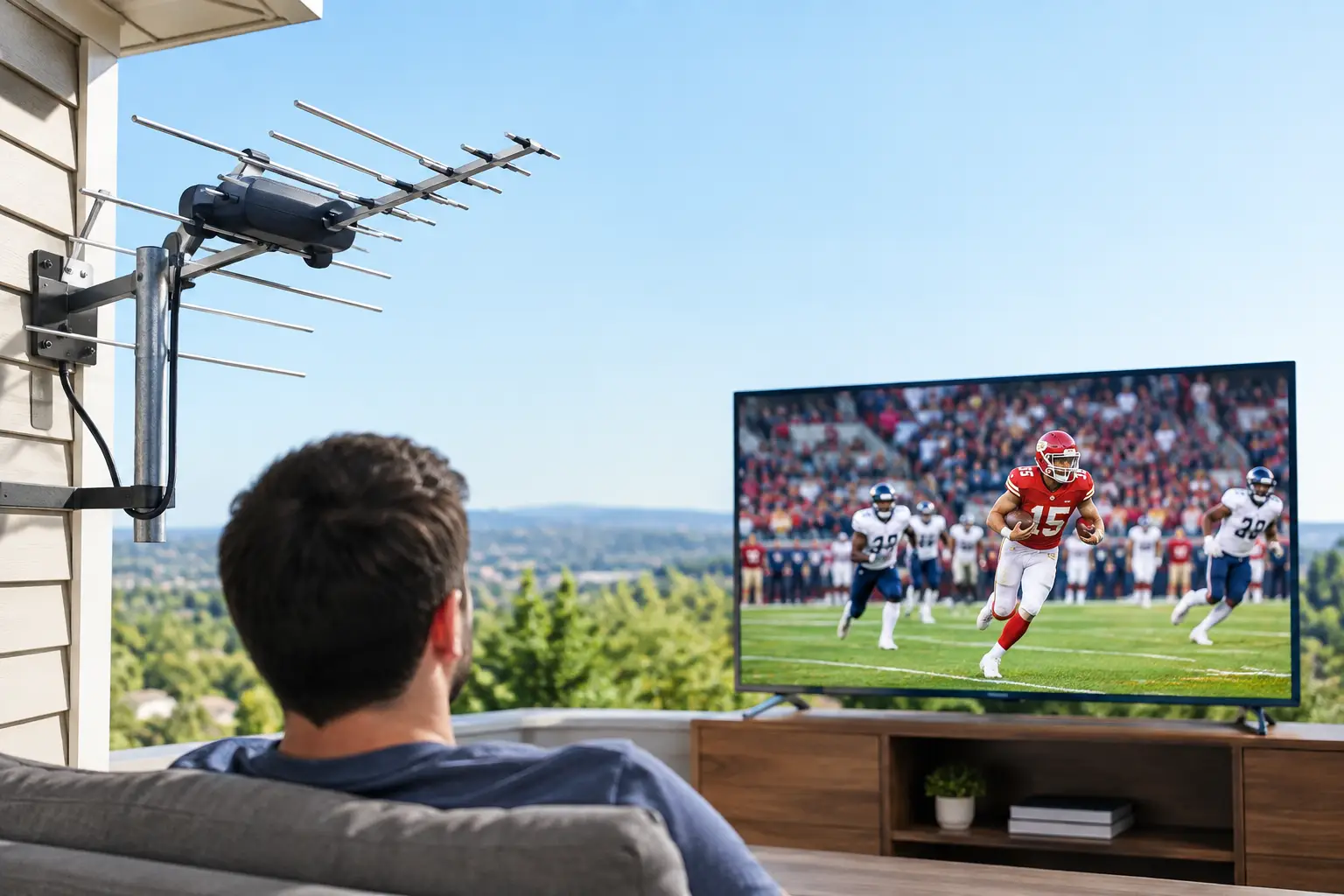
The game is about to start, and the last thing anyone wants is a spinning app, a forgotten password, or another channel package. So, can antennas receive sports? Yes. A properly installed TV antenna can bring live sports from local broadcast stations into your home in clear HD, with no dependence on cable or satellite service.
That matters because many of the biggest games people watch are still carried by local network affiliates. NFL matchups, college football, NBA games, MLB coverage, golf tournaments, major events, local pregame shows, and hometown news are often available over the air. The exact games available depend on your market and the network holding the broadcast rights, but an antenna remains one of the most practical ways to keep live local television after cutting the cord.
Can Antennas Receive Sports From Major Networks?
An antenna receives free over-the-air signals transmitted by nearby broadcast towers. It does not receive cable-only sports channels or internet streams, but it can receive local affiliates of networks such as ABC, CBS, FOX, NBC, The CW, PBS, and independent stations when signals are available at your address.
Those networks carry a substantial amount of live sports. FOX and CBS commonly air NFL games. NBC carries Sunday Night Football and other major events. ABC often carries college football, basketball, and select professional sports. Your local station may also carry regional teams, high school championships, local college coverage, and sports news that national packages do not prioritize.
The key distinction is between a game that is broadcast locally and one placed exclusively on a cable network, regional sports network, or streaming service. An antenna is excellent for local broadcast sports. It is not a replacement for every sports channel or every out-of-market game.
What Sports Can You Watch With an Antenna?
The answer changes by season, location, and broadcast schedule. Still, households often use an antenna to watch the events they care about most: live games that bring everyone into the living room at the same time.
Football, including local NFL coverage
Local network stations air many NFL games, including Sunday afternoon matchups, primetime games, playoff games, and the Super Bowl when it is assigned to a broadcast network. The teams and games you receive will follow your local market, so viewers generally see the teams relevant to their area rather than every game on the schedule.
College football is also a strong fit for antenna TV. Major conferences and rivalry games frequently appear on ABC, FOX, CBS, NBC, and local affiliates. Some games will still be exclusive to cable or streaming outlets, but an antenna can cover a meaningful share of the season.
Baseball, basketball, and major events
Broadcast networks may air nationally scheduled MLB and NBA games, postseason coverage, all-star events, and championship games. Local broadcast availability for regular-season teams varies widely. A local team may appear on an over-the-air station occasionally, while most of its schedule may sit behind a separate channel or service.
Antennas are also useful for big-event viewing: major golf tournaments, the Olympics, auto racing, tennis, award shows, and other live programming that networks place on their local stations. Because these broadcasts are sent over the air in HD, the picture can look excellent when reception is properly set up.
Local sports that can be easy to miss
One of the overlooked advantages of antenna television is local programming. Depending on the station lineup in your area, you may find local college games, high school sports, coaches’ shows, postgame coverage, and regional sports discussions. These broadcasts can be especially valuable for fans who care about more than the national headline game.
Why a Game May Not Be Available on an Antenna
Antenna reception and sports rights are two separate issues. You might receive a station perfectly and still not find a particular game because the event is assigned to a cable channel, streaming platform, or out-of-market package.
Blackout rules, local-market rules, and network scheduling can also affect what airs. For example, a local affiliate may show one NFL game while a different game appears only in another market. During overlapping events, a network may shift coverage based on regional interest.
This does not make an antenna less useful. It simply means the best cord-cutting plan starts with the sports you watch most. If local NFL games, network college football, postseason action, and major live events are your priority, over-the-air TV can be a very strong foundation. If you need every regular-season game from a specific league, you may want to pair the antenna with another viewing option.
What Determines Whether Your Antenna Receives Sports Reliably?
The game itself is not harder for an antenna to receive than a sitcom or evening news broadcast. What matters is whether your system can consistently receive the station carrying it. A channel that fades, pixelates, or disappears during bad weather is often a system-design issue, not a problem with the broadcast.
Signal strength is only one part of the equation. Signal quality, tower direction, distance, terrain, nearby buildings, trees, roof materials, and interference can all affect performance. In South Florida, dense development, changing weather conditions, and the layout of a home can make antenna placement especially important.
The right antenna and placement
Indoor antennas can work well in some homes near strong broadcast towers. They are convenient, but their location inside the building exposes them to walls, electronics, metal framing, and other obstacles. Moving one a few feet can sometimes change the result dramatically.
An outdoor or attic installation may provide a more dependable solution when signals are weaker or when you want reliable access across multiple televisions. Higher placement can reduce obstructions, but height alone is not the whole answer. The antenna must also be selected for the available channels and aimed appropriately.
A clean, properly configured system
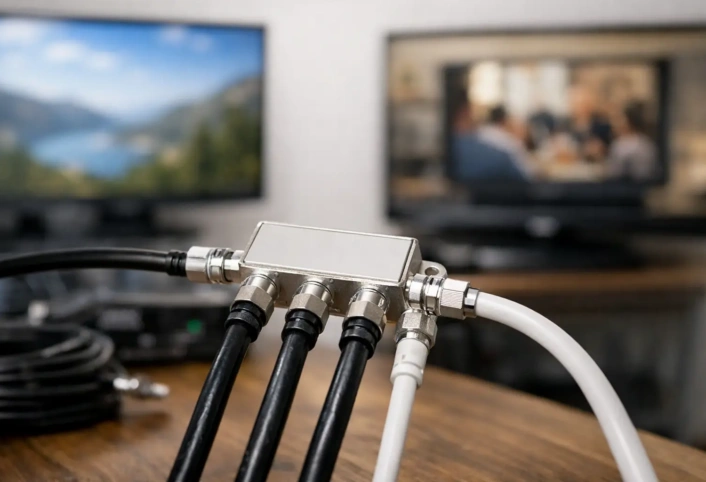
Antenna systems include more than the antenna itself. Coaxial cable condition, splitters, connectors, grounding, amplification when appropriate, and TV channel scans all influence the final result. An amplifier can help in certain situations, particularly with long cable runs or multiple TVs, but it can also amplify unwanted noise or overload strong signals if used incorrectly.
That is why a professional assessment is useful. Rather than guessing from a box on a retail shelf, a trained technician can evaluate your location, identify likely station sources, choose equipment that fits the home, and verify the channels after installation.
How to Build an Antenna Setup Around Sports
Start by listing the leagues, teams, and events your household watches most. Then identify which local networks usually carry them. This keeps expectations realistic before any equipment is installed.
Next, focus on dependable reception, not simply the highest possible channel count. A setup that consistently delivers the local ABC, CBS, FOX, and NBC affiliates may be more valuable to a sports fan than one that finds several weak stations that drop out when it matters.
Finally, connect the system to the TVs where live viewing happens. A properly planned installation can distribute antenna signals to more than one television, allowing different rooms to watch local programming without relying on separate indoor antennas. Antenna Master helps homeowners make that transition with professionally installed systems designed around the channels and viewing areas that matter to them.
A Better Way to Keep Live Sports After Cutting the Cord
For households that mainly want local games, network events, and dependable HD television, an antenna can remove a major reason to hold onto a large pay-TV package. It gives you direct access to the stations that still carry much of the live programming people gather to watch.
Before the next season starts, consider which games are truly must-watch in your home. A well-planned antenna system can keep those local broadcasts on the screen and make cutting the cord feel far less like a compromise.