A clear home antenna planning guide starts with one question: what local channels can your home reliably receive? The answer is not found on an antenna box alone. Your location, nearby buildings, roofline, wiring, number of TVs, and desired channels all affect the system that will deliver dependable over-the-air HD television.
For households ready to reduce reliance on cable or satellite, planning is the step that prevents disappointment later. A properly designed antenna system can bring local news, network shows, live events, and other broadcast programming into your home without turning television reception into a weekend troubleshooting project.
Start With Your Reception Reality
Every home receives broadcast signals differently. TV stations transmit from specific tower locations, and those signals must travel through open air before they reach your antenna. Distance matters, but it is only one part of the picture.
A home close to broadcast towers may work well with a smaller antenna. A home farther away, behind dense development, or surrounded by trees may need a more directional antenna and a better mounting location. Hills, high-rise buildings, metal roofing, solar panels, and even mature landscaping can weaken or reflect signals.
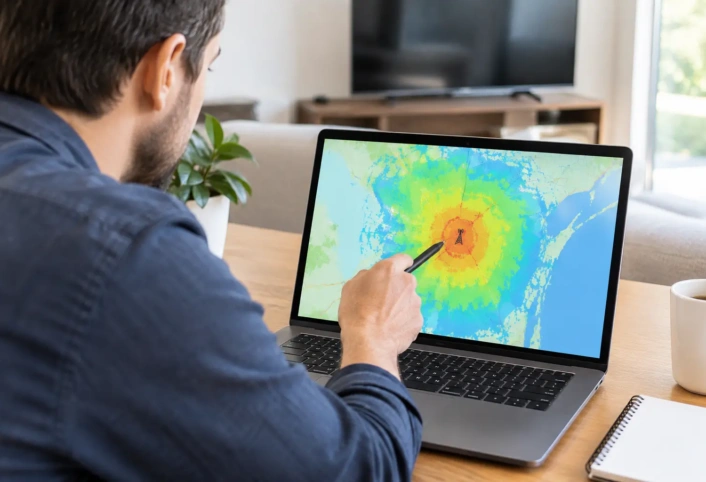
This is why “miles of range” on a retail antenna package can be misleading. Reception range is not a guarantee. It is a best-case claim that does not account for the route between your home and the transmission towers. A professional signal assessment looks at the channels available at your address, their signal direction, their broadcast bands, and the obstructions that may affect performance.
Think about the channels that matter most before choosing equipment. If local network affiliates, weather coverage, live sports, and major events are your priority, the goal is to build around those stations first. There may be additional channels available, but a smart plan focuses on the programming your household will actually watch.
Choose the Right Antenna Location
Placement is often more important than antenna size. An antenna needs the clearest practical path toward local transmission towers. For many homes, that means an outdoor installation mounted high enough to reduce interference from nearby obstacles.
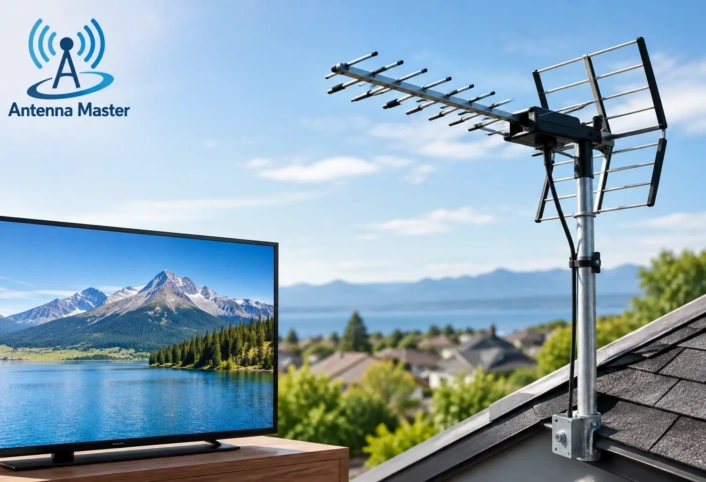
Outdoor antennas generally offer the strongest opportunity for stable reception because they are outside the walls, insulation, wiring, and metal components that can interfere with broadcast signals. A roof mount, eave mount, or other professionally selected exterior location can make a meaningful difference.
Attic installations can be a reasonable option when an exterior installation is not preferred or practical. The trade-off is that roofing materials, radiant barriers, ductwork, and structural elements may reduce signal strength. An attic antenna that works during a quick test may still struggle with weaker channels or shifting reception conditions.
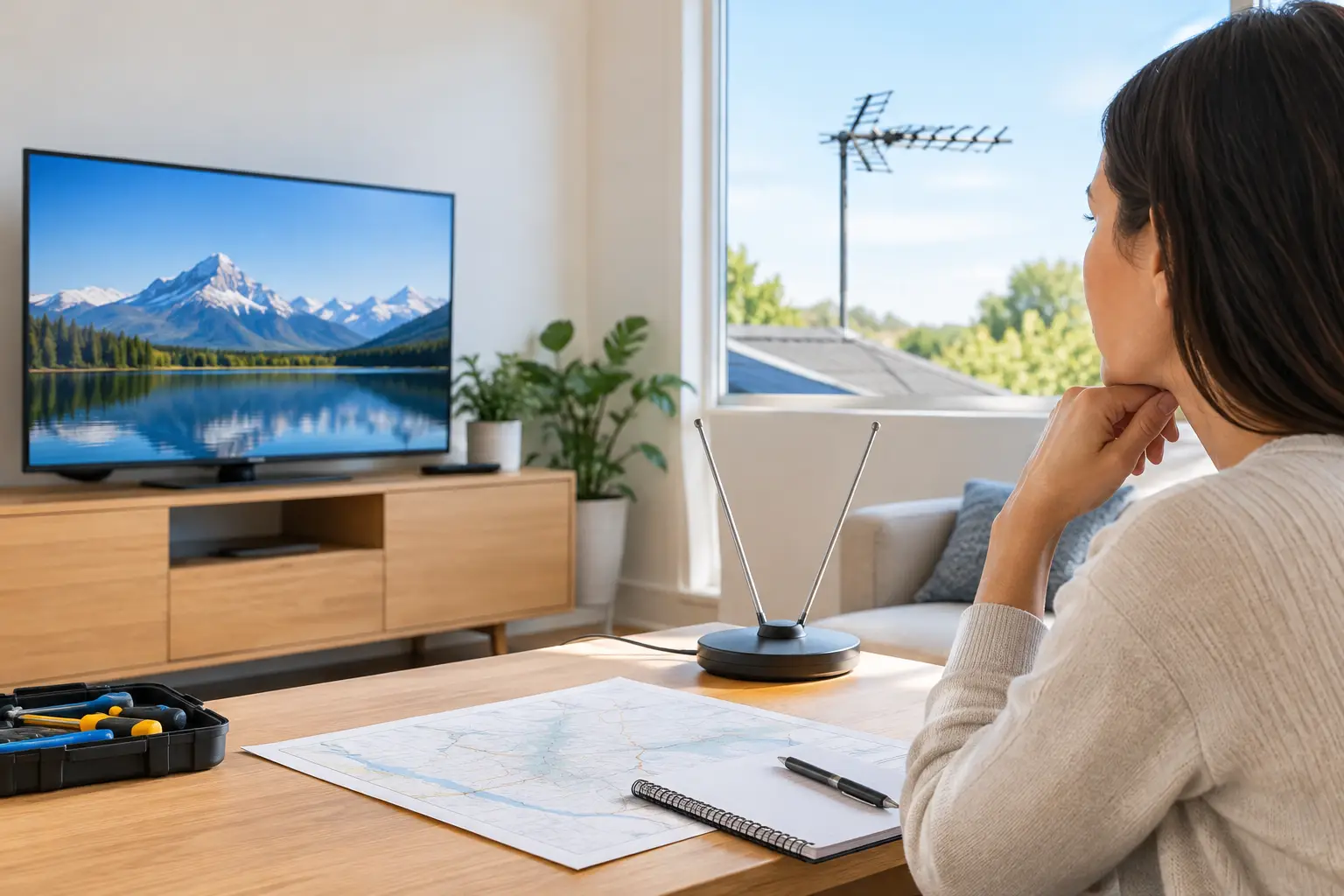
Indoor antennas are usually best treated as a simple first attempt for homes with strong nearby signals and a single TV. They can be convenient, but they are more vulnerable to interference from walls, electronics, moving people, and changing placement. If you want consistent reception across several rooms, an indoor antenna is rarely the strongest long-term plan.
In Miami-Dade, Broward, and Monroe County, outdoor installations also need to account for local weather conditions. Hardware, mounting methods, cable routing, and grounding should be chosen with wind, moisture, and coastal exposure in mind. A clean installation is not just about appearance. It helps protect system reliability.
Match the Antenna to the Signals You Need
There is no one antenna that is right for every home. The best choice depends on signal strength, tower direction, and the broadcast frequencies used by the stations you want.
Directional antennas concentrate reception in a particular direction. They are useful when desired stations are clustered in a similar area and your home needs extra focus to receive them. Multi-directional antennas can receive signals from more than one direction, which may help when towers are spread apart. The trade-off is that a wider reception pattern may not provide the same gain on weak signals as a focused directional model.
It is also wise to plan for both VHF and UHF reception. Many local stations broadcast on UHF, but not all of them do. Choosing an antenna based only on its size or advertising language can leave out channels that use a different band. A complete signal review helps ensure the antenna supports the stations your household expects to receive.
Avoid assuming an amplifier will fix a poor antenna choice or bad placement. Amplifiers can help compensate for signal loss in certain situations, especially with long cable runs or multiple TVs. But they also amplify noise and can overload a system in strong-signal areas. The antenna should capture a clean signal first. Amplification should be added only when the system calls for it.
Plan for Every TV Before Installation
A single television connected directly to an antenna is simple. A whole-home setup requires more planning. The signal may need to travel through existing coaxial wiring, splitters, wall plates, and multiple cable runs before it reaches each television.
Each split reduces available signal strength. A setup that works perfectly on one TV may become unreliable when divided among three or four rooms. Old splitters, damaged coaxial cable, loose connectors, and unused cable branches can also create signal loss or interference.
Before installation, decide which TVs should receive antenna channels and whether those rooms need direct access to live local programming. This is also the time to identify any smart TVs, DVRs, or streaming devices that will be part of your cord-cutting setup. An antenna provides broadcast channels, while streaming services and apps can fill in other viewing needs. Planning both sides of that experience keeps the transition simple for the household.
A technician can test existing wiring and determine whether it is worth using. In some homes, the best result comes from updating a portion of the distribution system rather than trying to work around aging components. The goal is not to add equipment for its own sake. It is to deliver a clean, stable signal where you plan to watch.
Do Not Overlook Grounding and Cable Routing
Antenna systems involve more than the antenna itself. Exterior equipment should be properly grounded according to applicable electrical and safety requirements. Grounding helps manage electrical risk and is an essential part of a professionally installed system.
Cable routing also deserves attention. The path from the antenna to your television equipment should be as direct and protected as practical. Excessive cable length, sharp bends, exposed connections, and poorly sealed entry points can affect performance and create avoidable maintenance issues.
A good installation respects the home. Cables should be secured neatly, exterior penetrations should be sealed appropriately, and equipment should be mounted in locations that balance reception with visual impact. The finished system should feel like part of the home, not a temporary workaround.
Test, Scan, and Set Expectations
After installation, each television needs a channel scan to recognize available over-the-air stations. This step sounds basic, but it should be repeated whenever equipment changes, a TV is moved, or reception conditions shift.
Keep expectations realistic. Broadcast reception can vary by channel because every station may transmit from a different location, at a different power level, or on a different frequency. Weather is not usually the main cause of everyday reception problems, but severe conditions, temporary transmission issues, or changes around the property can affect marginal signals.
The right system is designed for dependable performance, not for a promise that every possible channel will appear perfectly at every moment. That distinction matters. A professional plan identifies the strongest practical setup for your address and explains where trade-offs may exist before equipment is installed.
When Professional Planning Makes Sense
DIY can work in a straightforward, strong-signal location with one television. Professional planning becomes especially valuable when you want to serve multiple TVs, have inconsistent reception, need an exterior installation, or are unsure which antenna type fits your home.
A trained technician can evaluate reception conditions, select suitable equipment, install and ground the system correctly, connect it to your home wiring, and confirm channel reception at the television. Antenna Master approaches the project as a home television solution, not just an antenna mounted on a roof.
The best next step is simple: start with the channels you want to keep and the rooms where you want to watch them. With a plan built around your home rather than a generic package, cutting the cord can feel less like a technical experiment and more like a practical upgrade to the way you watch TV.