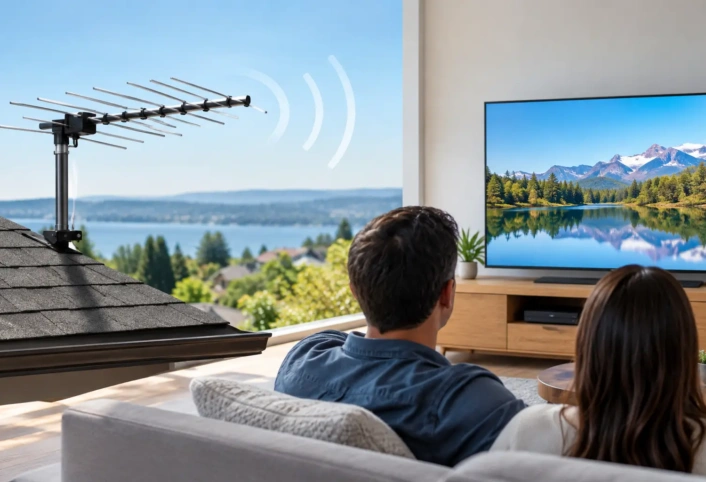
A great antenna can still deliver a disappointing picture if the wiring behind it is poorly planned. Antenna wiring installation is what carries the signal from the antenna to the televisions you actually watch, and it has a major effect on channel reliability, picture quality, and how easily your system can grow with your household.
For homeowners cutting the cord, the goal is simple: dependable local HD channels without turning the attic, roofline, or living room into a tangle of loose cable and guesswork. A professionally designed system gives every connection a purpose, protects the signal along the way, and makes everyday television easier to enjoy.
Antenna Wiring Installation Starts With the Signal
Wiring should never be treated as an afterthought. Before a technician runs a single cable, they need to understand what signals are available at the property, where the antenna can receive them best, and how many TVs need service.
A location that looks convenient is not always the best location for reception. Roof height, nearby buildings, trees, construction materials, and the direction of local broadcast towers can all affect results. In South Florida, wind, heavy rain, salt air near the coast, and intense sun also make proper exterior materials and secure cable routing especially important.
Once the antenna location is chosen, the wiring plan follows the shortest sensible route to the home’s central distribution point or to each television. Shorter cable runs generally preserve more signal, but the shortest path is not always the cleanest or safest. A good installation balances signal performance with a neat appearance, weather protection, and access for future service.
The Right Cable Makes a Difference
Most modern over-the-air TV systems use RG6 coaxial cable. It is designed to carry broadcast signals with less loss than older, thinner cable types and is a dependable choice for residential antenna work. Cable that is old, damaged, kinked, or poorly connected can weaken an otherwise strong signal before it reaches the TV.
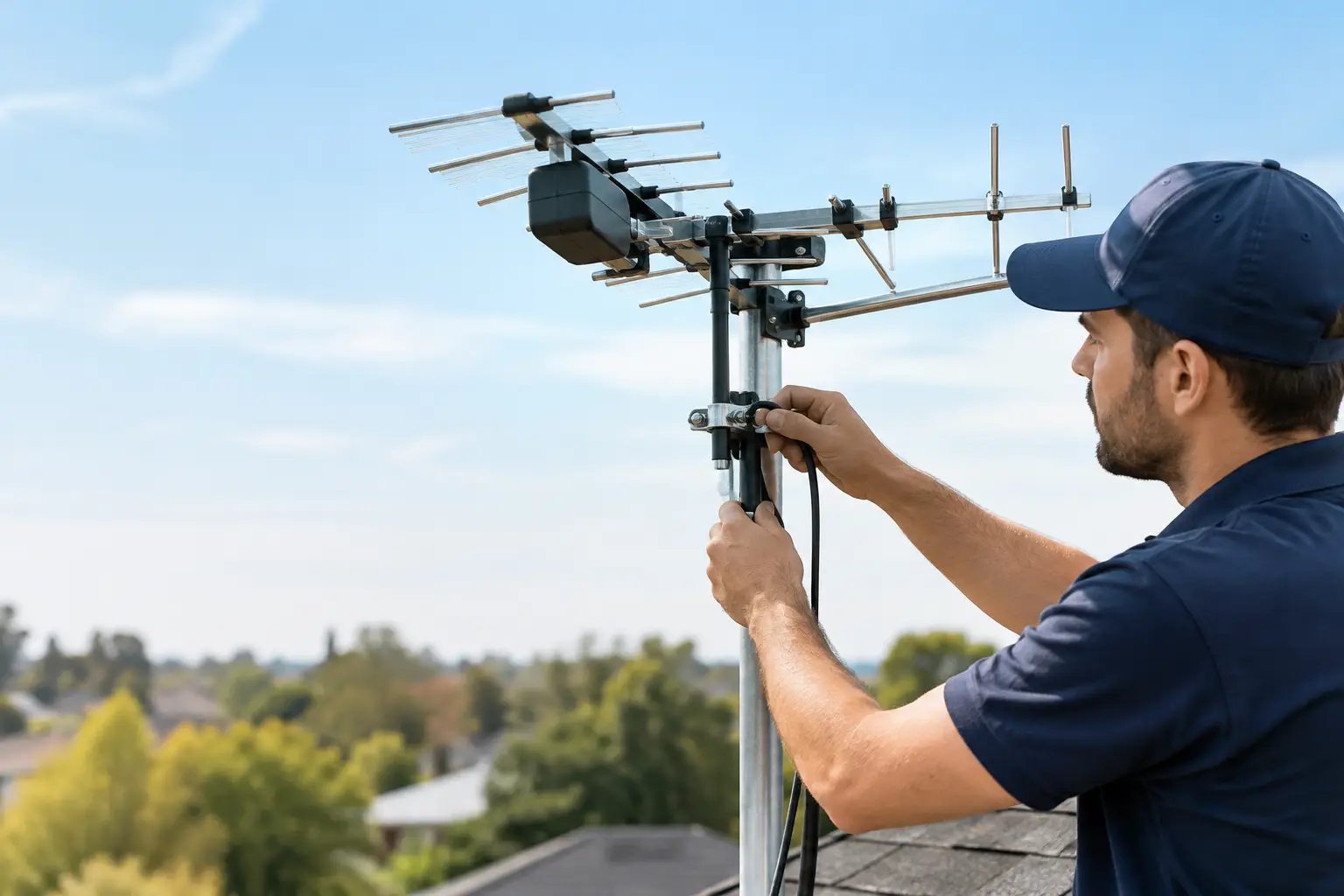
The connection points matter just as much as the cable itself. Quality compression fittings create a secure connection and help keep moisture out. That is particularly valuable outdoors, where a small amount of water intrusion can lead to corrosion, intermittent reception, and frustrating channel dropouts.
Cable should be supported along its route instead of hanging loosely or being pulled tight around sharp corners. A clean path protects the wire from wear and makes it easier to identify later if a service need arises. It also keeps the installation looking like part of the home, not a temporary project that never got finished.
Reusing Existing Cable: Sometimes It Works, Sometimes It Does Not
Many homes already have coaxial wiring from a previous cable or satellite service. Reusing it can be useful, but it should be tested before it becomes part of an antenna system. A cable run hidden in a wall may be in excellent condition, while an exterior line may have weather damage or connectors that were never intended for long-term exposure.
Satellite systems can also include components that are unnecessary for antenna reception. Certain splitters, amplifiers, or switches may block broadcast signals or reduce performance. A technician evaluates what can be retained, what should be bypassed, and where a new run will create a more reliable result.
Splitting One Antenna Signal to Multiple TVs
Connecting an antenna to one television is relatively straightforward. Serving several TVs requires more planning because every splitter divides the available signal. That does not mean a multi-TV system is a bad idea. It means the equipment and layout need to match the home.
A properly selected splitter sends the signal where it is needed while limiting unnecessary loss. The number of outputs should match the number of active television locations whenever possible. Adding unused splitter ports or chaining several splitters together can reduce signal strength without adding any benefit.
If signal levels are low after the antenna is installed or after they are divided among multiple TVs, an amplifier may help. But amplification is not a cure for every reception problem. It can boost noise along with the desired signal, and a poorly placed amplifier can make a weak setup less predictable. The best first step is always proper antenna placement, quality cable, and an efficient wiring route.
This is one reason professional installation is valuable. The system should be designed around the signal available at your address, not around a one-size-fits-all box from a retail shelf.
Grounding and Weather Protection Are Part of the Job
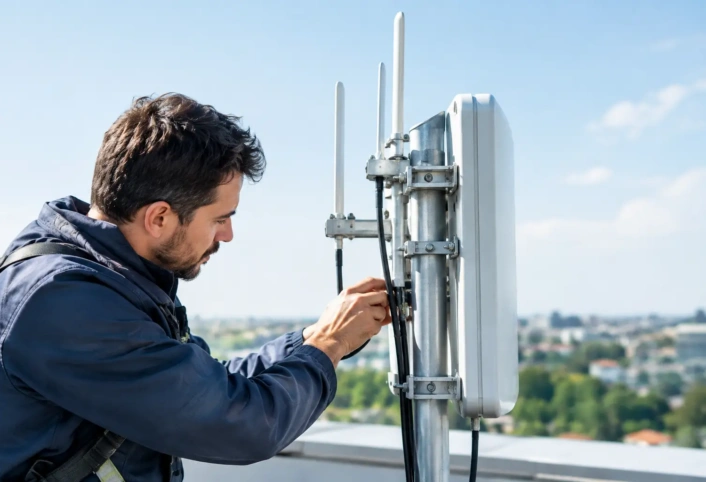
An outdoor antenna system needs more than an antenna and a cable. Proper grounding and bonding help manage electrical safety considerations and protect the equipment from electrical surges. The exact approach depends on the property and local requirements, which is why this work should be handled carefully rather than improvised.
Outdoor connections should also be protected from moisture. Weather-resistant fittings, drip loops, and correctly sealed entry points help prevent water from traveling along the cable and into the home. These details are easy to overlook, but they are often what separates a system that works well at first from one that stays dependable through changing weather.
A neat cable entry also matters inside the home. The point where wiring enters should be sealed and routed cleanly, without creating gaps that invite moisture or pests. The objective is a finished installation that performs well and respects the home.
What Happens at Each Television
At the TV, the antenna feed connects directly to the television’s antenna input or to a compatible tuner device. Modern TVs usually include a digital tuner, but settings still need attention. The TV must be switched to antenna or air input, then scanned for available channels.
Channel scanning is not a one-time technical chore to rush through. A technician should confirm that the expected local stations are coming in reliably at each connected TV. If a channel is weak, the solution may involve adjusting the antenna, refining the wiring path, or evaluating the distribution equipment. Simply rescanning the TV repeatedly will not solve a signal issue upstream.
For households with streaming devices, an antenna system fits naturally alongside internet-based entertainment. The antenna handles local news, network programming, live events, and other broadcast channels, while streaming covers the services each household chooses to keep. You get more control over how you watch without giving up the local channels that matter most.
Common Wiring Mistakes That Cause Reception Problems
Reception complaints are often blamed on the antenna itself, even when the wiring is the real issue. Loose connectors can create intermittent picture breakup. Low-grade splitters can reduce useful signal. Exterior cable with cracked insulation can let in moisture. Long, unnecessary cable runs can weaken reception before it reaches the television.
Another common problem is trying to feed several rooms from an indoor antenna placed wherever it happens to fit. Indoor antennas can work well in the right location, especially close to broadcast towers, but their results are more sensitive to walls, electronics, and placement changes. If dependable service across multiple TVs is the goal, an outdoor or attic-mounted solution with purpose-built wiring is often the stronger choice.
The right answer still depends on the property. Some homes need only a direct run to one TV. Others need a professionally mounted antenna, grounded exterior wiring, a distribution point, and carefully selected equipment for several rooms. A site evaluation replaces assumptions with a plan that fits the home.
A Cleaner Path to Better Local TV
Antenna Master approaches antenna systems as a complete reception solution, not just an antenna attached to a roof. Trained technicians assess signal conditions, select an appropriate placement, route the cable with care, configure connected TVs, and verify that the system is working as intended.
That support matters when you want to cut the cord without sacrificing dependable access to local HD television. Instead of spending weekends testing connectors, moving antennas from room to room, and wondering why one TV works while another does not, you can have a system designed around how your household watches.
The best antenna wiring installation is the one you barely have to think about after it is complete. Your local channels appear when you turn on the TV, the cable runs stay protected and unobtrusive, and your home is ready for the next game, breaking-news alert, or family movie night.