A family room TV is only part of the picture. If you also want local news in the kitchen, network shows in a bedroom, and live sports in another room, the question becomes practical fast: can one antenna feed TVs throughout a house? In many homes, yes. The right antenna system can deliver over-the-air channels to multiple televisions without placing a separate antenna in every room.
The key is not simply adding a splitter to an antenna cable. A reliable multi-TV setup depends on available signal strength, antenna placement, cable condition, the number of TVs, and the equipment used to distribute the signal. When those pieces work together, one professionally installed antenna can become a dependable source of free local HD programming across your home.
Can One Antenna Feed TVs Reliably?
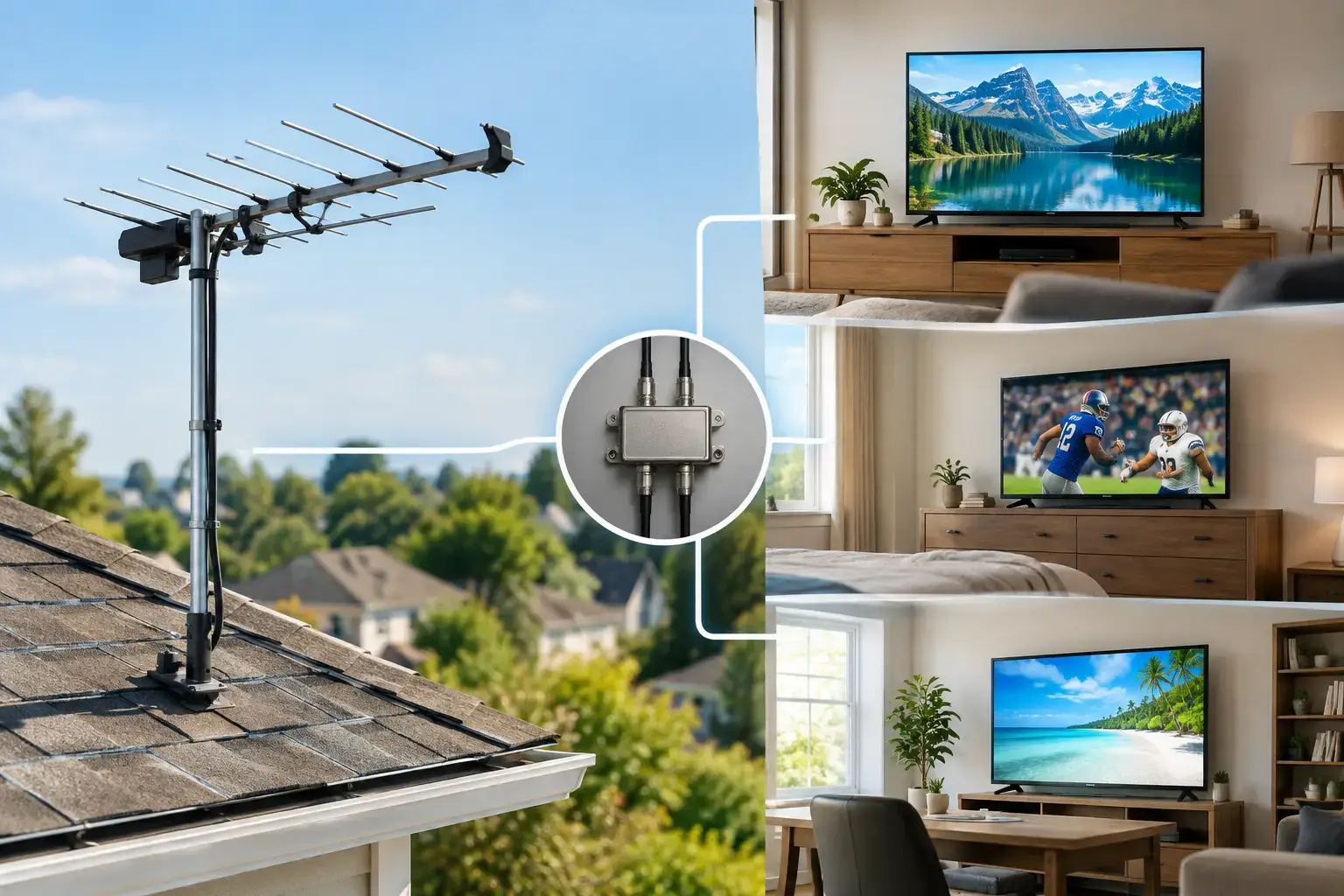
One antenna can feed two, three, four, or more TVs, provided the incoming signal is strong enough and the distribution system is designed for the home. Each television needs its own tuner, whether that tuner is built into the TV or part of an external device. The antenna supplies the broadcast signal, while each TV independently selects the channel it wants to watch.
That means one person can watch a local football game in the living room while someone else watches the evening news in a bedroom. You do not need every TV on the same channel, and you do not need a separate antenna for each set.
What changes as you add TVs is signal level. An antenna receives a limited amount of signal. Splitting that signal among several cable runs reduces the amount reaching each television. A strong system may handle several TVs easily. A marginal signal that looks fine on one TV may become unreliable after a splitter is added.
What Makes a Multi-TV Antenna System Work
A good antenna installation begins at the antenna, not at the splitter. The antenna must be matched to the local broadcast environment and installed where it can receive usable signals from the stations you want. Height, direction, nearby buildings, trees, roof materials, and local interference can all affect reception.
In South Florida, for example, a system may need to account for a mix of station locations, dense neighborhoods, coastal weather, and long cable paths through larger homes. There is no universal antenna or one-size-fits-all placement that guarantees the same results everywhere.
Once the antenna receives a healthy signal, the distribution path matters just as much. Coaxial cable carries the signal from the antenna to each TV location. Older, damaged, poorly terminated, or unnecessary cable runs can introduce signal loss and interference. A professional installation identifies which existing wiring can be used and where new, properly routed cable will provide a cleaner result.
Splitters Divide the Signal
A splitter takes one incoming antenna line and divides it into two or more outgoing lines. This is often all a small, strong-signal installation needs. However, every split reduces signal strength.
For instance, a two-way splitter sends part of the signal to each of two TVs. A four-way splitter divides it further. The more outputs used, the more important it becomes to begin with solid reception and quality components. An unused splitter port should also be properly terminated to help prevent unwanted interference from entering the system.
Cheap splitters are a common source of frustration. They may be designed for basic cable use, have poor shielding, or introduce more loss than expected. A splitter built for over-the-air television frequencies and installed correctly is a small detail that can make a visible difference.
Distribution Amplifiers Have a Purpose
If signal loss from multiple TVs or long cable runs is the problem, a distribution amplifier may help. This device is designed to compensate for loss while sending the antenna signal to several locations.
An amplifier is not a cure for weak reception at the antenna. It cannot create channels that the antenna does not receive well in the first place. In fact, using the wrong amplifier, or adding one where it is not needed, can overload the system and make reception worse.
The best use of amplification comes after evaluating the signal at the antenna and the demands of the wiring layout. It should solve a specific distribution issue rather than act as a guess.
How Many TVs Can One Antenna Support?
There is no fixed answer because every home is different. A well-positioned antenna with strong local signals may support several televisions through a properly designed distribution system. Another home may need extra attention even for two TVs because of distance from broadcast towers, difficult terrain, building materials, or aging wiring.
The number of TVs is only one factor. Cable length matters too. A TV located close to the antenna connection may receive a stronger signal than one at the far end of the house. Every wall plate, connector, coupler, splitter, and cable section adds a little loss or potential for trouble.
For that reason, the best question is not simply, “How many TVs can one antenna feed?” It is, “What does this home need to provide stable reception at every TV location?” A site-specific evaluation gives a much clearer answer than a box-store antenna label.
Common Problems When Feeding Multiple TVs
When one TV works but another does not, the antenna is not always the problem. Often, the issue is in the distribution path. A loose connector, an outdated splitter, a damaged cable, or a poor wall connection can affect one room without affecting the others.
Channel differences can also be confusing. Some broadcast signals travel farther or penetrate obstacles better than others. A television may receive most channels clearly while struggling with one particular station. This does not automatically mean the TV needs a new antenna. It may point to antenna direction, signal strength, or a channel-specific reception challenge.
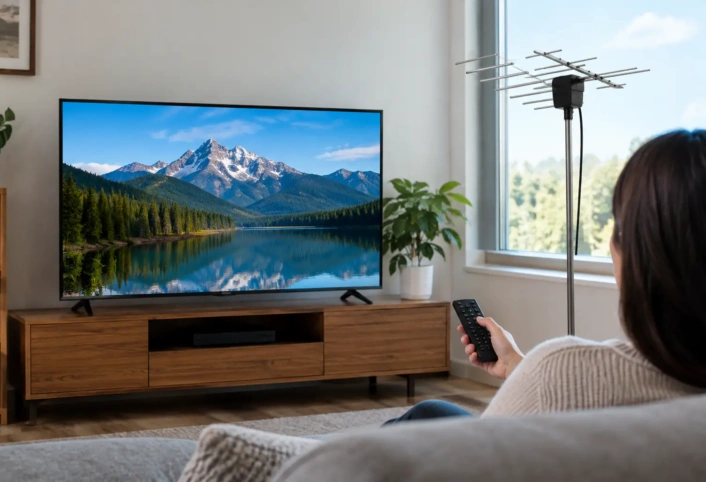
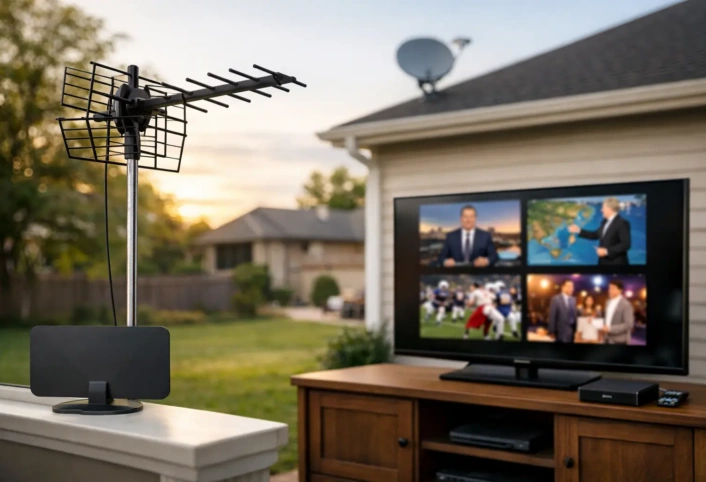
Another common issue is relying on indoor antennas in multiple rooms. Indoor antennas can work in certain situations, but each one depends on placement within that room. Moving it a few feet can change reception. A centralized outdoor or attic antenna system, when appropriate for the property, is often a more consistent way to serve several TVs.
When a Professional Installation Helps
A multi-TV antenna system becomes more valuable when it is built around the home rather than assembled from random parts. A trained technician can evaluate likely signal availability, choose appropriate equipment, identify the best antenna location, and configure the distribution system for the number of televisions you plan to use.
That approach also avoids unnecessary equipment. Some homes do not need an amplifier. Others may need a distribution amplifier, new cable runs, or a different antenna position to get dependable results. The goal is clear local HD channels where you want to watch them, not a pile of accessories.
Antenna Master helps homeowners turn cord-cutting plans into working TV systems, from antenna selection through multi-room setup. The focus is on making local broadcast television easy to use after installation, whether you are serving one main TV or several rooms.
A Better Way to Plan Your Setup
Before installing or upgrading an antenna system, think about the TVs you use now and the rooms you may want to serve later. It is easier to design for a future bedroom TV, patio TV, or home office connection while the distribution system is being planned than to rebuild it after the fact.
Also consider how your household watches television. If live local channels, major network programming, weather coverage, and sports are part of the weekly routine, a reliable whole-home antenna setup can reduce dependence on pay-TV service without forcing everyone into the same viewing schedule.
One antenna can absolutely serve multiple TVs. The lasting results come from proper signal reception, quality wiring, and distribution equipment chosen for your home. Start with the rooms that matter most, and build a system that keeps local television available wherever your household gathers.