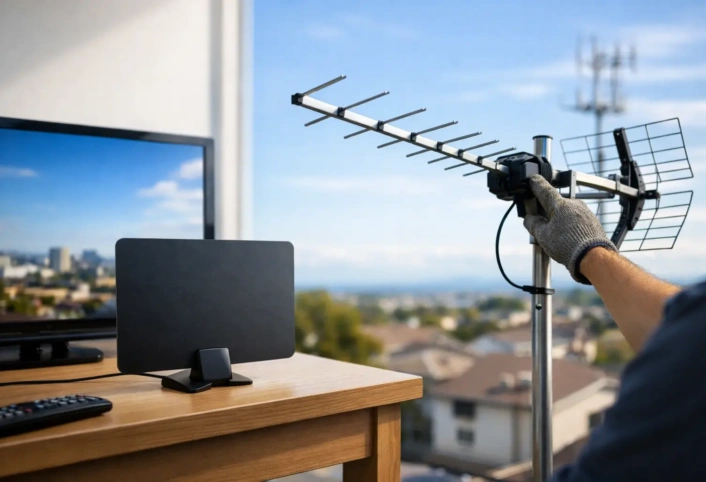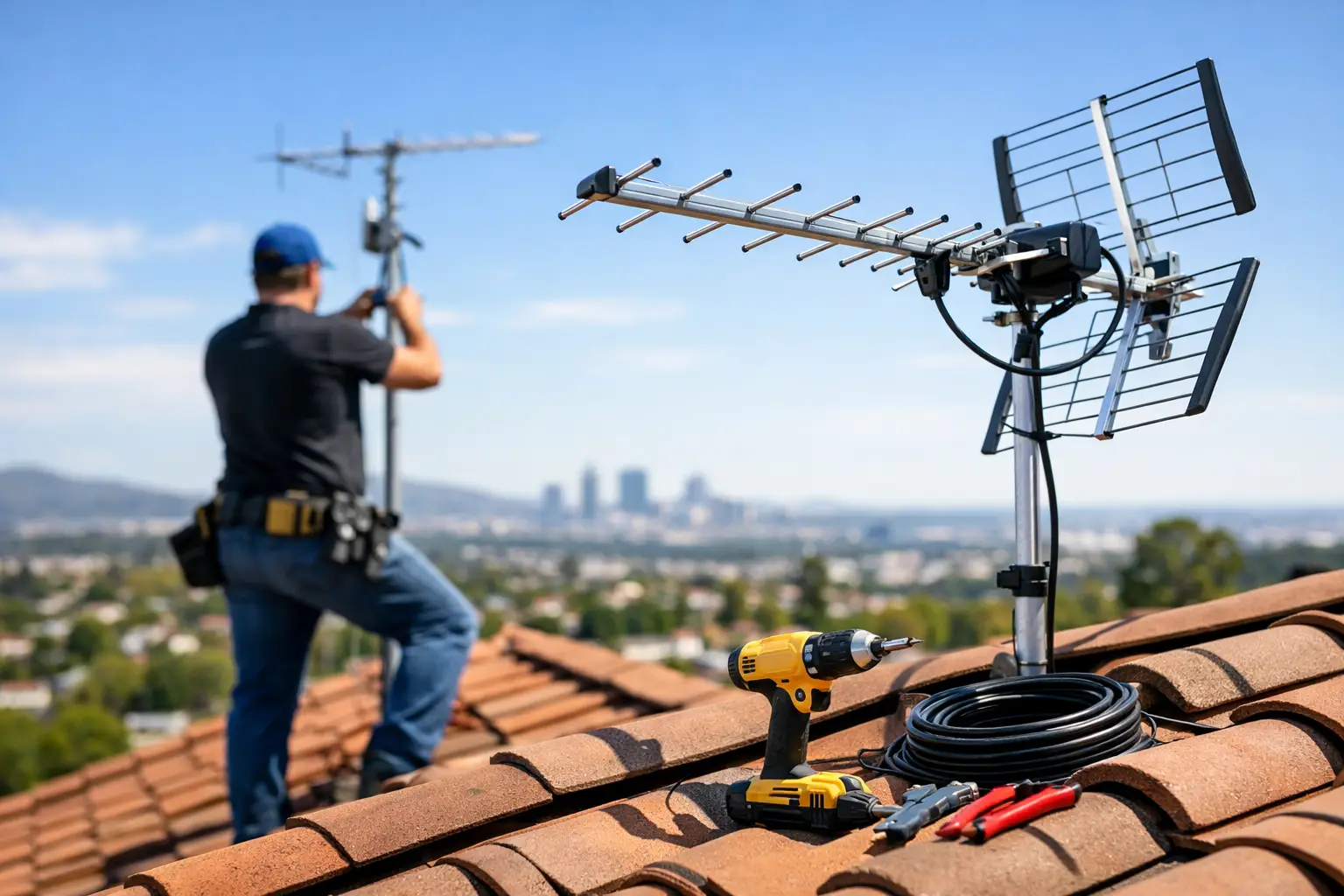
A roof-mounted antenna can replace a monthly cable bill with free local HD channels, but the upfront price depends on much more than the antenna itself. Your tv antenna installation cost reflects the signal conditions around your home, the safest mounting location, the number of TVs you want to serve, and the work needed to deliver a dependable picture.
For homeowners who want local news, live sports, network shows, and weather without another long-term TV contract, professional installation is often the part that turns cord-cutting from a project into a reliable home upgrade.
What Is the Average TV Antenna Installation Cost?
Most professionally installed residential antenna systems fall between $250 and $900, with more complex projects reaching $1,500 or more. That range is broad because no two homes receive broadcast signals in exactly the same way.
A straightforward installation may involve a quality outdoor antenna, a secure mount, basic cabling, grounding, and setup for one television. A higher-cost project may require a taller mast to clear nearby trees, difficult roof access, a signal amplifier, new coaxial cable runs, distribution to several rooms, or troubleshooting existing wiring.
A customized estimate is more useful than a one-size-fits-all price because it accounts for the reception conditions at your address. Being closer to broadcast towers does not always mean installation is simple. Hills, dense neighborhoods, metal roofing, tall trees, and the direction of local stations can all affect the system your home needs.
What Affects TV Antenna Installation Cost?
The antenna is only one part of the job. A professional installer evaluates how every component will work together so your system has the best chance of providing consistent reception, not just a few channels on a good day.
Antenna type and signal range
An antenna designed for strong nearby signals generally costs less than a model built to receive stations from farther away. The right choice is not always the largest antenna. Oversizing an antenna can create reception issues in certain signal environments, while a smaller model may not have enough gain for a home located farther from local broadcast towers.
An installer considers the stations you want to receive, their directions, and their expected signal strength. This helps avoid paying for equipment that does not match your home.
Mounting location and roof access
Attic, wall, chimney, eave, and roof installations all involve different levels of labor. An attic antenna can be less exposed to weather, but roofing materials, insulation, radiant barriers, and ductwork can weaken signals. Outdoor mounting often delivers better reception, especially where stations are distant or blocked, but it requires safe ladder work and weather-resistant mounting.
A steep roof, a multi-story home, limited access, or the need for a taller mast can increase labor costs. These are not unnecessary add-ons. Height and placement can make the difference between stable local channels and frequent pixelation.
Number of televisions
Serving one TV is simpler than sending antenna signals throughout a home. If you want broadcast channels in the living room, bedrooms, kitchen, and outdoor space, the system may need a splitter, amplifier, or new cable runs.
Existing coaxial wiring can help keep costs lower if it is in good condition and properly routed. Older or damaged wiring, loose wall connections, and unused cable or satellite components may need to be repaired, bypassed, or replaced.
Amplifiers, splitters, and grounding
A signal amplifier is useful in some homes, particularly when cable runs are long or multiple TVs share the signal. It is not automatically the answer to weak reception. Amplifying a poor signal can also amplify interference, which is why equipment should be selected after evaluating the system rather than added by default.
Proper grounding is another essential part of an outdoor installation. It helps protect the equipment and supports a safer, code-aware antenna setup. A professional estimate should explain whether grounding, surge protection, splitters, and amplifiers are included.
Repairs and removal work
A home may have an old satellite dish, a previous antenna, or aging coaxial lines already in place. Removing old equipment, repairing a damaged cable path, or working around existing roof penetrations can add time to the installation. In some cases, usable mounts or wiring can reduce the work required. The condition of those materials matters more than simply having them there.
What Should a Professional Installation Include?
The lowest quote is not always the lowest total cost if key work is left out. Before booking, ask what is included in the installed price and whether there could be additional charges for difficult access, extra televisions, cable runs, or specialized equipment.
A complete residential installation commonly includes these parts:
- A signal and location assessment to select an appropriate antenna
- Secure mounting hardware suited to the roof, wall, chimney, or attic location
- Coaxial cable connections, grounding, and weather protection where needed
- Television channel scanning and verification of the system after installation
The final channel lineup will depend on what is broadcast in your area and what your home can receive. No responsible installer should promise every possible station before assessing the property. The goal is to build the strongest practical system for your location and viewing needs.
Is DIY Cheaper Than Professional Installation?
Buying an antenna at a retail store can cost less at the start, especially for a single indoor antenna near strong local signals. For some homeowners, that is a reasonable first step. But the equipment price does not include the time needed to test locations, route cable, mount equipment safely, ground an outdoor antenna, and diagnose reception problems.
DIY becomes less attractive when you need rooftop access, have several televisions, live far from broadcast towers, or have inconsistent reception. Returning antennas, buying amplifiers that do not solve the problem, and replacing low-quality cable can quickly narrow the initial savings.
Professional installation is not just about putting an antenna on a roof. It is about choosing the right equipment, placing it where it can perform, and configuring the system for the channels your household actually watches. That expertise can prevent the common frustration of getting a few channels indoors but missing the local stations that made cutting the cord worthwhile.
How to Get an Accurate Antenna Estimate
A useful estimate starts with a few practical details: your address, the number of TVs you want connected, whether you have existing coaxial wiring, and any reception problems you have experienced with an indoor antenna. Let the installer know which local channels matter most to your household, especially if you rely on specific network affiliates for live sports, news, or local programming.
Be clear about your priorities, too. Some homeowners want the lowest upfront price for one primary TV. Others want a whole-home system with clean cable routing and room to add televisions later. Both are valid goals, but they lead to different equipment and labor requirements.
Ask whether the estimate includes equipment, mounting, grounding, cable, setup, and post-installation testing. A transparent quote gives you a clearer picture of what you are paying for and helps you compare services fairly.
Think Beyond the Upfront Price
The best way to judge antenna value is to compare the one-time installation cost with your recurring pay-TV expense. If cable or satellite service costs $100 per month, an antenna system that lets you cancel or reduce that package may pay for itself quickly. Even if you keep a streaming subscription, free over-the-air channels can cover much of the live local programming that often keeps households tied to expensive TV bundles.
An antenna does not replace every channel or every streaming service. It does give you more control over what you pay for. You can keep the entertainment services your family uses and stop paying for a large package just to access local broadcast television.
A well-planned antenna system should feel simple once it is installed: turn on the TV, select a local channel, and enjoy clear HD programming without another monthly bill. When you are ready to cut the cord, a professional assessment from Antenna Master can help you choose a system that fits your home, your viewing habits, and your budget.