A big game is about to start, a weather alert interrupts programming, or the evening news is breaking – and your TV setup suddenly matters. In the satellite versus antenna decision, the right answer depends less on marketing promises and more on what your household actually watches, where you live, and how much control you want over your television service.
For many households, local stations, network shows, live sports, and dependable news are the programs that matter most. An over-the-air antenna can deliver those broadcasts in high definition without relying on a satellite dish or a continuing pay-TV package. Satellite TV can offer a broader channel lineup, but it also comes with a different set of equipment, service, and reception considerations.
Satellite Versus Antenna: The Core Difference
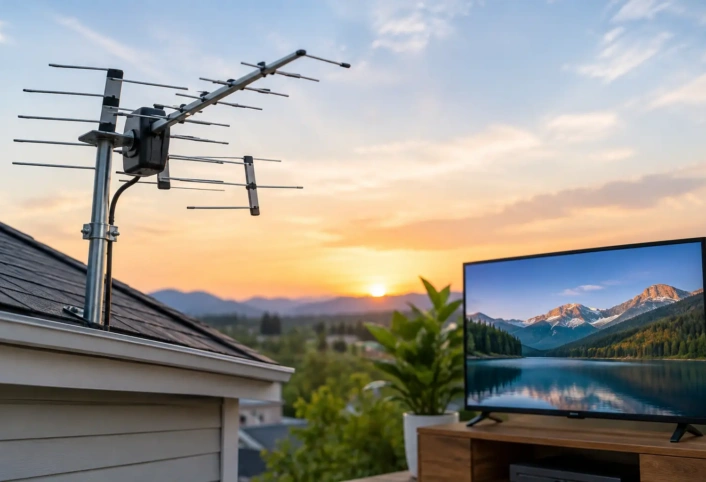
A TV antenna receives free broadcast signals transmitted by local television stations. These signals carry major network affiliates, independent stations, public television, Spanish-language programming, weather coverage, and more, depending on your location. The antenna does not create channels or rely on an internet connection. It captures signals already being broadcast through the air.
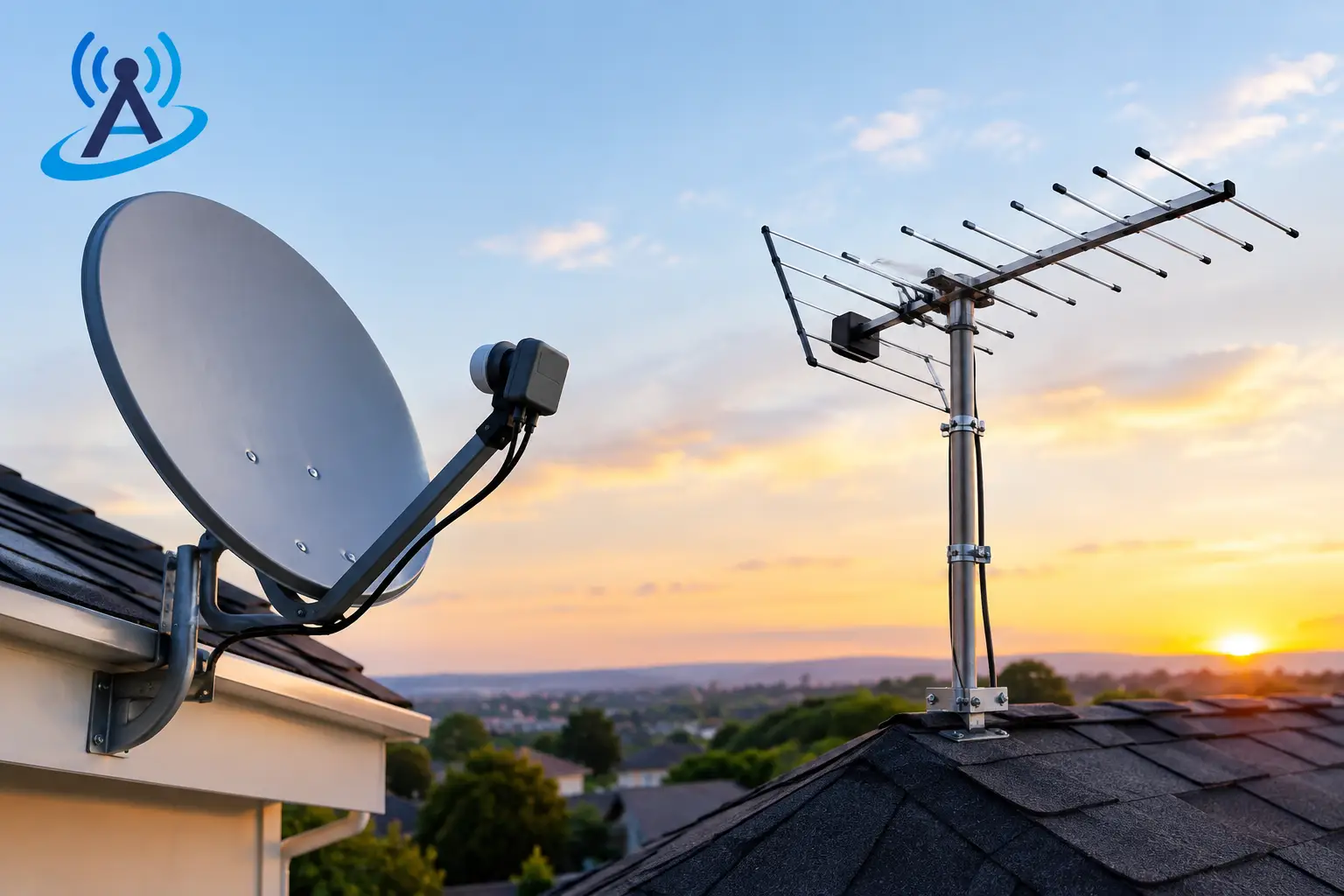
Satellite TV receives programming from satellites orbiting Earth through a dish installed at your property. That signal is processed through provider equipment and delivered as part of a subscription-based television service. It can provide channels that are not available through local broadcast towers, including specialty, movie, and national networks.
The distinction is straightforward: an antenna is built around free local broadcast TV, while satellite is built around a provider-managed package of programming. Neither option is automatically right for every home. The best fit comes down to viewing habits and reception conditions.
What You Can Watch With an Antenna
A properly designed antenna system can provide a strong lineup of local broadcast channels. In South Florida, that may include local network affiliates for ABC, CBS, NBC, FOX, PBS, The CW, and Spanish-language broadcasters, along with subchannels that carry classic TV, movies, sports, and specialty programming.
The exact channel selection varies by address. Distance from broadcast towers, building materials, roof height, nearby structures, and surrounding trees can all affect which signals are available and how consistently they come in. That is why a small indoor antenna that works well in one room may produce disappointing results in another home only a few miles away.
When reception is strong, over-the-air broadcasts can look exceptionally clear. Local stations are often transmitted in HD, and because the signal is received directly from the broadcaster, picture quality can be excellent. For viewers who care most about local news, live network television, major events, and local sports coverage, an antenna can cover a meaningful part of their viewing without adding another pay-TV dependency.
Where Satellite Has an Advantage
Satellite may make sense for viewers who want a large selection of specialty channels in one traditional TV package. If your household regularly watches niche sports networks, premium movie channels, national cable news, or specific lifestyle programming, satellite can offer a level of variety that broadcast television alone does not provide.
It can also be an option in locations where local over-the-air signals are difficult to receive. Reception challenges are not always about distance. Dense construction, high-rise surroundings, metal roofing, heavy foliage, and poor antenna placement can limit performance. A qualified antenna technician can often solve these issues, but there are homes where the available broadcast signal simply will not meet a household’s expectations.
Satellite service has its own limitations. The dish needs a clear view of the appropriate part of the sky, and severe weather can affect reception. Service also depends on provider equipment and account status. For some households, that trade-off is worthwhile for the programming selection. For others, it is exactly the kind of ongoing dependency they want to reduce.
Reception Reliability Is About Installation, Not Just Equipment
One of the biggest misunderstandings about antennas is that reception is random. In reality, reliable over-the-air TV starts with matching the equipment and installation approach to the property.
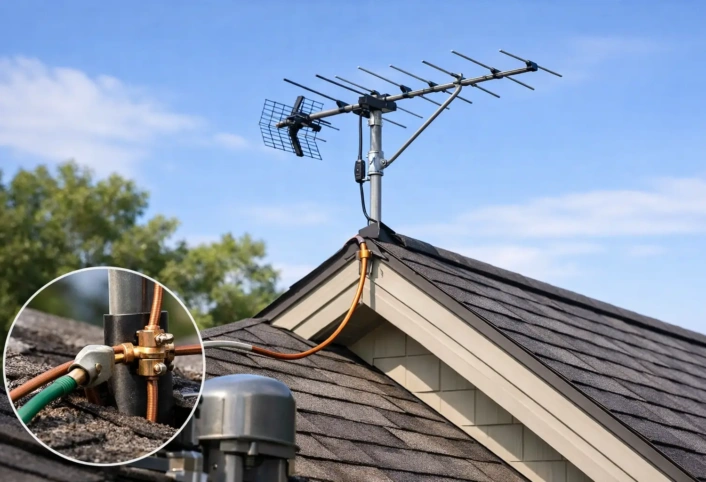
An antenna system must be selected for the local signal environment, then placed where it has the best opportunity to receive those signals. In many homes, an outdoor antenna mounted at an appropriate height performs better than a basic indoor model because walls, wiring, appliances, and building materials can weaken broadcast signals. But outdoor installation is not a one-size-fits-all answer. The antenna type, mounting location, cable path, grounding, and connection to one or more TVs all deserve attention.
Satellite equipment also requires proper installation. Dish alignment must be precise, connections must be secure, and the installation location needs a clear signal path. Both systems benefit from professional setup, but the goal is different. With an antenna, the work focuses on capturing the best available local signals. With satellite, it focuses on maintaining a reliable connection to a provider’s network.
Picture Quality and Weather Performance
Both satellite and antenna television can deliver high-definition programming, but their reception behavior differs. Antenna TV is either received clearly or begins to pixelate and drop out when the signal becomes too weak. A well-installed system with adequate signal strength is designed to minimize that problem.
Satellite signals can also be affected by heavy rain, storm conditions, and obstructions in the dish’s line of sight. South Florida weather can be intense, so this is not a minor consideration. A satellite dish may perform well most of the time, yet experience interruptions during severe conditions.
An antenna is not immune to weather, especially when winds move branches near the antenna or a connection has degraded over time. Still, broadcast towers are local, and a professionally installed antenna system can provide a dependable path to local information when it matters. That includes live weather reporting during the very conditions that can test other forms of television reception.
The Best Choice May Be Both, Not Either
Cutting the cord does not have to mean giving up every source of paid programming. Many households use an antenna as the foundation for local live TV, then add streaming services for on-demand shows, movies, or specific networks. This approach separates the programming people truly value from channels they rarely watch.
Others keep satellite service but add an antenna for a backup source of local channels. That can be especially useful for viewers who prioritize local news and network programming. The goal is not to force a single solution. It is to build a television setup that fits how your household watches.
An antenna can also serve multiple TVs when the system is designed correctly. Instead of relying on separate indoor antennas in different rooms, a professionally planned installation can distribute available broadcast channels throughout the home. The right equipment depends on the number of televisions, cable layout, signal strength, and whether any amplifiers or signal-management components are needed.
When an Antenna Is Likely the Better Fit
An antenna deserves serious consideration if you primarily watch local channels, live network shows, news, major sporting events, or broadcast programming. It is also a strong choice if you want more control over your TV setup and less reliance on a traditional pay-TV provider.
It may be less suitable as a complete standalone solution if your must-have viewing revolves around cable-only networks, extensive premium programming, or specialty channels that are not carried locally. In that case, an antenna can still be valuable as part of a combined setup rather than a full replacement.
The most useful first step is not buying the first antenna you see on a store shelf. It is understanding what signals are realistically available at your address and what installation approach gives those signals the best chance of staying clear. A trained Antenna Master technician can evaluate the property, recommend a system matched to your reception needs, and help turn local broadcast TV into a dependable part of your home entertainment setup.
Before choosing satellite, an antenna, or a combination of both, start with the programs you would miss most. That simple question usually points to the TV solution that will serve your home best.