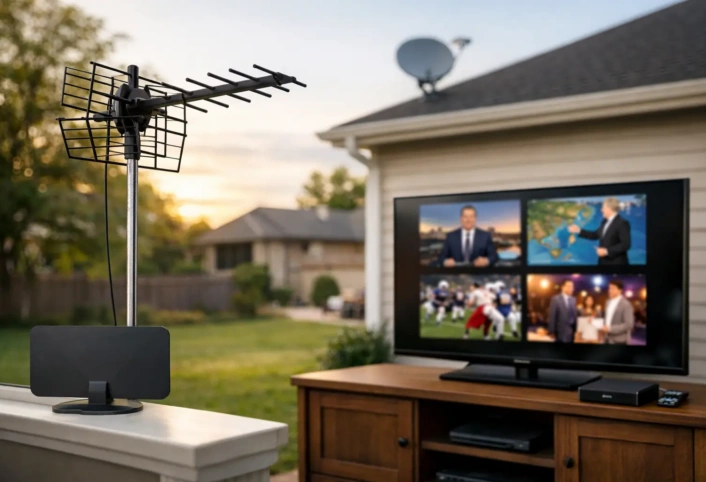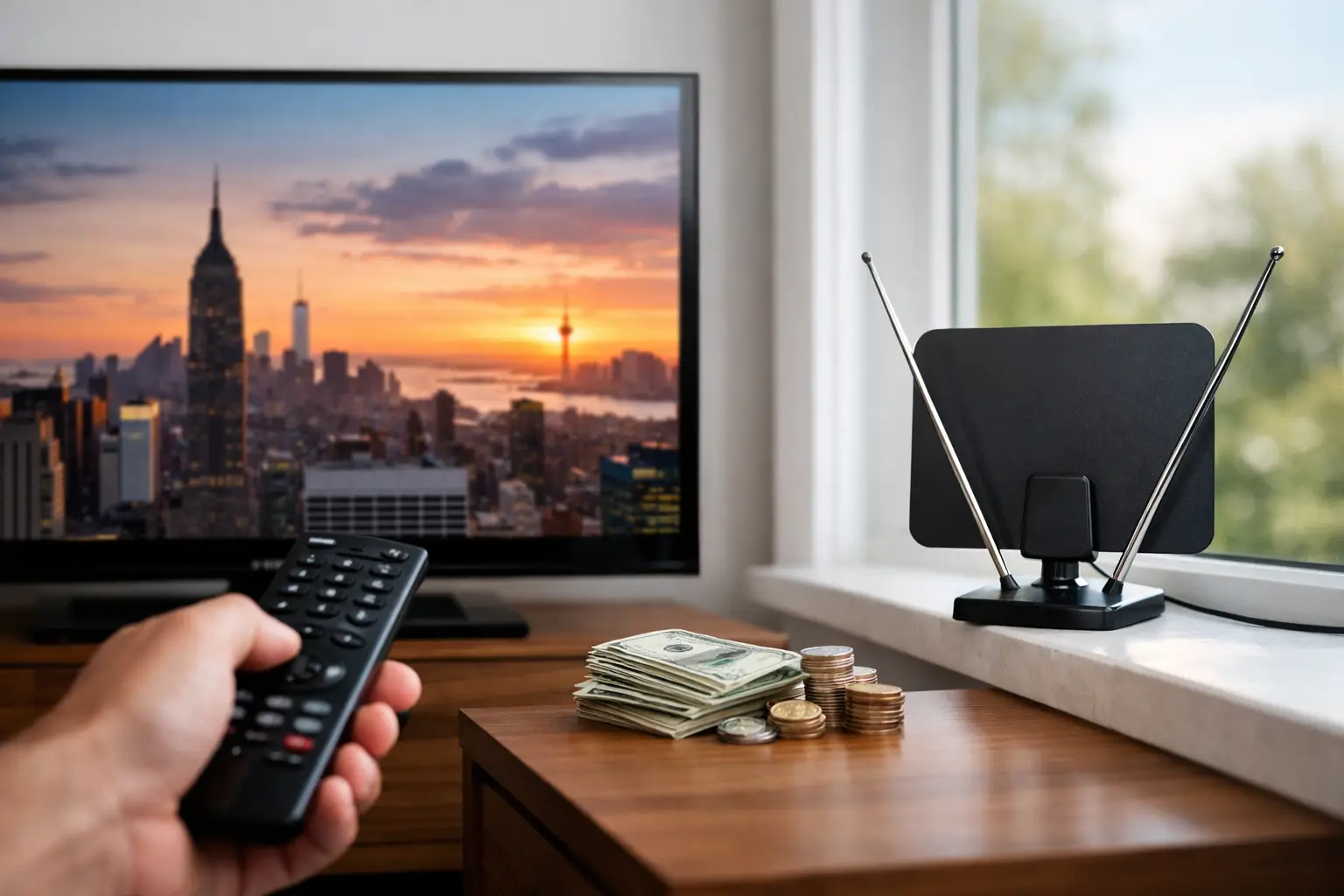
The cable bill often keeps rising even when the channels your household watches most are the same local stations: network shows, morning news, weather alerts, live events, and major sports. A local channels antenna can bring those broadcasts back to your television in high definition without another monthly TV charge.
That does not mean every home should buy the first antenna on a store shelf. Reliable over-the-air TV depends on where you live, how far you are from broadcast towers, the construction of your home, and how the antenna is installed. The right system can make cutting the cord feel simple. The wrong one can turn it into a cycle of rescanning channels and moving equipment around the room.
What a Local Channels Antenna Can Deliver
Local broadcast stations transmit their signals free over the air. With a properly installed antenna and a television with a built-in digital tuner – or a compatible tuner box – you may receive local affiliates for major networks, independent stations, public television, weather programming, and specialty subchannels.
For many households, that covers the television they would miss most after canceling cable or satellite service. Local news remains available when weather is changing quickly. Network prime-time programming is still there. Major live events that air on local broadcasters can be watched without relying on an internet connection that may buffer at the wrong moment.
Picture quality is another reason homeowners consider an antenna. Broadcast HD is delivered directly to your home rather than compressed through a cable package or internet stream. When reception is strong, the image can look exceptionally clear. The trade-off is simple: digital TV tends to look great or not come in at all. A weak signal may freeze, pixelate, or disappear, which is why system design matters.
An antenna is not a replacement for every paid service. Cable-only sports networks, premium movie channels, and certain streaming-exclusive programs still require another option. But for households paying a high monthly bill mainly to keep local TV, an antenna can reduce that bill substantially or make cancellation possible.
Why Reception Is Different From One Home to the Next
Two neighbors can have very different antenna results. One may receive dozens of channels with an attic installation, while another needs an outdoor antenna mounted higher on the home. The difference is not luck. It comes down to the path between your antenna and local broadcast towers.
Distance is a major factor. Homes closer to towers generally have more flexibility in antenna type and placement. Homes farther away may need a larger directional antenna, more height, or carefully selected equipment to receive a stable signal.
Terrain and surroundings matter too. Hills, dense trees, nearby buildings, and even seasonal foliage can weaken or block signals. In urban areas, signals can bounce off buildings and arrive from multiple directions. In rural areas, the challenge may be distance and open terrain. A professional assessment considers both the broadcast market and the property itself.
Your home can also affect performance. Metal roofs, foil-backed insulation, solar panels, brick, stucco, and low-E windows can interfere with indoor reception. An indoor antenna may work well in some homes, especially near a window facing the towers, but it is not always the dependable long-term choice. Moving an antenna a few feet can change the result, which is frustrating when a system has not been planned around the home.
Choosing the Right Antenna Setup
The best antenna is not necessarily the biggest or most expensive model. It is the one matched to your location, the channels you want, and the way you use television at home.
A small indoor antenna may be a sensible choice for a home near broadcast towers with clear signal paths. It is easy to try and requires no exterior work. Its limitations are placement and consistency. Furniture, walls, people moving through the room, and changes in weather can all affect reception.
An attic antenna is hidden from view and protected from the elements. In the right home, it can provide excellent results. However, roofing materials and insulation may reduce signal strength, so attic placement should be evaluated rather than assumed to be the answer.
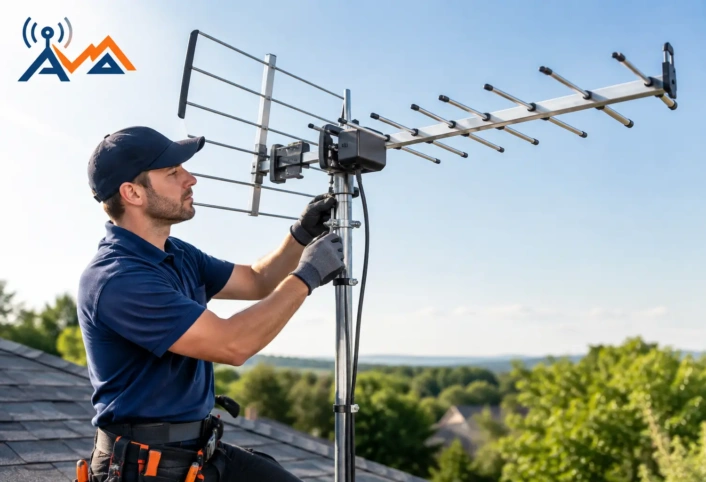
An outdoor antenna usually provides the strongest opportunity for reliable reception because it sits above more of the obstacles around the house. Proper mounting, grounding, cable routing, and weather-resistant connections are essential. This is where professional installation can prevent common issues that do not show up on a product box.
Directional antennas focus on signals coming from a particular area, making them useful when most local towers are grouped together. Multi-directional options can help when stations are spread across different directions. An amplifier may be useful for a long cable run or a weak signal, but more amplification is not automatically better. If the incoming signal is already strong, an amplifier can overload the system and create reception problems of its own.
One Antenna Can Serve More Than One TV
A single antenna system can often supply multiple televisions throughout a home. The design depends on cable runs, the number of TVs, existing wiring, and available signal strength. Splitting a signal between televisions reduces the amount of signal reaching each set, so the system must be planned for the number of locations you intend to use.
Existing coaxial wiring may be usable, which can simplify installation. In other homes, old splitters, damaged connectors, or unused cables create hidden signal loss. A technician can test the wiring, identify the useful routes, and configure the system so your family is not limited to watching local TV in only one room.
If you use streaming services alongside broadcast TV, the combination can be especially practical. The antenna handles live local programming, while streaming fills in on-demand shows and services that are not available over the air. That approach gives you more control over what you pay for each month.
Avoid the Most Common Antenna Mistakes
Many reception problems begin with an assumption that a simple channel scan tells the whole story. Scanning is necessary, but it only finds channels the television can detect from the antenna’s current location. It does not tell you whether a better placement, different antenna style, or improved connection would produce more dependable results.
Another common mistake is buying an antenna based on exaggerated mileage claims. Reception range is not a straight-line promise. A product labeled for a very long distance may still struggle if towers are behind terrain, trees, or dense building materials. It is better to choose based on real broadcast conditions than packaging language.
Homeowners should also avoid mounting equipment without considering safety and long-term durability. Outdoor antennas need secure mounting and correct grounding. Cables should be protected from weather, routed cleanly, and connected with quality fittings. A loose mount or poorly sealed connection can turn a money-saving project into a repair problem.
Finally, do not judge a system only by the number of channels it finds. The channels that matter are the ones your household actually watches, and they need to remain stable. A system that delivers dependable local networks, news, and live programming is more valuable than a channel list full of stations that break up whenever conditions change.
When Professional Installation Makes Sense
Professional help is especially valuable when you are serious about replacing paid TV service, serving multiple televisions, mounting an outdoor antenna, or solving unreliable reception. Instead of guessing at equipment and placement, you can start with a plan based on your home and local signal conditions.
Antenna Master technicians install and configure residential antenna systems with the goal of helping homeowners enjoy dependable HD broadcast television and lower monthly TV costs. The work includes more than attaching an antenna. It means selecting the right placement, checking reception, setting up the television system, and making sure the result fits the way your household watches TV.
The value is peace of mind. You should not have to climb on a roof, troubleshoot splitters, or wonder whether a missed channel is caused by the antenna, cable, or television settings. A properly designed system gives you a clearer path to cutting the cord with confidence.
Before you make another payment for channels you rarely use, consider what local broadcast TV could cover in your home. A customized antenna estimate can show you whether a better picture and a smaller monthly bill are within reach.