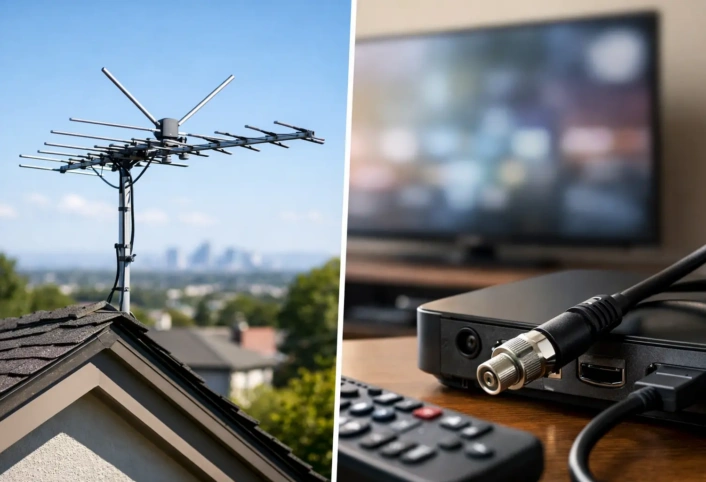
A clear picture can disappear at the worst possible time: during local news, a live game, or the season finale your family planned to watch. Before assuming over-the-air TV no longer works at your home, consider TV antenna repair. Many reception problems come from a fixable connection, damaged cable, shifted antenna, or failing amplifier – not from a lack of available broadcast channels.
For homeowners who have cut the cord, reliable antenna reception protects the savings that made the switch worthwhile. Local ABC, CBS, NBC, FOX, PBS, independent stations, and other channels are broadcast free over the air. A properly working antenna system helps you keep them in high definition without returning to an expensive cable or satellite package.
TV Antenna Repair Starts With the Right Diagnosis
Pixelation, frozen images, audio dropouts, and missing channels can all point to an antenna issue, but they do not always have the same cause. One weak station may be affected by its location or broadcast frequency, while every channel dropping out usually suggests a system-wide problem. The right repair begins with determining where the signal is being lost.
Start with the simple checks inside the home. Make sure the television is set to Antenna or Air rather than Cable, and run a channel scan if channels have disappeared after a station made technical changes. Check that the coaxial cable is firmly connected to the TV, wall plate, and any splitter or amplifier. A loose fitting can create intermittent reception that looks far more serious than it is.
If these checks do not solve the problem, avoid guessing with a new retail antenna. Replacing equipment without testing the signal path can add cost while leaving the real issue in place. A technician can measure the available signal, inspect the existing system, and identify whether the antenna, wiring, amplifier, splitter, or TV connection needs attention.
Signs Your Antenna System Needs Service
Reception changes after high winds, heavy rain, roof work, or a nearby tree growing into the signal path often point to an outdoor equipment issue. You may also need service when channels work in one room but not another, when a channel scan finds far fewer stations than it used to, or when reception gets worse whenever multiple TVs are turned on.
An antenna system that has worked reliably for years can also develop problems gradually. Sun, moisture, temperature changes, and corrosion take a toll on outdoor connections. Coaxial cable can crack, splitters can fail, and an older amplifier can introduce noise instead of improving the signal.
Common Causes of Poor Over-the-Air Reception
Outdoor antennas are exposed to conditions that indoor equipment never faces. A mounting bracket can loosen, an antenna can shift slightly out of alignment, or a cable connection can corrode. Even a small change in antenna position may affect certain channels, especially when local broadcast towers sit in different directions.
Damaged coaxial cable is another frequent culprit. Cable may be pinched by a window, chewed by pests, exposed to water, or degraded where it enters the home. Water intrusion is particularly troublesome because it can affect reception inconsistently, making the system seem fine one day and unreliable the next.
Distribution equipment inside the home deserves attention, too. A splitter divides one antenna signal among several televisions, but every split reduces available signal strength. The wrong splitter, too many unused cable runs, or a failing connection can weaken reception enough to cause picture breakup. In some homes, an amplifier helps compensate for cable length and multiple TV locations. In others, amplification is unnecessary or excessive and can make reception worse.
Signal conditions also change over time. New construction, mature trees, and changes around your property can affect the antenna’s line of sight. This does not automatically mean you need a larger antenna. It may mean the current antenna needs to be repositioned, aimed more precisely, or paired with better system components.
What Professional TV Antenna Repair Looks Like
A professional service visit should be more than swapping parts and hoping for a better picture. The technician evaluates your home’s reception conditions, checks antenna mounting and direction, tests cable runs and connections, and looks at the full path between the antenna and each television.
That process matters because antenna performance is specific to the property. The channels available at one house can differ from those available a few streets away due to terrain, building materials, elevation, and obstructions. A repair plan should reflect the stations your household wants to watch and the number of TVs that need service.
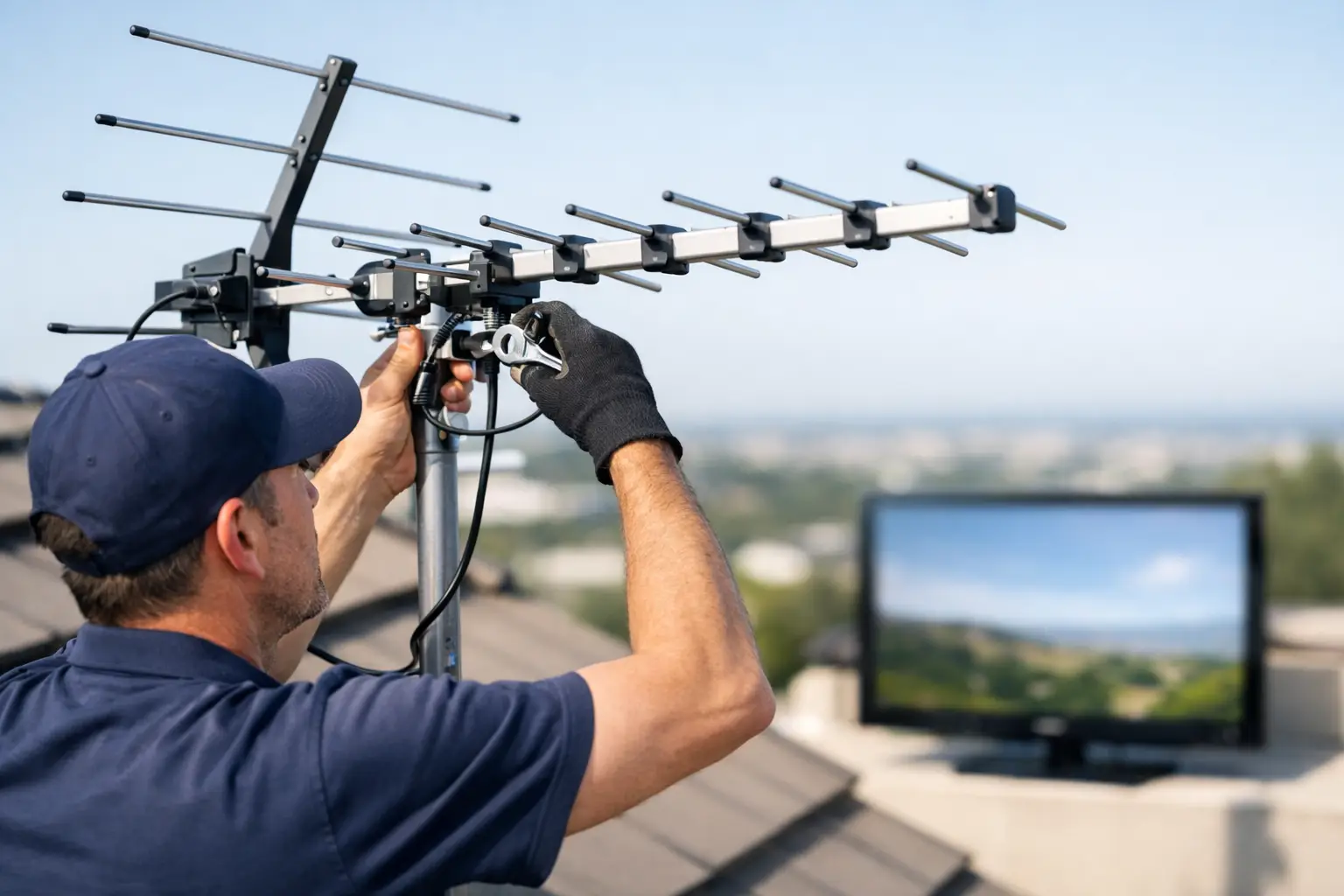
For an outdoor antenna, safe access is part of the job. Roof-mounted equipment should be inspected for secure mounting, weather-resistant connections, proper grounding, and cable routing that protects both the roof and the signal. Climbing onto a roof without the right equipment creates an unnecessary safety risk, particularly when the issue may be diagnosed from the ground and inside the home first.
After repairs are complete, the system should be tested on the televisions you actually use. This confirms that local channels are coming in clearly and that a repair has not solved reception in only one room while leaving another room with a weak signal.
Repair or Replace: Which Makes More Sense?
Repair is often the practical choice when the antenna itself is in good condition and the problem is limited to a connection, cable run, splitter, mounting adjustment, or amplifier. These targeted fixes can restore dependable reception without rebuilding the entire system.
Replacement may be the better value if the antenna is badly corroded, undersized for your location, damaged by weather, or installed before your household added more TVs. Older systems may also use components that are not well suited to current broadcast reception needs. A replacement gives you the opportunity to improve antenna placement, simplify wiring, and build a cleaner setup for the channels you watch most.
The answer depends on the condition of the system and the signal at your address. A good recommendation explains the trade-off clearly. If a modest repair will provide reliable local channels, there is no reason to replace working equipment. If repeated service calls are likely because the core system is failing, replacement can prevent more frustration and expense later.
Keep Your Cord-Cutting Setup Working Longer
Once reception is restored, a few habits can help protect it. Run a channel scan occasionally, particularly after local stations announce changes. Keep indoor cable connections snug, and avoid sharply bending or crushing coaxial cable behind furniture. If you notice reception changes after a storm, do not wait for the problem to become a full outage.
Outdoor equipment benefits from periodic inspection, especially in areas with strong wind, ice, heavy rain, or intense sun. A technician can spot loose mounts, worn weather seals, and early cable damage before those issues interrupt your TV service.
Antenna Master helps homeowners turn unreliable reception into a dependable source of free local HD television. Whether your system needs a focused repair or a fresh approach, the goal is simple: keep the channels your household relies on available without adding another monthly TV bill.
When the picture starts breaking up, treat it as a signal problem worth solving, not a reason to give up on cord-cutting. The right diagnosis can bring your local channels back and let your antenna system keep earning its place in your home.