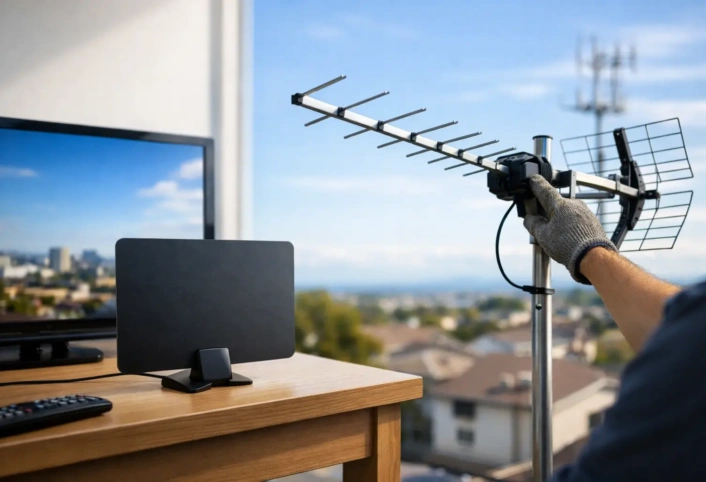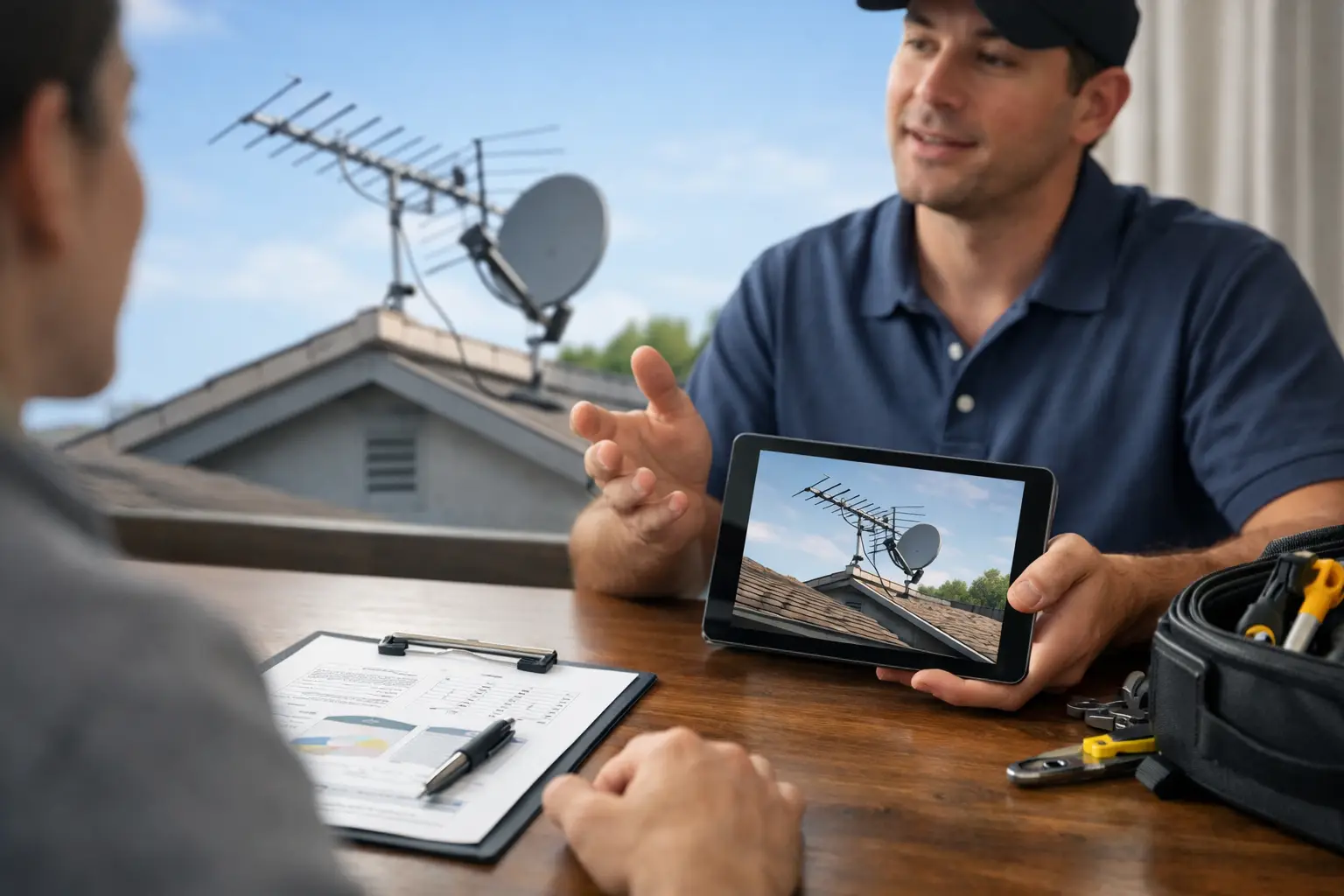
A rooftop antenna can be a smart answer to a cable bill that keeps climbing, but no two homes receive broadcast signals the same way. A free antenna installation estimate gives you a practical starting point: what local channels may be available, which antenna setup fits your home, and what it could take to cut back or cancel pay TV with confidence.
For many households, the goal is simple. Keep dependable access to local news, major network programming, live sports, weather coverage, and favorite broadcast shows without paying for hundreds of channels they rarely watch. The right antenna system can help make that happen, but selecting one based on a box at a retail store is not always enough.
What a Free Antenna Installation Estimate Should Tell You
An estimate should be more useful than a generic price range. It should help you understand the likely reception options for your address and the work required to build a system around your television needs.
A professional antenna estimate typically considers your location relative to local broadcast towers, the channels you want to receive, terrain, nearby trees and buildings, and the construction of your home. These details affect whether an indoor antenna, attic installation, outdoor antenna, or roof-mounted system makes the most sense.
It should also account for how many TVs you want to connect. Serving one television can be straightforward. Sending a reliable signal to several rooms may require using existing coaxial wiring, adding a splitter, installing an amplifier, or correcting older cable connections that were never designed for antenna service.
The result is a clearer picture of the equipment, installation approach, and expected investment. Just as important, you can find out whether an antenna is likely to deliver the programming your household values before making a decision.
Why Home Reception Is Not One-Size-Fits-All
An antenna receives free over-the-air broadcast signals, but reception is local. A neighbor may get strong results with a small indoor antenna while another home a few streets away needs a properly placed outdoor model. That difference can come down to elevation, building materials, trees, electrical interference, or the direction of nearby broadcast towers.
Distance matters, but it is not the only factor. Homes in a clear area may have access to stations farther away than expected. A home in a valley, behind dense foliage, or surrounded by tall buildings may need more careful antenna selection and placement.
This is where professional guidance saves time and frustration. Rather than guessing based on marketing claims such as “100-mile range,” a trained technician can recommend a system based on real-world signal conditions and your home’s layout. Antenna Master technicians are trained to turn those variables into a practical installation plan, not a pile of equipment you have to troubleshoot yourself.
What May Be Included in the Estimate
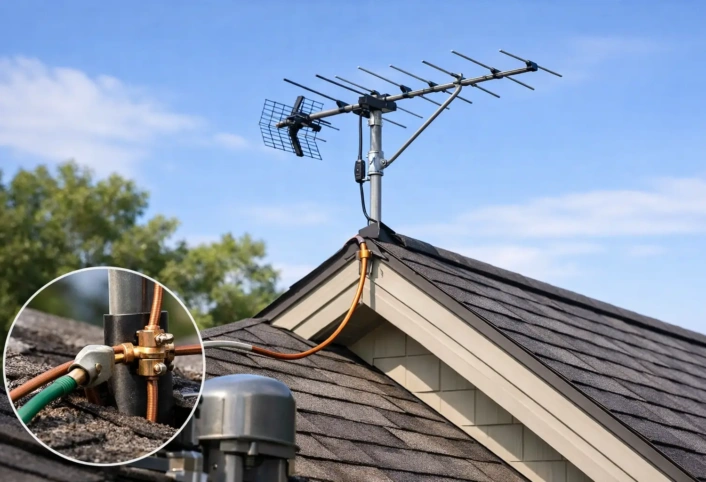
Every estimate is customized, but homeowners should expect the conversation to cover the main parts of a complete antenna system. That includes the antenna itself, the preferred installation location, mounting hardware, grounding, cable connections, and setup for the televisions you plan to use.
If your home already has coaxial cable outlets, those lines may be able to distribute antenna signals throughout the house. In other cases, old wiring is damaged, disconnected, or tied into former cable or satellite equipment that needs to be bypassed. An estimate can identify those issues before installation day.
The technician may also discuss optional equipment when it is appropriate. An amplifier can help in certain low-signal or multi-TV situations, but it is not automatically better. In a strong-signal area, adding amplification unnecessarily can cause reception problems. The same goes for larger antennas: bigger is not always the right answer when the correct antenna is properly positioned.
A useful estimate explains the recommendation in plain language. You should know what is being installed, why it is being recommended, and whether it is intended to support one TV today or multiple televisions as your needs change.
How to Prepare for Your Antenna Estimate
You do not need antenna expertise before requesting an estimate. A little preparation can make the conversation more productive, though. Think about the channels that matter most to your household. Local affiliates, PBS, independent stations, Spanish-language programming, and live sports carried on broadcast networks can all affect your priorities.
It also helps to know how many televisions you want connected and whether you currently use cable, satellite, streaming services, or a mix of all three. An antenna does not replace every paid channel or streaming subscription. It provides access to local over-the-air broadcast programming. For many families, that means they can eliminate a large cable package, keep an internet connection, and choose only the streaming services they actually use.
Be ready to mention any reception challenges you have noticed. Maybe an indoor antenna has been inconsistent, a previous satellite dish is still mounted on the roof, or certain rooms have cable outlets that do not work. These details can help shape the recommendation.
You may also want to ask about the installation location. Attic installations can be appealing because they keep equipment out of sight, but roofing materials, insulation, radiant barriers, and surrounding structures can weaken signals. Outdoor placement often provides the strongest reception, though it requires proper mounting, weather-resistant connections, and grounding. The best option depends on your property and signal conditions.
Questions Worth Asking Before You Approve a Quote
A free estimate is your chance to get straightforward answers, not to rush into a purchase. Ask what channels are realistically expected at your address and whether any desired stations may be difficult to receive consistently.
You should also ask how the system will connect to your existing TVs, whether new wiring is likely to be needed, and whether the quote includes all required mounting and grounding work. If you are planning to cancel cable or satellite, ask whether the installer will help configure each television to scan for available channels after the system is connected.
Four questions are especially useful:
- Which local channels should this system receive reliably at my home?
- Where will the antenna be installed, and why is that location recommended?
- Can my existing coaxial wiring serve all of my TVs?
- What is included in the quoted installation price, including setup and grounding?
Clear answers help you compare options based on value, not just the lowest number on a quote.
Looking Beyond the Installation Price
The cost of an antenna installation is a one-time household investment. Cable and satellite bills are recurring expenses, often with equipment fees, broadcast fees, and price increases that add up year after year. That does not mean every household should cancel every service. Some people want premium sports packages, specialty channels, or a broad selection of on-demand programming that an antenna alone cannot provide.
But for homeowners who mainly watch local stations and major network programming, an antenna can significantly reduce monthly TV costs. Pairing free broadcast television with a smaller streaming plan often gives families more control over what they pay for.
The value also comes from reliability and picture quality. Over-the-air broadcasts can deliver excellent HD picture quality without the compression sometimes associated with cable or streaming. During major local events, severe weather, or breaking news, access to local broadcast stations can be especially valuable.
Take the Next Step With Confidence
A free antenna installation estimate is not just about finding a price. It is about finding out whether your home can support a dependable, professionally installed path to free local HD television. With the right system and a clear expectation of reception, cutting the cord becomes a home improvement decision you can feel good about.
Start with the channels your family watches most, the TVs you want connected, and the monthly bill you are ready to reduce. From there, the right estimate can turn a frustrating pay-TV expense into a smarter entertainment setup.