A $150 cable bill can feel normal until you look closely at what your household actually watches. For many homeowners, the antenna vs cable decision comes down to one question: do you need hundreds of paid channels, or do you mainly want dependable local TV, network shows, live news, and major events without another monthly charge?
There is no single right answer for every home. Cable can still make sense for households that want specific cable-only networks or prefer one bundled provider. But an over-the-air antenna gives many families a practical way to keep the channels they value most while cutting a recurring bill that keeps rising.
Antenna vs Cable: The Cost Difference
The biggest difference is simple. Cable is a subscription. An antenna is equipment you buy and install once, with no monthly charge for local broadcast stations.
Cable packages often start with a promotional price, then increase after the introductory period ends. Add equipment rental fees, broadcast TV fees, regional sports fees, taxes, and premium channels, and the total can become much higher than the advertised rate. Even a basic package can cost hundreds of dollars over a year.
With a professionally installed TV antenna, the upfront cost depends on your location, the signals available nearby, the type of antenna needed, roof access, and how many televisions you want connected. After installation, local over-the-air programming is free. That can make an antenna especially appealing for homeowners who watch ABC, CBS, FOX, NBC, PBS, CW, independent stations, and local news more than cable networks.
An antenna does not have to replace every entertainment service in your home. Many households use it as the foundation for live TV, then choose one or two streaming subscriptions for on-demand shows. That approach gives you more control than paying for a large channel package you rarely use.
What Channels Can You Get With an Antenna?
An antenna receives local broadcast signals sent through the air. In many markets, that means major network affiliates, public television, local news, weather coverage, daytime programming, sitcoms, classic TV channels, and specialty digital subchannels.
The exact channel lineup depends on where you live. Distance from broadcast towers matters, but so do terrain, trees, nearby buildings, construction materials, and antenna placement. A home close to towers may receive a strong selection with a modest setup. A home farther out or surrounded by hills may require a larger outdoor antenna, careful aiming, and higher-quality components.
Cable provides a broader channel lineup, including many national cable networks, regional sports networks, movie channels, and specialty programming. If your household regularly watches channels that are not broadcast locally, cable may still be worth part of your entertainment budget.
The key is to compare your viewing habits with the channels available at your address. Do not assume an indoor antenna on a window will deliver the same results as a properly designed system. A professional evaluation helps identify what is realistically available and how to receive it reliably.
Local News and Live Network TV
For cord-cutters, local programming is often the reason an antenna makes sense. Breaking news, severe weather, election coverage, local events, morning shows, and network prime-time programming are all available over the air in many areas.
Live sports can also be a major advantage. Many high-profile games air on local broadcast networks. Availability changes by league, market, and broadcast schedule, so an antenna will not cover every game or every sports channel. Still, it can provide access to many events without requiring a full cable package.
Picture Quality: Is Antenna TV Better Than Cable?
It can be. Over-the-air broadcasts are often delivered with less compression than the same local channel carried through a cable system. On a good signal, that can produce a clean, detailed HD picture with natural motion and sharp color.
Cable picture quality is usually consistent and convenient, but providers may compress channels to fit more programming through their network. The difference is not always dramatic, and the quality you see also depends on your television, cabling, and the specific provider. But homeowners are often surprised by how good local channels look with a properly installed antenna.
A strong antenna signal is essential. Digital television generally looks excellent until the signal becomes too weak. Instead of gradually turning snowy like old analog TV, a weak digital signal may freeze, break into blocks, drop audio, or disappear altogether. That is why antenna selection and placement matter more than packaging claims at a retail store.
Reliability Depends on the Setup
Cable service is centralized and generally simple for the customer: connect the provider’s equipment and watch. It can still experience outages, equipment problems, price changes, and service appointments. When your cable internet and TV are bundled together, one provider issue can affect both.
An antenna system is independent of a pay-TV provider. Local broadcasts remain available without a subscription, which can be valuable during contract disputes or when you want to reduce household expenses. However, antenna reliability depends on having the right system for the home.
Indoor antennas are convenient, inexpensive, and sometimes effective. They are also more vulnerable to interference from walls, electronics, appliances, and changing conditions inside the home. Moving one a few feet can make a noticeable difference.
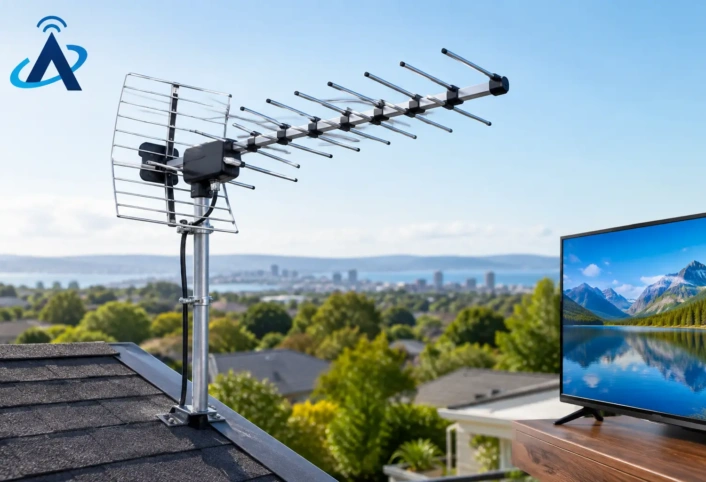
Outdoor antennas are typically the more dependable option because they are mounted higher and have a clearer path to broadcast signals. A professional installation can account for tower direction, mounting location, grounding, splitters, cable runs, and the number of TVs served. That turns an antenna from a trial-and-error project into a home TV solution built around your address.
When Cable Still Makes Sense
Choosing an antenna does not mean cable is always the wrong choice. Cable may fit your household if you watch several cable-only channels every week, want a broad lineup without switching between services, or rely on a regional sports network that is not available through local broadcasts.
It may also be useful for people who do not want to manage separate streaming subscriptions or who value a single provider for television, internet, and phone service. Just review the total bill carefully, including fees and the price after promotions expire.
For many homes, the better choice is not strictly antenna or cable. It is less cable. You might cancel a large package, keep internet service, install an antenna for local TV, and add streaming only where it earns its place in your monthly budget.
How to Decide What Is Right for Your Home
Start with what your family watches in a typical week. If local news, network shows, live events, and free broadcast channels cover most of your viewing, an antenna can deliver meaningful savings. If your must-watch list is built around cable networks, compare the cost of cable against an antenna plus the streaming services you would actually use.
Then consider your home itself. Reception is not determined by ZIP code alone. A nearby hill, a metal roof, a dense tree line, or the wrong antenna location can change the result. The best system is not necessarily the biggest antenna. It is the one matched to the available signals and installed correctly.
Antenna Master helps homeowners evaluate reception, select the right equipment, and set up a system that supports the televisions they use every day. Instead of guessing with a retail antenna, you can get a tailored estimate based on your home and your cord-cutting goals.
Your TV setup should support the way you actually live, not keep you paying for channels you never turn on. A well-planned antenna system can make local HD television a dependable part of a lower monthly entertainment bill.