A cable bill can feel especially frustrating when the shows your household watches most are already broadcasting free over the air. Local channels bring network programs, regional news, weather coverage, live events, and many major sports broadcasts into your home without a monthly TV package. The right antenna system can make cutting the cord a practical decision instead of a risky experiment.
For many homeowners, the question is not whether free TV exists. It is whether it will work reliably at their address, on the televisions they use, and when severe weather or a big game is on. That is where professional antenna planning and installation make a real difference.
What Local Channels Can You Watch With an Antenna?
Broadcast television is still a major part of the way Americans watch TV. Stations transmit their signals over the air, and a properly selected antenna receives those signals at your home. There is no cable box rental, no satellite dish contract, and no recurring charge to watch the broadcasts you receive.
What is available depends on your market and location, but an antenna often provides major network affiliates such as ABC, CBS, FOX, NBC, PBS, The CW, and independent stations. Many markets also carry additional digital subchannels with classic television, movies, lifestyle programming, local sports, kids’ programming, and around-the-clock news.
The biggest benefit is live television. Streaming services are useful, but they can change channel lineups, raise prices, or place games and local programming behind a higher-priced plan. Over-the-air TV gives your household a direct way to watch the broadcasts available in your area.
The Picture Quality May Surprise You
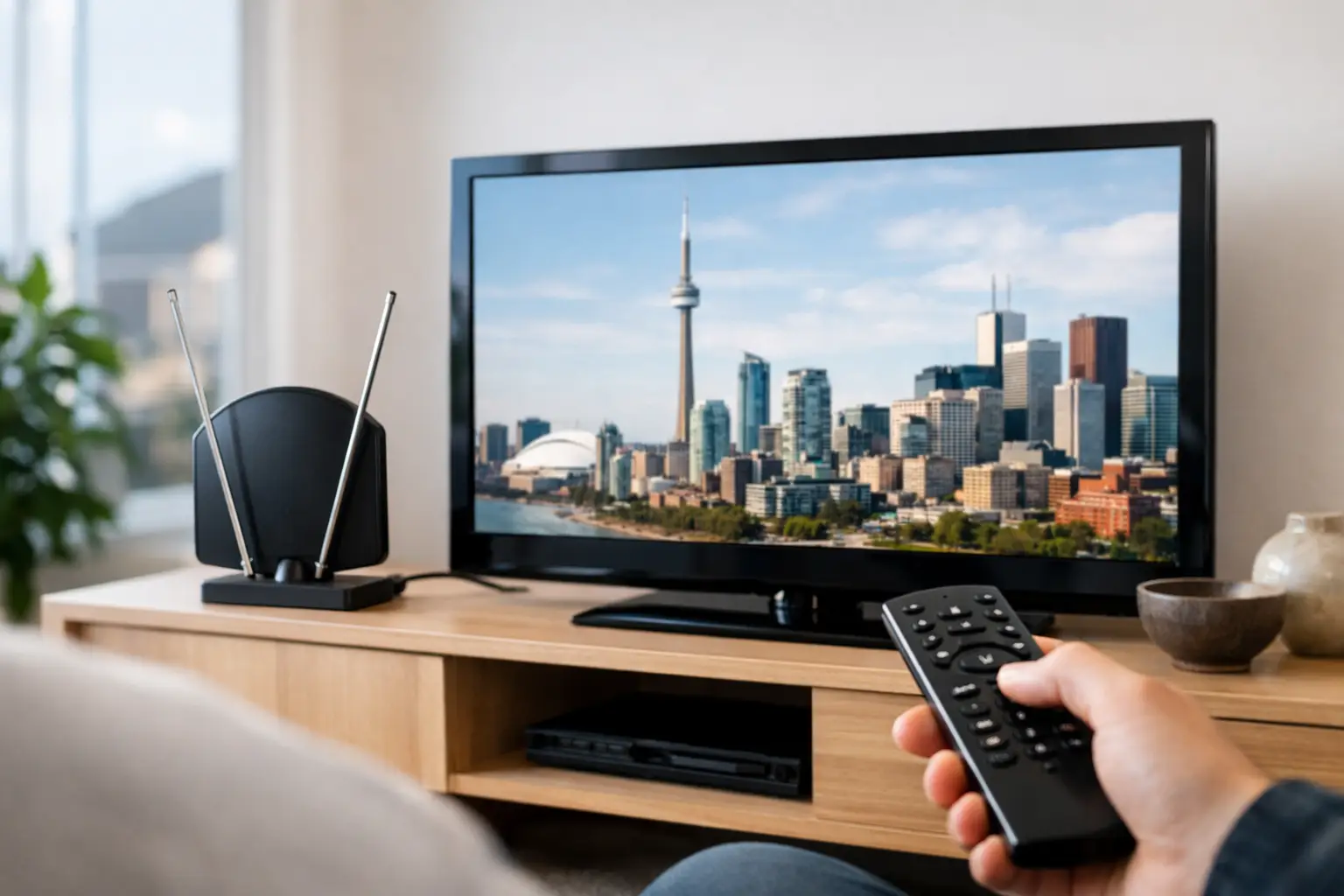
A common assumption is that free television must mean lower-quality television. In many homes, the opposite is true. Local broadcast signals are delivered in high definition, and they can look exceptionally clear on a modern TV when reception is strong.
Cable and streaming providers may compress video to manage bandwidth. An antenna receives the broadcaster’s signal directly, which can produce a sharp, detailed picture. Results vary by station and home, but homeowners are often surprised by the improvement after moving from an unreliable indoor antenna or heavily compressed pay-TV feed.
Why Reception Is Different From One Home to Another
Buying an antenna off a store shelf does not guarantee dependable television. Reception is affected by your distance from broadcast towers, the direction of those towers, terrain, trees, nearby buildings, roof materials, and even the construction of your walls.
A home in a strong signal area may receive many stations with a simple setup. A home farther from the broadcast towers, or one surrounded by tall trees and dense development, may need an outdoor antenna, higher mounting position, a preamplifier, or carefully routed coaxial cable. Sometimes a station that is easy to receive in one neighborhood is difficult just a few miles away.
This is why advertised antenna mileage ranges should be treated carefully. A number on a package cannot account for the obstacles between your home and the transmitting tower. It also cannot tell you whether an attic installation will be blocked by radiant barrier material, whether a roofline provides a better signal path, or whether a signal amplifier would help rather than create interference.
Indoor, Attic, or Outdoor Antenna?
Each placement has a trade-off. Indoor antennas are easy to try and can work well near towers, but walls, electronics, and limited positioning can reduce reliability. Attic antennas are hidden from view and protected from weather, although roofing materials and insulation can weaken signals.
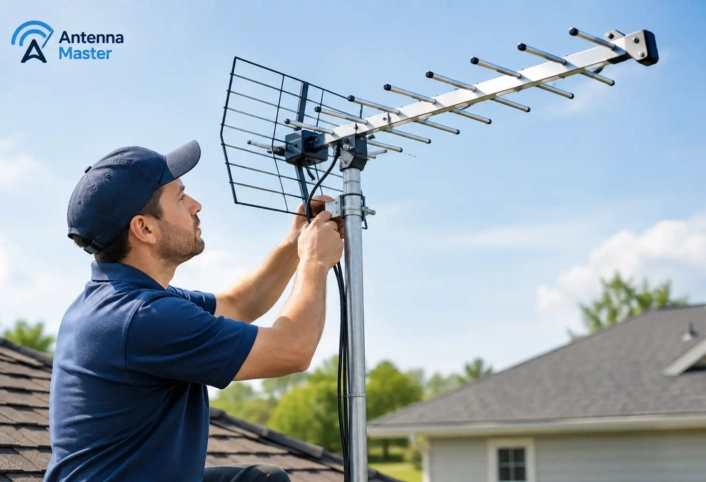
Outdoor antennas usually offer the best opportunity for consistent reception because they can be mounted higher and placed with a clearer path toward broadcast towers. They also need proper mounting, grounding, weather-resistant connections, and cable routing. A professional installation is designed around both performance and the condition of your home.
The best choice is not always the largest antenna. It is the antenna and placement that fit your signal conditions, television needs, and property.
A Professional Setup Makes Local Channels Easier
Cord-cutting should not require climbing onto a roof, guessing at antenna direction, or running visible cable through the house. A trained technician evaluates the reception possibilities at your home and recommends a system built for the stations you want to watch.
The process starts with your goals. Some households want the basic local networks for news and prime-time shows. Others want the strongest possible access to live sports, PBS, specialty subchannels, and multiple network affiliates. The number of TVs matters too. A system serving one television is different from a clean, dependable installation that distributes a signal to several rooms.
A professional antenna installation can include the right antenna type, secure mounting, precise aiming, quality coaxial connections, appropriate amplification when needed, and signal distribution to your televisions. The technician can also scan and organize channels on your TV so the system is ready to use.
That expertise helps avoid common do-it-yourself problems: pixelation on certain stations, channels that disappear in bad weather, loose connections, poorly placed amplifiers, and an antenna that works in one room but not another. It also means your home receives a solution based on actual conditions rather than a one-size-fits-all product claim.
What an Antenna Will Not Replace
An antenna is an excellent way to keep free broadcast television, but it does not replace every type of entertainment service. Premium cable networks, most on-demand libraries, and some games carried exclusively by cable or streaming services are not available through an over-the-air antenna.
That does not make the antenna less valuable. For many households, it becomes the foundation of a lower-cost TV plan. You can retain local news, network shows, and broadcast sports for free, then choose only the streaming services that fit your viewing habits. Some homeowners find that combination gives them more control and far fewer monthly charges than a traditional cable bundle.
If your priority is local programming and live network television, an antenna may let you cancel pay TV entirely. If your household relies on a few subscription-only channels, it may allow you to step down to a smaller streaming plan instead. The right choice depends on what you actually watch, not on how many channels a provider puts in a package.
Get More Value From Your Television Setup
Before you cancel cable or satellite service, take a practical look at your viewing routine. Think about which local stations you watch each week, how many TVs need service, and whether your home has reception challenges such as dense trees, a low roofline, or a distant broadcast market. These details shape the system that will serve you best.
It is also smart to consider the long-term picture. A professionally installed antenna is an investment in your home’s entertainment setup, while pay-TV bills continue month after month. Even if you keep a few streaming subscriptions, removing an expensive cable or satellite package can create meaningful savings over time.
Antenna Master helps homeowners make that change with trained, recently certified technicians and customized antenna solutions. Instead of hoping a retail antenna works, you can get a clear recommendation based on your home and your goals.
Your favorite local broadcasts are already in the air. With the right antenna system, your household can enjoy them in HD, keep the live programming that matters, and put more control back into the monthly budget.