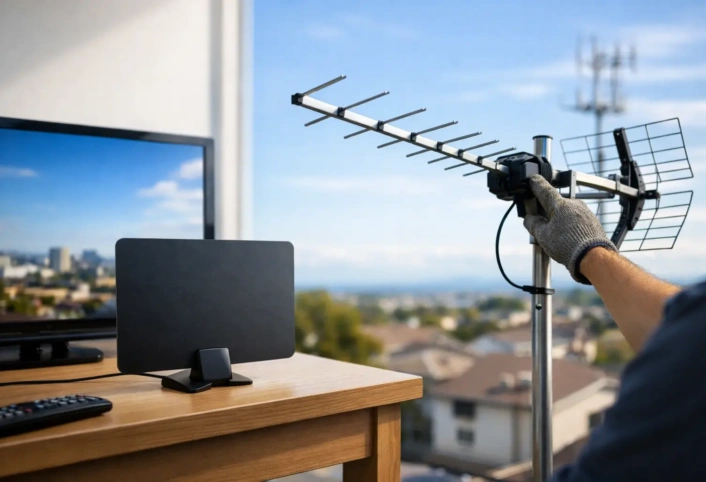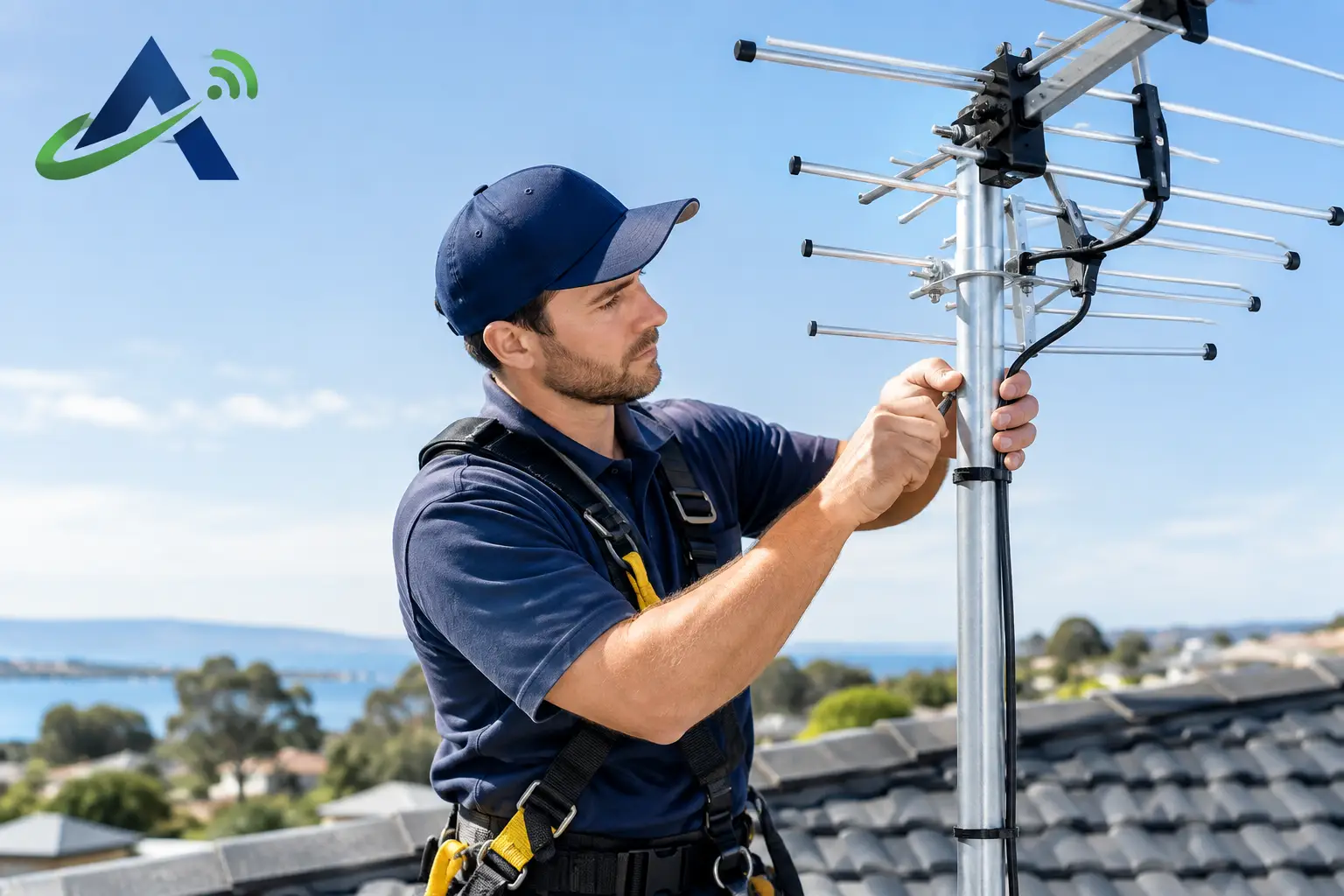
A rooftop antenna may look simple from the street, but dependable over-the-air TV depends on much more than mounting hardware. Understanding antenna installation quotes helps you see what a professional is planning for your home: how the signal will be evaluated, where equipment will go, which TVs will be connected, and what happens after the channels are scanned.
For homeowners ready to cut the cord, a good quote turns a vague goal – clearer local HD channels without another complicated TV project – into a defined installation plan. It should make the work easier to understand, not bury you in technical language.
What an Antenna Installation Quote Should Tell You
An installation quote is not simply a description of an antenna. It is a recommendation based on your property, your television setup, and the local broadcast signals available to your address. Two homes on the same block can need different solutions because rooflines, nearby buildings, trees, interior wiring, and the number of TVs can all affect reception.
Look for a clear explanation of the proposed system and the work involved. The language does not need to be overly technical, but you should be able to understand the intended antenna location, the equipment being installed, the televisions or rooms included, and the setup work planned at the end of the visit.
A useful quote also sets expectations. Broadcast reception is influenced by real-world conditions, so a qualified technician should recommend a solution based on available signal data and on-site conditions rather than promise identical results for every channel in every home.
Why Your Home Needs Its Own Recommendation
Retail antenna boxes often suggest that one model works everywhere. Professional installation starts from a different question: what will work reliably at your specific location?
Signal strength is only part of the answer. Direction matters, especially when local broadcast towers are not all in the same place. A home can also have obstacles that affect the signal path, such as tall buildings, dense foliage, metal roofing, or a low mounting position. In parts of Miami-Dade, Broward, and Monroe counties, coastal conditions and varied building styles can make a property-specific assessment especially useful.
Your existing TV setup matters as well. A single television near an exterior wall is a different project from a home with several rooms, existing coaxial cable, splitters, and wall outlets that need to be evaluated. The right quote accounts for the full path from antenna to television, not only the antenna itself.
Signal Evaluation Is More Than a Channel List
Most households want local news, network programming, live sports, and major broadcast stations in high definition. A signal evaluation helps determine whether those goals are realistic for the home and how the system should be aimed and configured.
The evaluation may consider local transmitters, distance, terrain, nearby interference, and the likely mounting height. A trained technician uses this information to select appropriate equipment and placement. That is a meaningful difference between a system designed around your reception conditions and an antenna chosen from a store shelf without a site plan.
Read the Scope of Work, Not Just the Equipment Name
When comparing antenna installation quotes, focus on what the installer will actually do. The antenna model is one part of the project. Professional workmanship includes the decisions and finishing steps that help the system perform as intended.
The scope of work should describe where the antenna will be mounted and how the cable route will be handled. It should address the connection to your existing television wiring when applicable, along with any necessary distribution components for multiple TVs. If a special mounting approach or additional signal-management equipment is recommended, the quote should make clear why it is part of the plan.
Ask whether the planned work includes these practical outcomes: secure mounting, protected cable routing, grounding where appropriate, connections to the intended TVs, channel scanning, and verification that the televisions are receiving broadcast channels. These details are where a professional installation becomes a finished, usable home TV system.
Be careful about assuming that an existing cable outlet will automatically be ready for antenna service. Older wiring, unused splitters, disconnected runs, or components left behind by a previous provider can affect the signal. A thorough quote acknowledges the existing setup and explains whether it will be used, adjusted, or bypassed.
What Can Change After an On-Site Visit?
A responsible quote is based on the best information available before work begins, but homes can reveal surprises. Access limitations, concealed wiring conditions, roof material, safety concerns, or signal interference may only become clear during an on-site assessment.
That does not mean the quote should feel uncertain. It means it should distinguish between the planned installation and conditions that cannot reasonably be confirmed in advance. Clear communication is the standard to look for. If the recommended approach needs to change, you should understand what was found, why it matters to reception or safety, and what the technician recommends next.
There are also cases where the ideal antenna location is not the most obvious one. A higher location may have a clearer signal path, while another location may better balance reception, cable routing, appearance, and safe access. The best choice depends on the property, not a one-size-fits-all rule.
Questions That Help You Compare Quotes
You do not need to become an antenna expert before requesting an estimate. A few direct questions can reveal whether the recommendation is tailored to your needs.
Ask which local channels the system is intended to receive and whether any stations may be more challenging at your location. Ask where the antenna is expected to be installed, how many TVs are included in the setup, and whether the technician will test the existing coaxial wiring. It also helps to ask what happens during final configuration: will each included television be connected, scanned, and checked before the job is complete?
If you stream as well as watch live TV, mention that early. Many households use an antenna for local broadcasts while keeping selected streaming services for other programming. Your installer does not need to redesign your entertainment habits, but knowing how you watch helps shape a system that fits the way your household uses television.
Watch for Vague Promises
A quote that only says “antenna installation” leaves too many questions unanswered. It may not identify the service area inside the home, the signal strategy, the number of television connections, or the completion steps. Clarity is more valuable than a long list of unfamiliar parts.
Likewise, be skeptical of blanket promises that every channel will be perfect under every condition. Broadcast signals can be affected by weather, changes in nearby foliage, and other environmental factors. A credible provider explains the expected results honestly and builds the system around the strongest available reception plan.
The Value of Professional Setup After Installation
Mounting an antenna is not the final step. The system still needs to be connected, aimed, scanned, and confirmed at the television. This is where many DIY attempts fall short: the antenna may be installed, but the channel scan is incomplete, the input is set incorrectly, or the signal is weakened somewhere in the home wiring.
Professional setup helps make the transition to over-the-air television feel straightforward. A trained technician can verify the signal path, organize the connection, scan for local channels, and confirm that the included televisions are ready to use. That support matters when your goal is dependable access to the local programming you care about, not another unfinished home project.
At Antenna Master, the focus is on turning antenna reception into a practical household solution, with trained technicians and a recommendation built around the property. When you request a quote, share the number of TVs you use, the channels that matter most, and any concerns about your current wiring. That small amount of context helps start the conversation with a plan designed for the way you watch.