A clear picture on one local station and missing channels on another is often not a TV problem. It is a reception problem. UHF VHF antennas are designed to receive the broadcast frequencies used by local television stations, and choosing the right setup can make the difference between dependable free HD programming and a frustrating channel scan.
For households looking to cut the cord, the goal is simple: keep the local news, network shows, live sports, weather coverage, and public television you enjoy without relying entirely on a paid TV package. The antenna itself matters, but so do its location, direction, wiring, and the signals available at your address.
What UHF VHF Antennas Receive
Local broadcast stations transmit on two primary frequency bands: VHF and UHF. VHF, or Very High Frequency, includes television channels 2 through 13. UHF, or Ultra High Frequency, includes channels 14 and above, although the active television spectrum commonly used today is more limited than the channel numbers on a TV dial suggest.
The channel number you see on screen is not always the frequency your antenna receives. A station may identify itself as Channel 7, for example, while broadcasting its actual signal on a UHF frequency. This is called a virtual channel. It is one reason an antenna should be selected based on the stations serving your home, not just the familiar channel numbers you want to watch.
Many major network affiliates broadcast on UHF, but VHF remains important in many markets. A UHF-only antenna can work well at one address yet leave out a key local station at another. A combination antenna that receives both bands gives a household more flexibility when local broadcasts use a mix of frequencies.
Why HD Does Not Mean UHF Only
High-definition television is a picture format, not a frequency band. Both VHF and UHF signals can carry HD broadcasts. If a station is available over the air, its picture quality can be excellent when the signal arrives cleanly at your television.
That distinction matters when shopping based on labels such as “HD antenna.” Nearly every modern television antenna is marketed for HD reception, but that label alone does not tell you whether it can receive the frequencies your local stations use. Band coverage, gain, placement, and installation quality are much more useful factors.
Choosing Between Indoor and Outdoor Antennas
An indoor antenna is the simplest starting point for homes close to broadcast towers with few signal obstacles. It may be enough for a television near a window, particularly when the desired stations come from the same general direction. But walls, concrete, metal framing, tinted glass, appliances, and nearby buildings can weaken or reflect signals before they reach the antenna.
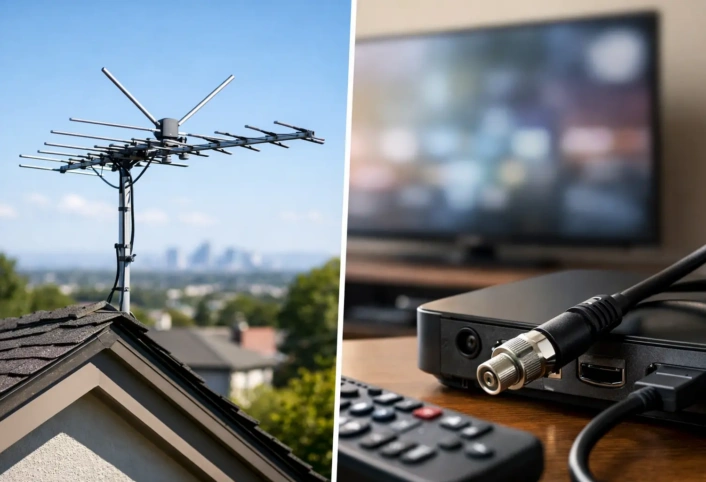
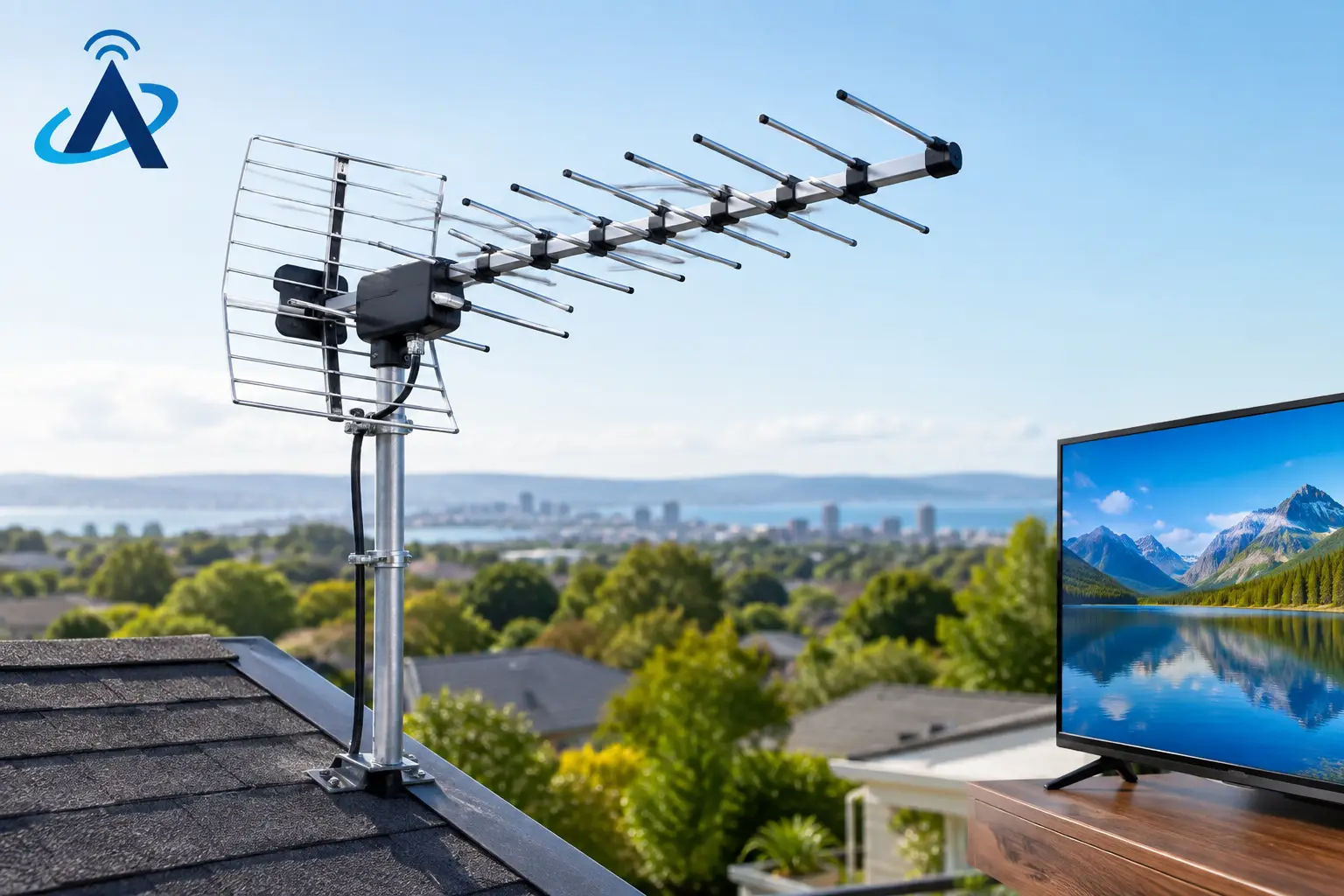
Outdoor antennas are usually the better choice when consistent reception matters across more channels or more than one television. Mounting an antenna higher and outside the home reduces the interference caused by building materials. It also gives the antenna a clearer path toward broadcast towers.
There is a trade-off. Outdoor equipment needs secure mounting, proper cable routing, weather-ready connections, and grounding that follows applicable electrical and safety requirements. A professional installation addresses those details while keeping the system as unobtrusive as possible.
Attic installations can be a middle ground, but they are not automatically equivalent to an outdoor installation. Roofing materials, radiant barriers, solar equipment, ductwork, and insulation can reduce performance. An attic may be a practical choice in some homes, while another home will need a roof, exterior wall, or mast location for the best result.
UHF VHF Antennas Need the Right Placement
A capable antenna in the wrong location can underperform a modest antenna installed correctly. Television signals travel largely by line of sight, so elevation and direction have a major effect on reception. Trees, taller homes, condominiums, and other structures can block or scatter the signal.
Directional antennas focus reception toward one area of the sky. They are useful when most stations are located in a similar direction and when unwanted signals or interference need to be reduced. Multi-directional antennas receive from a wider area, which can help when stations are spread out. The right choice depends on the tower locations and the signal conditions around the property.
In Miami-Dade, Broward, and Monroe counties, reception conditions can vary significantly from one neighborhood to the next. A home near open water or in a low-density area may have different signal behavior than a condo surrounded by concrete and taller buildings. South Florida weather also places extra demands on outdoor mounting and connections. A site-specific assessment is more reliable than choosing an antenna based on a generic mileage claim on a box.
Amplifiers Can Help, but They Are Not a Cure-All
An amplifier can be useful when a good signal must travel through a long cable run or serve several TVs. It can offset some loss from splitters and wiring. However, amplification cannot create a clean signal where the antenna is receiving mostly noise, reflection, or interference.
Too much amplification can overload a tuner, especially in areas with strong local signals. That may cause channels to disappear, freeze, or become unreliable. The better approach is to first maximize antenna placement and aim, then add amplification only when the system calls for it.
Your Television Setup Matters Too
Most modern televisions include an ATSC tuner for over-the-air broadcasts. After the antenna is connected to the TV’s antenna input, the television must run a channel scan. This scan finds the available local stations and assigns them to the channel list.
If you use multiple TVs, the antenna system needs to be designed for distribution. Each splitter introduces some signal loss, and aging coaxial cable, loose fittings, or poorly installed connectors can undermine an otherwise good antenna. A clean system uses appropriate cable, quality connections, and signal distribution that matches the number of viewing locations.
A streaming device can still have a place in a cord-cutting household. An antenna complements streaming by providing live local programming without depending on home internet service. During severe weather or an internet outage, that access can be especially valuable for local news and emergency information.
When Professional Installation Is Worth It
DIY antennas are a reasonable option for some simple setups. If you are close to the towers, need only a few stations, and have a good indoor placement option, a basic antenna may meet your needs. The challenge begins when reliable reception is inconsistent, channels come from different directions, or the signal must reach several rooms.
A trained technician can evaluate likely signal paths, identify a practical mounting location, select an antenna with the appropriate UHF and VHF coverage, and configure the wiring for your home. The work also includes the details that are easy to overlook: secure mounting, weather-protected connections, cable management, grounding, aiming, and final channel testing.
That process is less about installing the largest antenna possible and more about building a system that fits the property. A large directional antenna may be unnecessary for one home, while another property may need a more focused setup to overcome obstacles. Antenna Master approaches each installation as a reception solution, not a one-size-fits-all retail purchase.
Get More From Free Local Television
The best antenna system does not promise every channel in every condition. Broadcast signals are affected by location, building construction, weather, equipment condition, and changes in the local signal environment. What a properly planned system can provide is a much stronger foundation for dependable local TV reception.
If you want to cut the cord while keeping the local channels your household relies on, start with a professional evaluation of your reception options. The right antenna, installed in the right place, can turn free over-the-air television into a dependable part of your home entertainment setup.