The cable bill arrives whether you watched five channels or fifty. That is why many homeowners ask, can antennas bypass cable fees and still keep the local news, live network shows, and big broadcast events their household watches most? In many cases, yes – but an antenna is not a workaround for cable service. It is a separate way to receive free, over-the-air television signals that broadcasters already transmit to your area.
A professionally selected and installed TV antenna can give you dependable access to local broadcast channels without a cable or satellite TV package. The right result depends on your location, your home, the channels available nearby, and how the system is set up.
Can Antennas Bypass Cable Fees Legally?
Yes, when “bypass” means leaving behind the paid TV package and receiving local broadcasts with an antenna. Major network affiliates and many independent stations transmit their programming freely over the air. Your antenna receives those signals, and your television displays them in high definition.
There is no special trick, modified box, or hidden cable connection involved. You are simply using a different signal source. Broadcast television has long been available free to viewers with the proper receiving equipment.
An antenna does not remove charges from an active cable account, nor does it provide access to channels that are exclusive to a cable, satellite, or streaming provider. If you want to stop paying for a pay-TV package, you must cancel or change that service through the provider. The antenna then becomes your source for available local broadcast programming.
For households in Miami-Dade, Broward County, and Monroe County, reception can be especially location-specific. Distance from broadcast towers, surrounding buildings, roof design, trees, and even the materials in a home can affect what an antenna receives. That is where professional signal knowledge makes a meaningful difference.
What You Can Watch With an Antenna
The appeal is straightforward: live local television in clear HD without relying on a pay-TV subscription for those channels. Depending on the signals available at your address, an antenna may provide local network affiliates, public television, independent stations, Spanish-language programming, weather coverage, news, and additional digital subchannels.
That can cover a surprising amount of everyday viewing. Morning news, local breaking news, network prime-time shows, daytime programming, live awards shows, and many major sporting events are carried by local broadcast stations. For viewers who primarily turn on the TV for live local programming, an antenna can be the foundation of a simpler setup.
Picture quality is another benefit people often notice. Over-the-air broadcasts can look exceptionally sharp because the signal reaches your television directly rather than being heavily compressed through another delivery system. A strong, properly tuned antenna system gives compatible TVs a clean HD picture and reliable sound.
The available channel lineup is never identical from one home to another. A nearby neighbor may receive a station that is difficult at your address, while your roofline may have a better path to another transmitter. An assessment should be based on your home, not a generic channel promise on a box.
What an Antenna Will Not Replace
An antenna is excellent for broadcast television, but it is not intended to duplicate every channel in a cable package. Premium movie networks, many cable news channels, regional sports networks, and specialty cable programming generally require another service.
That does not mean cord-cutting has to be all or nothing. Some households keep only internet service and pair an antenna with a streaming service or a few individual apps. Others use the antenna as their primary source of live TV and stream on-demand shows when they choose. The practical goal is not to copy an old package exactly. It is to keep the programming your household values and remove the services it does not use.
Sports are a good example of why the answer depends on your viewing habits. Many nationally televised games and local network broadcasts are available over the air. Other games may be tied to a specific sports channel or streaming platform. Before changing your TV setup, consider which teams, events, and channels matter most in your home.
Why a Store-Bought Indoor Antenna Can Be Hit or Miss
Indoor antennas can work well in the right setting, particularly when a home is close to broadcast towers and has a clear signal path. They are easy to try, but they also sit inside the part of the house most likely to interfere with reception. Walls, metal framing, low-emissivity windows, appliances, electronics, and movement around the room can all affect performance.
A larger antenna does not automatically solve that problem. The antenna type, placement, direction, cabling, amplifier use, and signal conditions must work together. An amplifier can help in some systems, but it can also amplify unwanted noise or overload a strong signal. That is why adding equipment without testing can create more frustration instead of better reception.
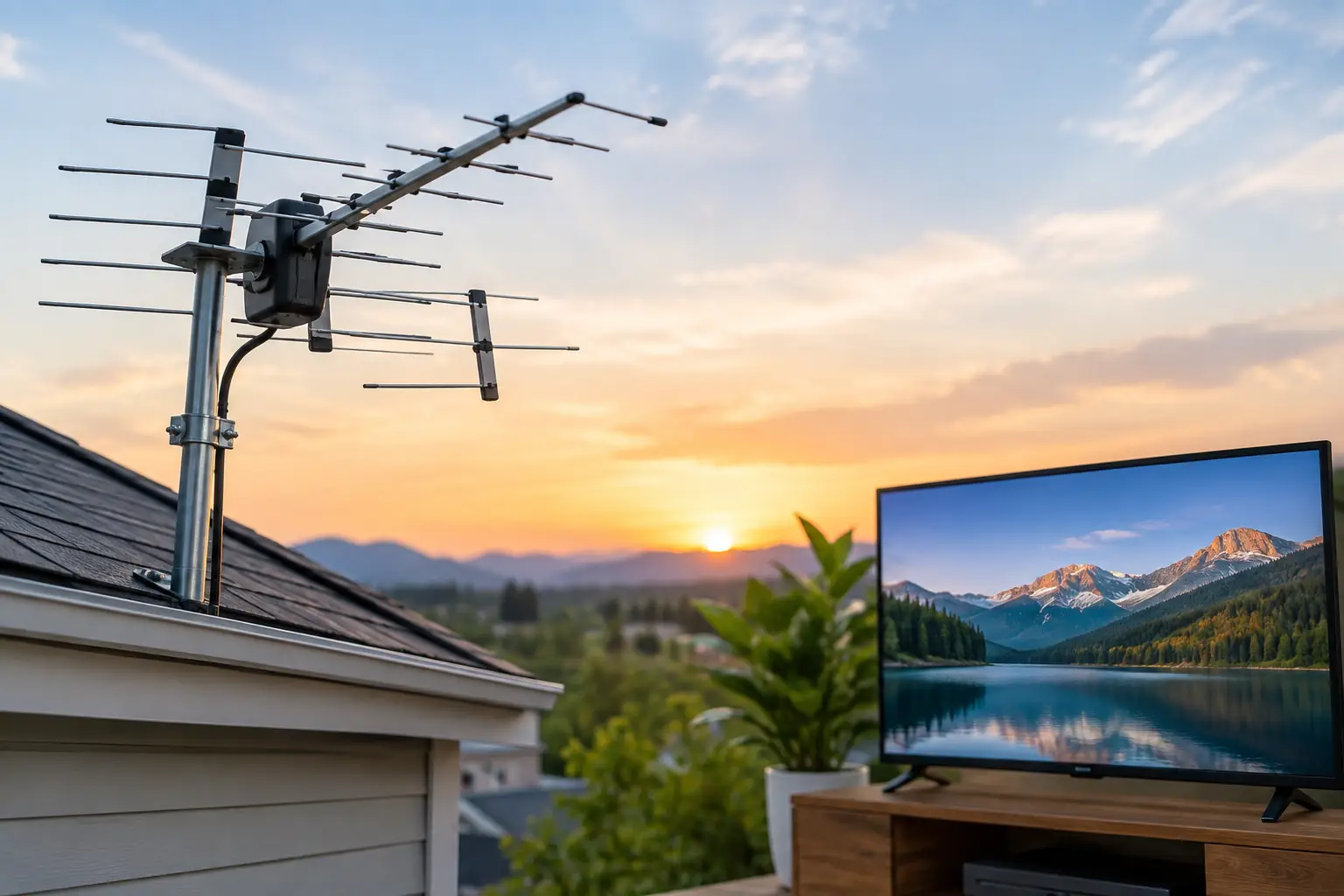
Outdoor or attic-mounted systems often offer better positioning than an indoor antenna, but every installation has its own considerations. The best mounting location must balance reception, weather exposure, building materials, safe cable routing, and the appearance of the home. A professional installation is designed around the entire system, not just the antenna itself.
A Better Way to Plan Your Cable-Free Setup
Start with what you actually watch during a typical week. If local news, network programming, live events, and community information are the essentials, an antenna may cover a major share of your television needs. If your household relies heavily on cable-exclusive channels, an antenna may still reduce your dependence on a large package while another service fills the remaining gaps.
Next, look at the televisions you want to connect. Most modern TVs include a built-in digital tuner and can scan for available broadcast channels once an antenna is connected. Multiple-TV setups may require thoughtful distribution so every screen receives a stable signal. Existing in-home coaxial wiring can sometimes be used, provided the system is evaluated and configured correctly.
Finally, prioritize reception over marketing claims. Terms such as “long-range” do not guarantee results at a particular address. Real-world reception is shaped by terrain, distance, local obstructions, and installation quality. The most useful question is not, “Which antenna is biggest?” It is, “Which system is right for this home and these viewing goals?”
When Professional Installation Makes Sense
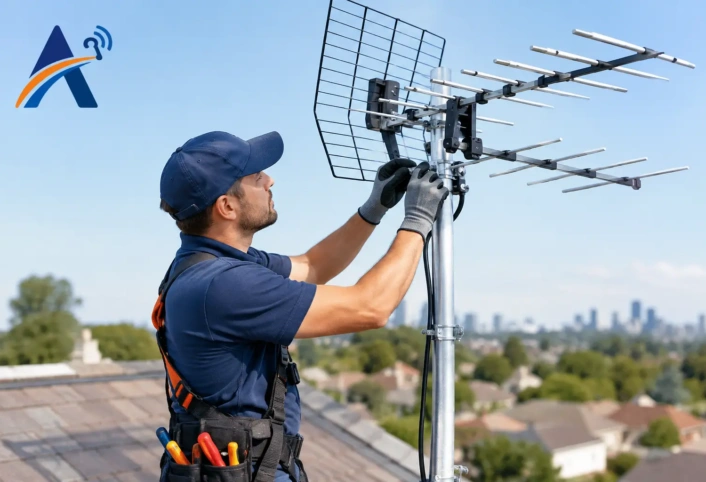
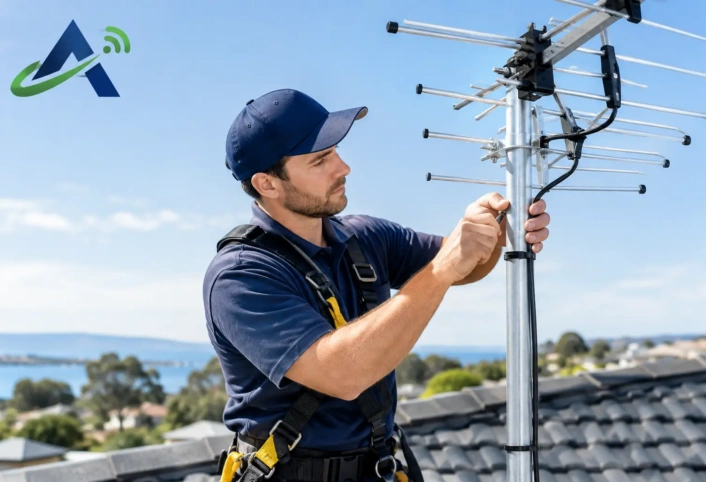
Professional help is especially valuable when you want an antenna mounted safely, need to serve more than one television, have tried an indoor model with inconsistent results, or simply want the job handled correctly from the start. Trained technicians can assess likely signal conditions, recommend an appropriate antenna, identify a suitable installation location, run and terminate cabling properly, and scan and configure your TVs.
That service-led approach also makes troubleshooting simpler. If a channel changes, a TV loses its scan, or reception is affected by a system issue, you have a knowledgeable team that understands how the equipment was installed. It is a more reassuring option than spending weekends moving an indoor antenna from window to window.
Antenna Master helps homeowners turn cord-cutting into a complete, professionally managed TV reception project. The focus is on giving your home the strongest practical access to free local HD broadcasts, based on your signal environment and the way you watch television.
An antenna will not make every cable channel appear for free. What it can do is give you back control over the local television that is already in the air around your home. If that is the programming you value most, a custom antenna system can be a smart next step toward a cleaner, more flexible TV setup.