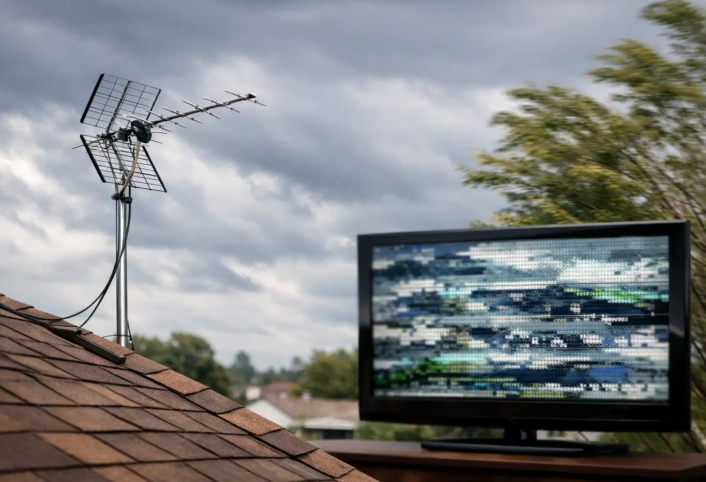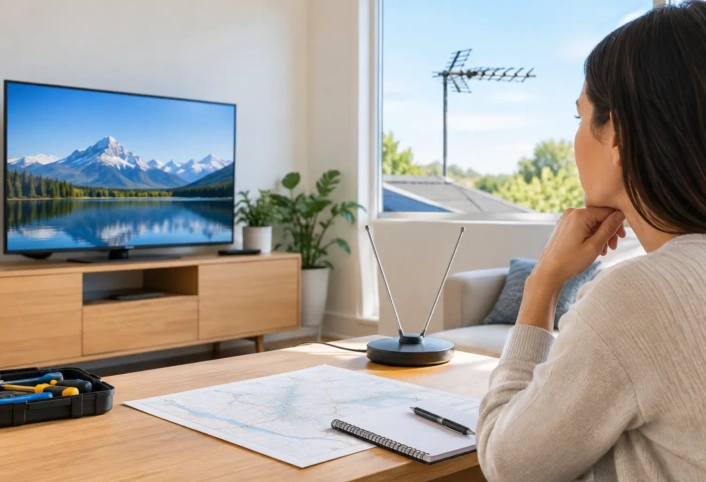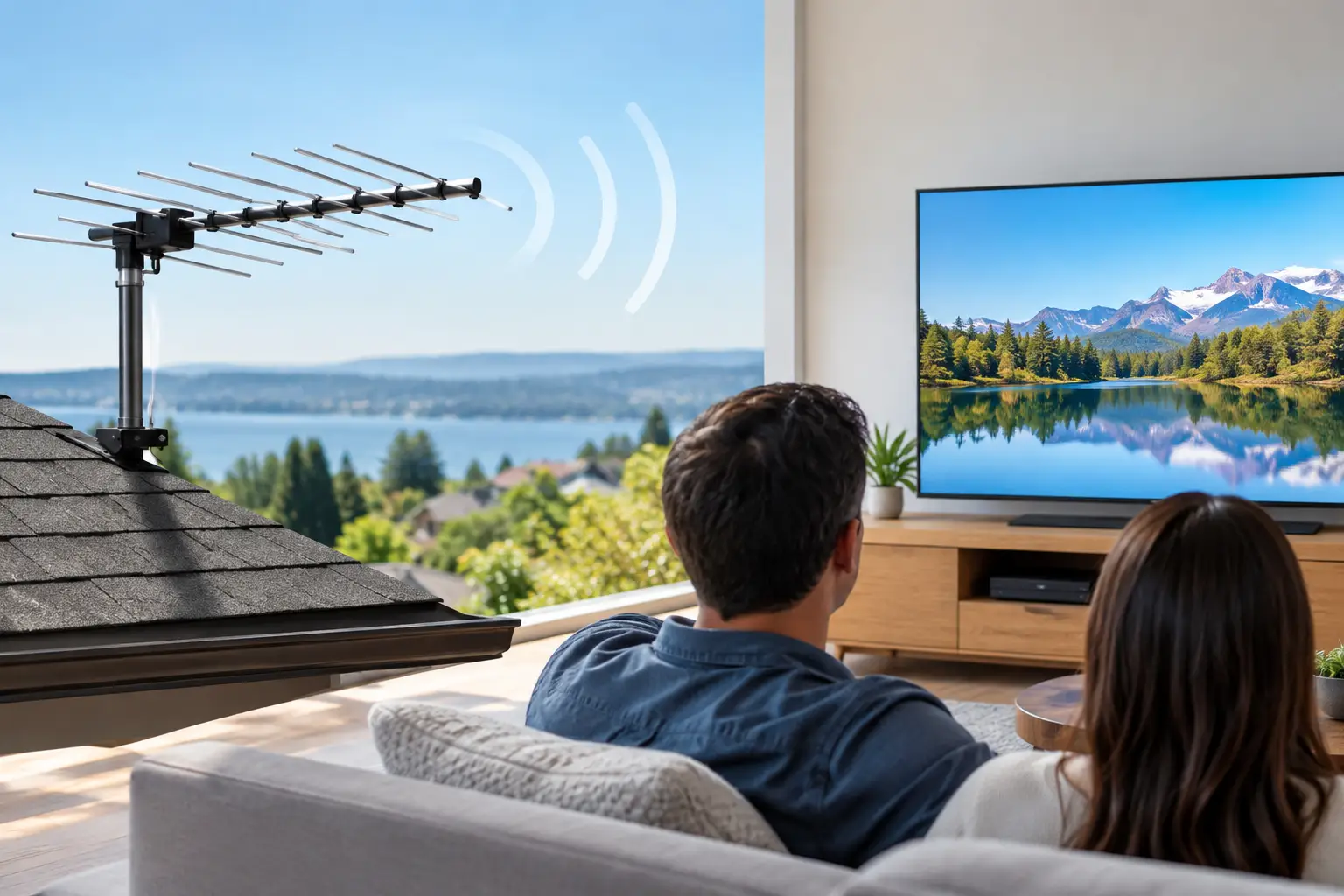
A channel can look perfect one evening and break into pixels the next. That does not always mean your antenna has failed. What affects reception is usually a combination of broadcast signal strength, your home’s surroundings, antenna placement, equipment, and even changing weather conditions. The good news is that most reception problems have a logical cause – and a practical fix.
For households cutting the cord, dependable local TV starts with understanding that an antenna does not create a signal. It captures signals already traveling from local broadcast towers. A professionally planned system gives those signals the best possible path from the air to your television.
What Affects Reception at Your Home?
Your address is the starting point. Broadcast towers are fixed, but every home sits in a different signal environment. A house close to major towers with an open line of sight may receive many channels with a modest antenna. A home farther away, behind dense development or natural obstacles, may require a more carefully selected antenna and installation location.
Distance matters, but it is not the whole story. Signal strength can change considerably from one neighborhood to the next, or even between two homes on the same street. Elevation, tower direction, nearby structures, and the construction of your house all affect the result.
Distance and direction from broadcast towers
Television stations transmit from different tower locations, and they may not all be in the same direction. An antenna works best when it is suited to the stations you want to receive and aimed appropriately. If local stations are spread across a wide area, the system may need to balance coverage rather than favoring one narrow direction.
This is why simply purchasing the largest antenna available is not a guaranteed answer. An oversized or highly directional antenna can perform well in one situation and poorly in another. The right choice depends on the channels available at your property, their directions, and the signal conditions around your home.
Height and the path between your antenna and the signal
TV signals travel primarily by line of sight. The clearer the path between the antenna and a broadcast tower, the better the odds of stable reception. Rooftops often perform better than indoor locations because they place the antenna above many common obstacles.
Trees, neighboring homes, high-rise buildings, bridges, and terrain can all weaken or reflect a signal. In South Florida, dense foliage can be especially noticeable. Leaves and branches hold moisture, move in the wind, and may affect a marginal channel more than homeowners expect.
Height helps, but placement is more than putting an antenna as high as possible. A location that is clear in the tower direction, safely mounted, and properly grounded is far more useful than a random high spot. A trained technician evaluates the signal path before treating elevation as the answer.
The Biggest Reception Factors Inside the House
Once an antenna captures a signal, the system still has to deliver it cleanly to each television. A strong signal at the antenna can become unreliable by the time it reaches the TV if cabling, splitters, connectors, or equipment are not working together properly.
Antenna location: indoor, attic, or roof
An indoor antenna is convenient, but it must contend with walls, wiring, appliances, metal framing, and the activity inside a home. Moving it a few feet can change reception dramatically. For someone near broadcast towers, an indoor model may provide acceptable results. For many homes, however, it is a compromise between convenience and consistency.
Attic antennas can be protected from the weather, but roofing materials may reduce the signal. Metal roofs, radiant barriers, solar equipment, stucco mesh, and certain insulation materials can create significant challenges. An attic can work well in the right home, but it should not be assumed to perform like an outdoor installation.
An outdoor antenna typically has the clearest opportunity to receive broadcast signals. It also needs correct mounting, weather-resistant connections, grounding, and cable routing. Professional installation is about more than attaching hardware to a roof. It is about building a system that performs reliably and respects the home.
Coaxial cable and connections
The cable between your antenna and television carries a delicate radio-frequency signal. Damaged, outdated, poorly terminated, or unnecessarily long cable runs can reduce signal quality. Loose connectors invite intermittent problems that often appear as pixelation, audio dropouts, or channels that vanish without warning.
Connectors should fit securely, and outdoor connections need protection from moisture. Water intrusion can cause problems long before it becomes visible inside the home. If reception worsens after heavy rain or over time, a connection issue deserves attention.
Splitters, amplifiers, and multiple TVs
Every splitter divides the available signal. One antenna feeding several televisions can work very well, but the distribution system must be designed for the number of sets and cable runs involved. Adding splitters casually can turn a stable channel into an unreliable one.
Amplifiers are also not automatic solutions. They can help compensate for signal loss in a long cable run or a multi-TV setup, but they also amplify unwanted noise. If the incoming signal is already distorted, an amplifier can make the problem worse. In areas with very strong signals, too much amplification may overload the tuner and cause reception issues.
The best approach is to test the signal, identify where loss occurs, and use amplification only when it supports the system design.
Weather, Interference, and Other Changes You May Notice
Weather can expose weaknesses in a reception setup. Heavy rain, strong winds, and wet foliage may affect a channel that already has little signal margin. Weather alone should not regularly eliminate dependable local stations. If it does, the antenna may need better placement, alignment, or system adjustments.
Electrical interference can also play a role. Nearby electronics, faulty power supplies, LED lighting, wireless devices, and certain appliances can introduce noise in or around the home. The effects may be inconsistent, which makes them frustrating to diagnose. A channel that fails only when a particular device is running is a useful clue.
There is also multipath interference. This happens when a broadcast signal reaches the antenna by more than one route after bouncing off buildings or other surfaces. The TV receives slightly delayed versions of the same signal, which can interfere with each other. Changing antenna height, location, or direction may improve it, even if the antenna remains close to its original spot.
How to Tell Whether the Antenna Is the Problem
Before replacing equipment, look for patterns. Do all channels fail, or only one or two? Does the issue happen on every television? Did it start after a storm, home renovation, new roof, or landscaping change? Clear answers help separate an antenna issue from a cable, splitter, connection, or TV-tuner issue.
If only one television has trouble, the problem is often downstream from the antenna. Check that television’s coax connection and any splitter or cable serving that room. If every TV loses the same channels, the antenna, its aiming, outdoor connection, or main distribution point is more likely involved.
A television channel scan can help after an installation change, but it does not repair weak reception by itself. Rescanning tells the TV what channels it can currently detect. It cannot overcome an obstructed signal path, faulty cable, or poorly matched antenna.
When a Professional Assessment Makes Sense
DIY antennas can be useful for simple situations, but troubleshooting becomes less simple when a home has several TVs, long cable runs, inconsistent channels, or difficult surroundings. A professional assessment replaces guesswork with measurements, site-specific planning, and correct installation practices.
A trained technician can identify which channels should be available, evaluate likely signal paths, choose an antenna designed for the location, and configure distribution equipment without over-amplifying the system. At Antenna Master, that means helping homeowners turn local broadcast TV into a dependable part of the home entertainment setup.
Clear HD reception is not about finding a magic antenna. It comes from matching the right equipment and placement to the home you actually have. When local news, live sports, and network programming matter, a well-designed antenna system gives you the best chance to enjoy them without the daily frustration of a fading signal.