A monthly TV bill can make local news, live sports, and network shows feel more complicated than they need to be. So, what channels can antennas receive? The answer is often more than homeowners expect: free local broadcast stations from major networks, independent stations, public television, and multiple extra channels carried by a single station. The exact lineup depends on your address, surrounding terrain, antenna placement, and the strength of signals in your area.
An antenna does not replace every cable channel. It receives free over-the-air broadcasts sent from local television towers. For households that want dependable access to live local programming without relying entirely on a pay-TV package, that can cover a meaningful part of everyday viewing.
What Channels Can Antennas Receive?
In most U.S. markets, a properly installed antenna can receive local affiliates for major broadcast networks. That commonly includes ABC, CBS, NBC, FOX, PBS, The CW, MyNetworkTV, Telemundo, Univision, and independent local stations. Availability varies by market, and not every station reaches every home with equal strength.
These are the channels that carry much of the programming people miss when considering cutting the cord: local and national news, weather coverage, prime-time network shows, daytime programming, major live events, and many NFL, college, and other sports broadcasts. When a game or program is carried by a local broadcast affiliate, an antenna can deliver it in high definition without an internet connection.
In Miami-Dade, Broward, and Monroe County, viewers may have access to English- and Spanish-language broadcast stations, public television, local news, and national network affiliates. However, South Florida’s coastal conditions, dense construction, tall buildings, and distance from broadcast towers can affect which signals come in clearly at a particular property. A neighbor’s channel lineup is useful as a reference, but it is not a guarantee for your home.
One station can provide several channels
The number shown on your television is not always a one-to-one match with a single broadcast signal. Many stations use digital subchannels to offer additional programming. A primary station might appear as channel 7.1, while 7.2, 7.3, or 7.4 carry classic television, movies, lifestyle programming, news, or specialty networks.
That is why a channel scan can produce a longer list than the handful of major network stations you expected. Subchannel lineups change from time to time, so an antenna installation is best viewed as access to the local broadcast signals available today, rather than a permanent promise of a fixed channel count.
What an Antenna Will Not Receive
An antenna cannot pull in cable-only networks simply because they are popular. Channels such as ESPN, CNN, HGTV, TNT, USA, Discovery, and many regional sports networks generally require a separate subscription or streaming service. Antennas receive broadcasts that local stations transmit freely through the air.
That distinction helps set the right expectations. An antenna is a strong solution for local television and live broadcast programming. It is not designed to duplicate a full cable lineup. Many households pair antenna reception with selected streaming services, keeping the channels they value while reducing dependence on a large pay-TV bundle.
It also cannot overcome a station that is not broadcasting into your area. A larger antenna is not automatically the answer. The right equipment and placement depend on the signals available at your address and on the obstacles between your home and the broadcast towers.
Why Channel Availability Changes From House to House
Digital TV is clear when the signal is strong enough, but it can freeze, pixelate, or disappear when it is not. Unlike the gradual static of older analog television, digital reception tends to work well until signal quality drops below a usable level. This is why the question is not only which stations are in your market, but whether your home can receive them consistently.
Several factors shape the result:
- Distance and direction to local broadcast towers
- Trees, buildings, rooflines, and nearby construction
- Building materials such as concrete, metal, stucco mesh, or energy-efficient window coatings
- Antenna height, orientation, and whether it is placed indoors, in an attic, or outdoors
- The condition of coaxial cable, splitters, connectors, and television tuners
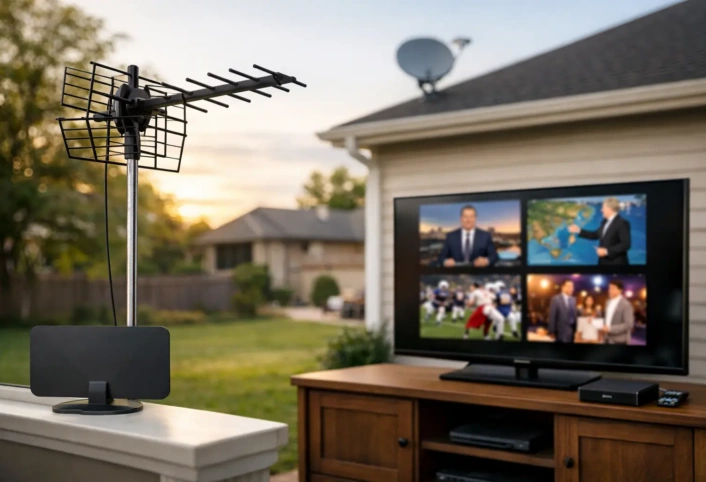
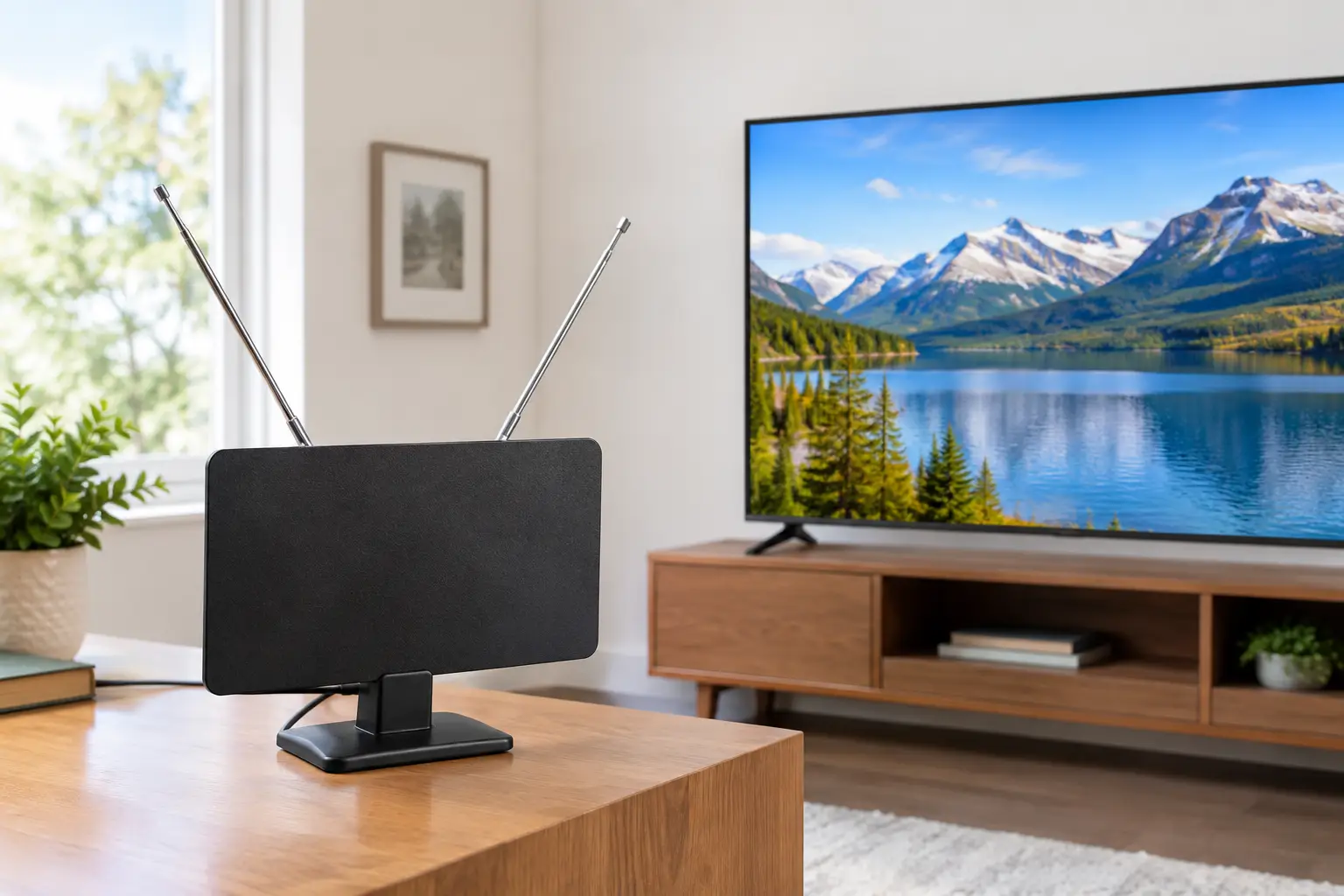
Indoor antennas can work well in some homes, especially near strong urban signals. They are also the most affected by walls, electronics, changing room layouts, and the simple fact that the best receiving location may not be near the television. Attic antennas offer a cleaner appearance, but roofing materials can weaken signals. Outdoor antennas often provide the clearest path to broadcast towers and the most dependable reception, though every property should be evaluated individually.
The antenna is only part of the system
A television antenna system includes more than the antenna itself. Signal distribution matters when you want reception on multiple TVs. Long cable runs, worn connectors, unnecessary splitters, or poorly planned amplification can reduce performance. In some cases, an amplifier helps compensate for signal loss. In others, amplification magnifies interference and makes a weak signal worse.
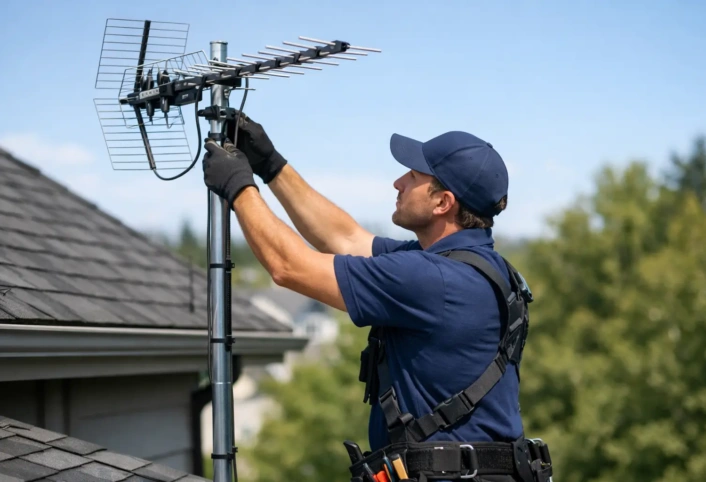
This is where professional installation makes a practical difference. A technician can assess available signals, choose an appropriate antenna, identify the best mounting location, aim the system correctly, and configure the distribution setup for the TVs you plan to use. The goal is not simply to get a channel scan once. It is to create a setup that delivers the channels your household wants to watch with reliable day-to-day performance.
HD Quality and NextGen TV
Over-the-air television can look excellent. Major local stations typically broadcast in high definition, and the picture is delivered directly from the local station rather than compressed through a cable system or internet stream. The result can be especially appealing for live sports, local news, and network programming.
Your television must have a digital TV tuner, or you will need a compatible external tuner. Most modern televisions include one, but older sets may not. After installation, a channel scan tells the TV which local stations it can receive.
Some markets also offer NextGen TV, also called ATSC 3.0. This newer broadcast standard can support improved features and enhanced picture or audio options where available. Receiving it requires a compatible TV or tuner, and station availability differs by market. Standard antenna reception remains useful because traditional over-the-air broadcasts continue to carry the core local channels most viewers want.
How to Find Your Realistic Channel Lineup
The most accurate answer starts with your address, not a generic channel list. Signal-prediction tools can estimate nearby stations, but they cannot fully account for your roofline, trees, building materials, interference, or the equipment already in your home. A professional site evaluation adds the real-world detail that an online estimate cannot see.
Before moving forward, think about the viewing that matters most to your household. If you rely on local news, network prime time, football, major events, Spanish-language stations, or public television, antenna reception may meet a large share of your needs. If specific cable networks are essential, an antenna may work best alongside a smaller streaming plan rather than as a complete replacement.
Antenna Master helps homeowners turn that decision into a properly planned system instead of a trial-and-error project. With trained technicians, the focus is on receiving the strongest available local broadcast lineup at your property and setting it up for the way you actually watch TV.
The best antenna setup is not the one that claims the most channels on the box. It is the one that brings the local programming you care about into your home clearly, consistently, and with less dependence on a monthly TV package.