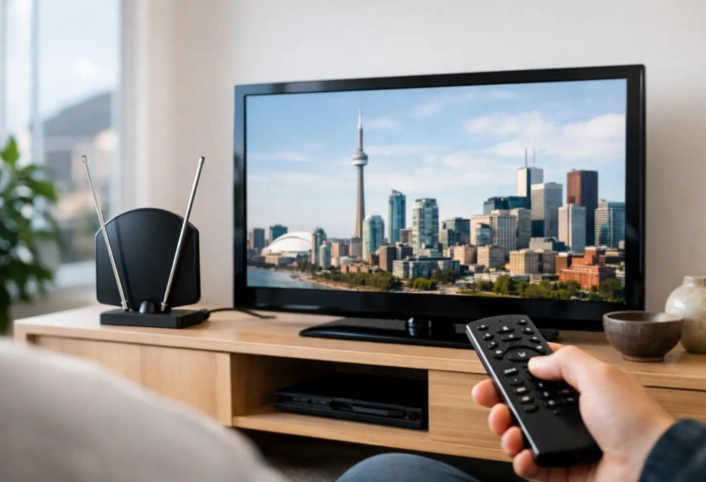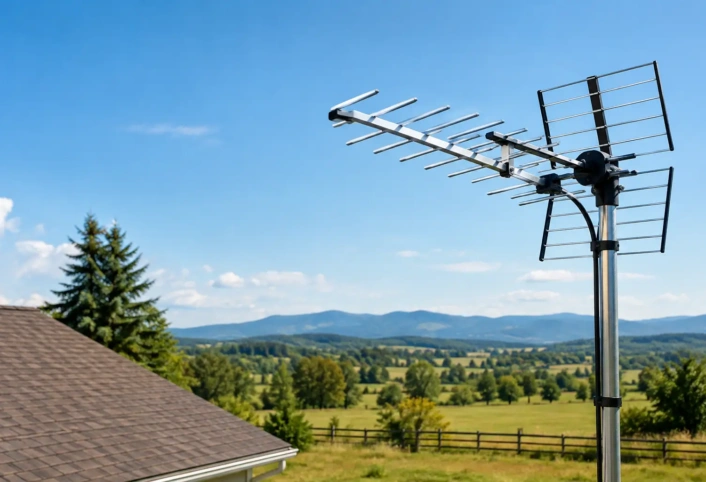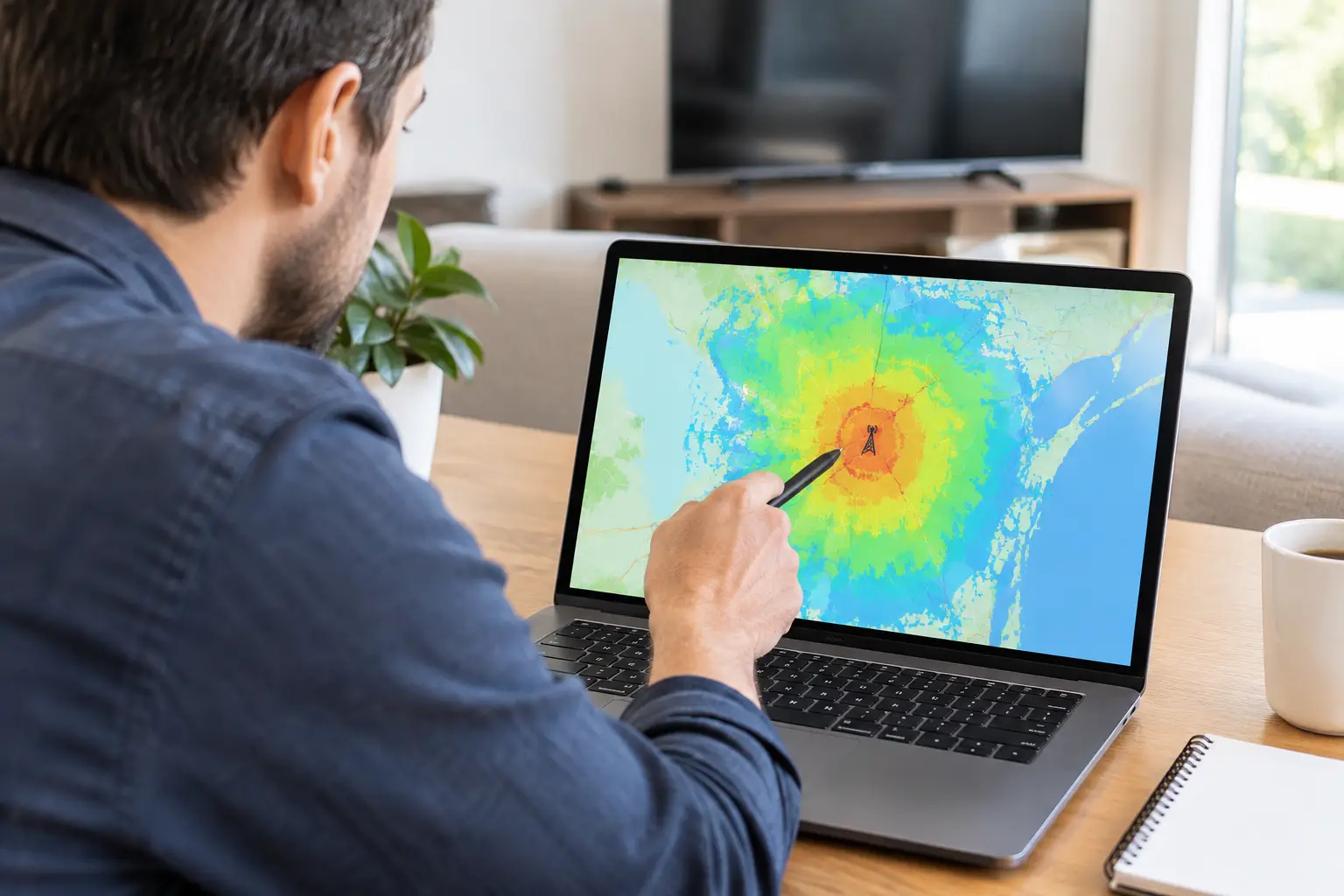
A television signal reception map can tell you far more than whether an antenna might work at your address. It gives you an early look at available local stations, their distance and direction, and the reception challenges that may affect your home. Read it correctly, and you can make a smarter decision about cutting the cord without guessing which antenna belongs on your roof or in your living room.
For households that rely on local news, live sports, network shows, and emergency information, that planning matters. Over-the-air television can deliver sharp HD broadcast channels without a cable or satellite connection, but dependable reception depends on the signal at your specific location – not on a box that promises a certain range.
What a Television Signal Reception Map Shows
A reception map estimates the broadcast signals that reach a location from nearby television towers. Most maps use your address or ZIP code to generate a channel list, then show information such as the station call sign, network affiliation, distance from your home, compass direction, broadcast frequency, and predicted signal strength.
The result is a useful starting point, not a final installation plan. Maps model terrain, transmitter power, and distance. They cannot fully account for a tall condominium next door, dense tree cover, a metal roof, solar equipment, interior wiring, or the construction materials around your television.
That distinction is where many DIY antenna attempts go wrong. A map may show that a station is available, while the actual home setup still needs better antenna placement, a different antenna type, or careful signal distribution to multiple TVs.
Signal colors are a shortcut, not a guarantee
Many maps group channels by color or reception category. Stronger signals are usually presented as easier to receive, while weaker or more distant signals may require an outdoor antenna, more elevation, or a carefully aimed system. The names and colors vary by mapping tool, but the message is generally the same: the farther and weaker the signal, the less forgiving the installation becomes.
A strong signal does not automatically mean any small indoor antenna will work in every room. Likewise, a weaker signal is not necessarily out of reach. A professionally selected and positioned antenna can often perform much better than a flat indoor model placed behind the TV.
How to Read the Results for Your Home
Start with the channels you actually want to watch. A long list looks impressive, but the useful question is whether it includes the local network affiliates, public television, independent stations, and specialty broadcasts that matter to your household.
Next, look at station direction. If most desired stations sit in roughly the same direction, one properly aimed antenna may serve the home well. If they are spread across very different compass headings, the system may need a wider reception pattern, precise placement, or equipment designed to handle signals from more than one direction.
Distance matters, but it is only one factor. A station 20 miles away can be difficult if buildings or terrain interfere with its path. Another station farther away may come in clearly from a better tower location. The map’s predicted signal category and direction are often more useful together than distance alone.
Also pay attention to whether stations broadcast on VHF or UHF frequencies. Some compact antennas are better suited for UHF signals and may struggle with VHF channels. If an important local station uses VHF, the antenna needs to support it. This is a technical detail that can make the difference between receiving a favorite channel consistently and losing it when conditions change.
Check for clustered towers
Tower clustering is one of the best signs for an efficient antenna plan. When primary stations are grouped together, antenna aiming is more straightforward. When they are not, selecting the right antenna becomes more important than choosing the largest one available.
An oversized antenna is not automatically the answer. In areas with strong nearby signals, excessive amplification can overload the tuner and create reception problems. In areas with weaker signals, an amplifier may help only after the antenna is correctly chosen and positioned. Signal quality begins at the antenna, not at an add-on device.
Why Your House Can Change the Map’s Prediction
A television signal reception map sees a geographic location. An antenna technician sees the practical conditions that determine whether that location performs well.
Your roofline, attic space, surrounding structures, trees, and the direction of nearby towers all matter. In South Florida, for example, flat terrain can be favorable, but concrete construction, dense development, hurricanes, salt air, and changing vegetation can influence where an antenna should be installed and how the equipment should be secured.
Indoor placement creates another layer of variables. Walls, low-E windows, appliances, and electronics can weaken or reflect broadcast signals. Moving an antenna a few feet, raising it higher, or placing it on a different side of the room can change channel availability. That is why a quick channel scan in one location should not be treated as the final verdict.
Outdoor and attic installations often provide more flexibility because the antenna can be placed higher and aimed more accurately. However, the best choice depends on the signal report and the property. An attic may protect equipment from weather, while an outdoor location may provide a cleaner path to the towers. The right answer is the one that delivers stable reception for the channels you care about.
Turn the Map Into an Antenna Plan
Use the map to set realistic expectations before choosing equipment. Identify your must-have stations, note their directions and frequencies, and compare the predicted signal levels. Then consider the home’s layout and how many televisions need service.
A single-TV setup may be simple, but splitting an antenna signal across several televisions changes the design. Every splitter, cable run, connector, and wall plate can introduce signal loss. Older coaxial cable or loose connections can also affect performance. A system that works at one television may need thoughtful distribution to remain reliable throughout the home.
For the most dependable result, the process should include a site assessment, the right antenna for the local signal conditions, secure mounting where appropriate, correct aiming, channel scanning, and verification at each connected television. That is the value of professional installation: it turns a map-based estimate into a working system built around the property.
Do not judge reception by channel count alone
The goal is not simply to receive the maximum number of channels during a test. The goal is to receive the channels you value with a stable picture and sound over time. A channel that appears briefly but drops out in rain, wind, or during normal household activity is not a dependable result.
Digital television tends to work clearly until the signal falls below a usable threshold. Unlike older analog TV, which could look snowy when weak, digital reception may freeze, pixelate, lose audio, or disappear entirely. A small improvement in antenna position or signal quality can therefore have a major effect on viewing reliability.
When a Map Suggests You Need Expert Help
A map is especially helpful for spotting situations that deserve a closer look. Homes with distant stations, mixed VHF and UHF channels, tower directions that are far apart, heavy tree cover, tall nearby buildings, or several TVs often benefit from a customized plan.
It also makes sense to seek help when an indoor antenna receives some channels but not the ones you want most, or when reception changes from room to room. These are usually system-design issues, not a reason to give up on over-the-air television.
Antenna Master helps homeowners in Miami-Dade, Broward County, and Monroe County turn local signal information into a properly configured antenna system. Trained technicians can evaluate the site conditions a map cannot see, select appropriate equipment, and confirm that your televisions are receiving the available local broadcasts as reliably as possible.
Before you replace another subscription with a guess, use the reception map as your first piece of evidence. Then let the channels you watch, the layout of your home, and the real signal conditions guide the antenna solution.