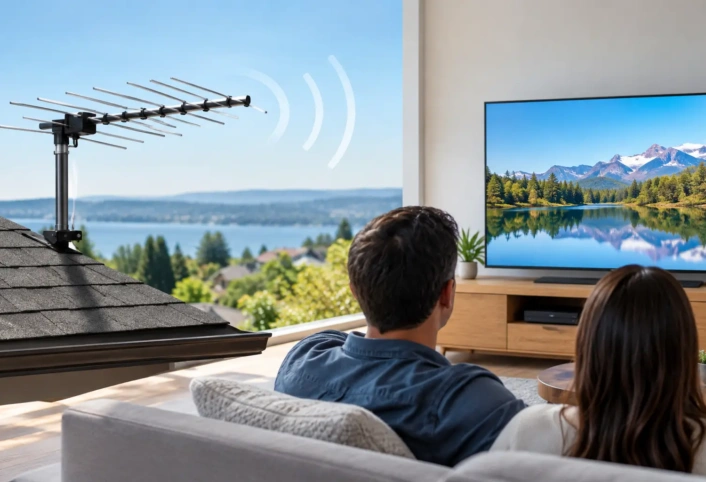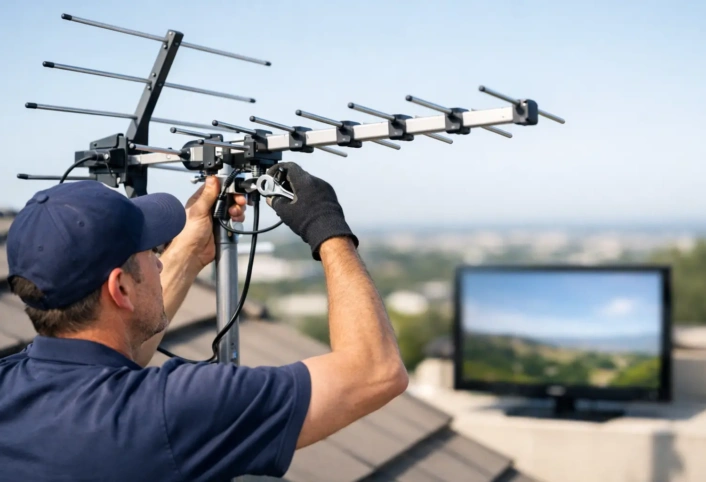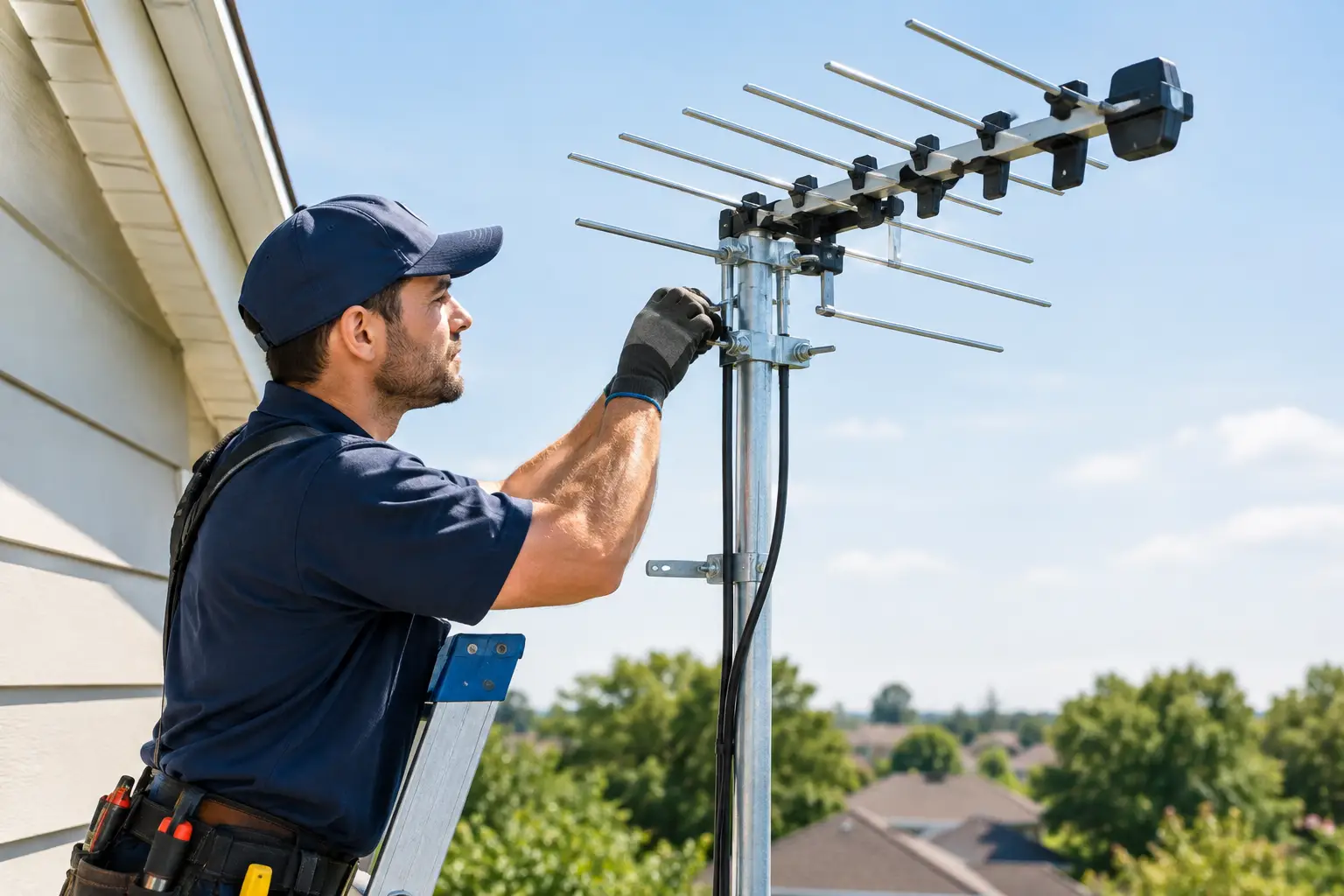
A new antenna can look simple in the box. The real work starts when it needs to pull in clear local channels through South Florida weather, building materials, nearby interference, and the layout of your home. That is where certified antenna technician benefits become clear: instead of hoping a retail antenna works, you get a system planned around the signals available at your address and the way you actually watch TV.
For households cutting the cord, professional installation is not about making television more complicated. It is about removing the guesswork. A properly designed over-the-air TV setup can provide dependable access to local news, network programming, live sports, weather coverage, and high-definition broadcast channels without turning your weekend into a troubleshooting project.
What a Certified Technician Brings to the Job
A certified antenna technician does more than mount equipment and connect a cable. Training helps technicians evaluate the full reception path, from available broadcast signals to antenna placement, wiring condition, television settings, and distribution to multiple rooms.
Signal strength alone is not the whole story. A signal can appear strong but still produce dropouts when it is affected by interference, poor cable connections, a weak splitter, damaged wiring, or an antenna aimed in the wrong direction. The right technician looks at signal quality and consistency, then builds a setup that supports reliable viewing rather than a channel scan that happens to work once.
This matters because every property has its own reception conditions. A single-story home with a clear path to broadcast towers may need a different approach than a condo, a commercial location, or a home surrounded by taller buildings and dense landscaping. There is no one-size-fits-all antenna that performs equally well everywhere.
Placement is a performance decision
Height can help reception, but higher is not automatically better. The best antenna location balances access to broadcast signals with a secure installation, practical cable routing, and the conditions around the property. Roofing materials, attic insulation, metal framing, solar equipment, trees, and neighboring structures can all affect performance.
A trained technician knows how to test and compare practical placement options. That experience can prevent a common DIY frustration: installing an antenna in the first convenient spot, then moving it repeatedly when channels disappear or pixelate.
The system has to work beyond one television
Many households want local channels in more than one room. That changes the job. Existing coaxial wiring may be usable, or it may need attention before it can deliver a clean signal throughout the home. Splitters, connectors, amplifiers, and signal distribution all need to work together.
A certified technician can identify whether a signal issue begins at the antenna, along the cable run, or at a specific television. That targeted approach avoids adding unnecessary equipment that may not solve the real problem.
Certified Antenna Technician Benefits for Cord-Cutters
The biggest benefit is confidence. Cutting the cord should give your household more control over television, not create uncertainty every time a storm rolls in or a favorite local station moves to a different channel assignment.
Professional installation gives the system a stronger starting point. The antenna is selected and positioned for local reception conditions, the connections are properly secured, and the television is configured to scan for available over-the-air channels. Instead of sorting through conflicting online advice, you have a clear path from installation to watching TV.
That support is especially valuable for viewers who rely on live programming. Streaming services are useful, but they do not replace every local broadcast need. Over-the-air television keeps local news, emergency information, network shows, major events, and many live sports within reach through an antenna connection.
For families, the convenience is practical. A professionally installed system can make it easier for everyone in the house to use the TV without needing to understand antenna settings, input selections, or signal diagnostics. The goal is simple: turn on the television and enjoy the channels available in your area.
Better Reception Means Fewer Frustrating Surprises
Pixelation, frozen pictures, missing channels, and intermittent audio are rarely random. They are symptoms. A technician is trained to trace the source rather than treat every issue with the same fix.
For example, an amplifier can improve a weak signal in the right situation, particularly when a system serves several TVs or has longer cable runs. But amplification is not a cure-all. If the antenna is receiving interference or a poor-quality signal, adding power can also amplify the problem. A knowledgeable technician determines whether an amplifier helps before adding one to the system.
Weather is another reason professional planning matters in Miami-Dade, Broward County, and Monroe County. Heavy rain, wind, humidity, and salt air can put extra stress on outdoor equipment and connections. A secure installation with properly protected components is better prepared for the conditions antennas face in South Florida.
No antenna system can promise every channel will be available at every address. Broadcast tower distance, terrain, obstructions, station power, and changes in the local broadcast environment all play a role. A professional assessment sets realistic expectations while working to get the best available reception for the property.
Installation Quality Protects the Experience
An antenna installation should look as good as it performs. Careful cable routing, secure mounting, clean connections, and attention to the property all affect the finished result. The equipment should not feel like a temporary experiment attached to your home.
Certified technicians also understand that a television antenna system is part of a larger home entertainment setup. They can help ensure the antenna works with compatible televisions, existing coaxial outlets, and the way your household uses its screens. If an issue appears later, you have a professional point of contact who understands how the system was installed.
That service-led approach can save time. DIY troubleshooting often becomes a cycle of swapping antennas, replacing cables, rescanning channels, and guessing whether the television itself is the problem. Professional diagnosis narrows the possibilities quickly and focuses effort where it will make a difference.
When DIY May Be Enough, and When It Is Not
A basic indoor antenna can be a reasonable option for some viewers. If you live close to broadcast towers, only need one television, and receive strong signals indoors, a simple setup may provide the channels you want. It is a good way to test over-the-air television before making a larger change.
The trade-off is consistency. Indoor antennas are more exposed to interference from walls, electronics, movement around the room, and the building itself. They also offer fewer options when channels are weak or unreliable.
Professional installation is often the better choice when you want service in multiple rooms, have had mixed results with retail antennas, live in a location with reception challenges, or want a cleaner permanent setup. It is also a smart option when you want guidance before canceling or reducing pay-TV service. Reliable local television should be established first, not assumed.
A Better Way to Make the Switch
The best antenna system is not necessarily the largest model or the one with the boldest range claim on the package. It is the system that matches your location, your home, and your viewing goals. Certified antenna technicians bring the testing, installation skill, and practical judgment needed to make that match.
Antenna Master helps homeowners turn cord-cutting into a straightforward home improvement decision, with trained technicians focused on clear HD reception and dependable local channels. When your antenna is designed around your property instead of a generic promise, watching free broadcast television feels less like a compromise and more like a smarter way to enjoy what matters.