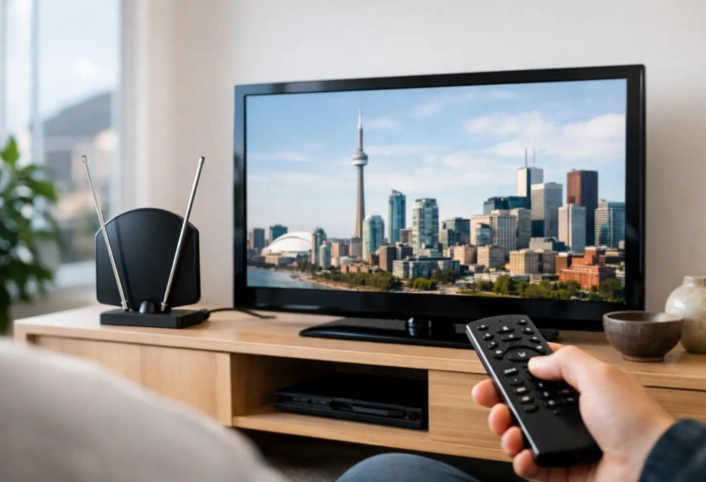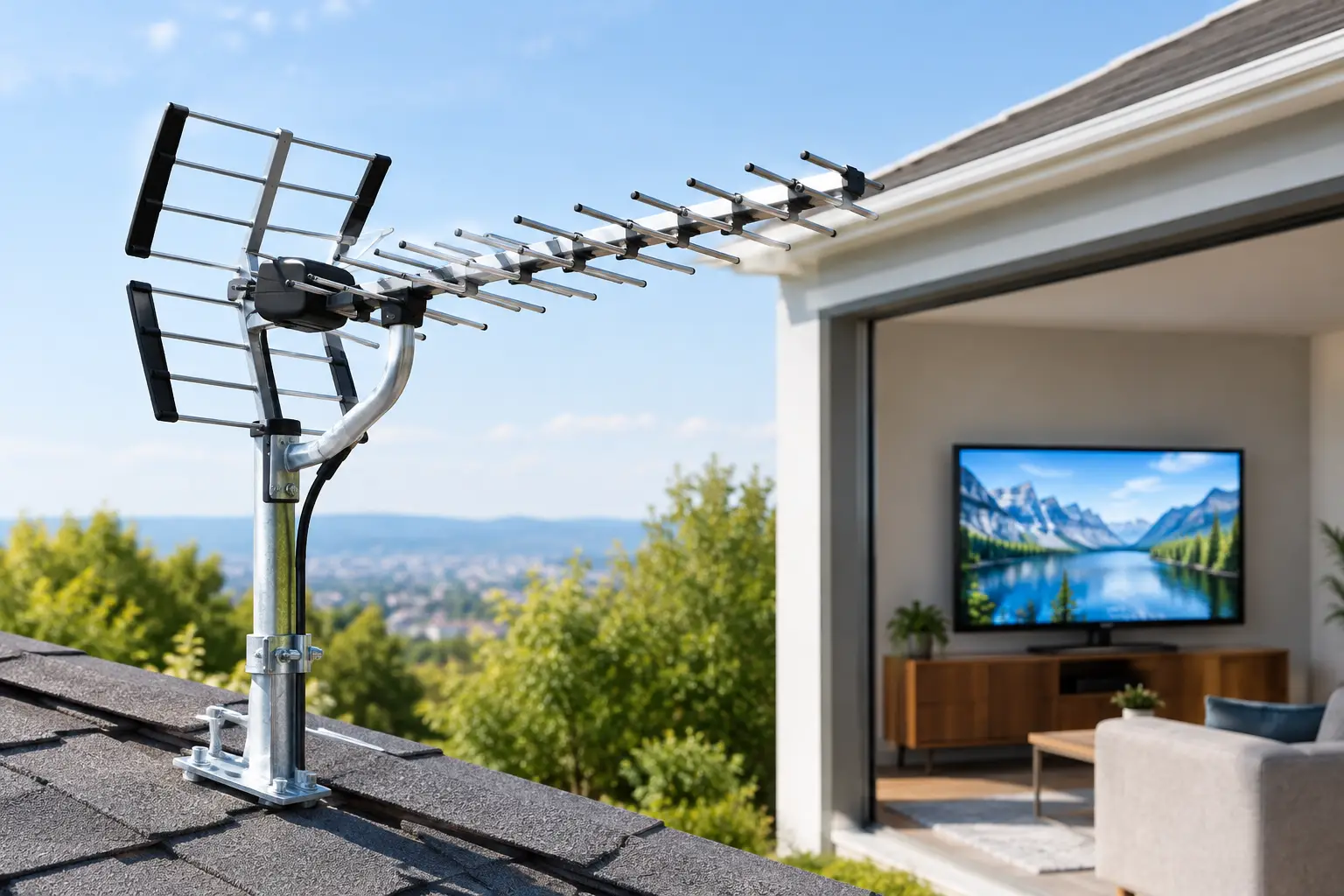
The big game is about to start, local weather coverage matters, or you simply want the evening news without relying on a paid TV package. In those moments, homeowners understandably ask: are antennas reliable? A properly selected and professionally installed TV antenna can provide dependable access to local broadcast channels in high definition, often for years. But reliability depends on more than buying an antenna and placing it near a television.
Broadcast television is sent over the air from local transmission towers. Your antenna receives that signal, and the quality of the system determines whether you get a clear, stable picture or occasional interruptions. The good news is that a well-designed antenna system is not a complicated appliance with recurring software issues. It is a practical piece of equipment that works quietly in the background when it is matched to your location and installed correctly.
What Makes a TV Antenna Reliable?
An antenna’s reliability starts with signal strength at your home. Homes closer to broadcast towers often have more flexibility, while homes farther away may need a larger or more directional antenna. Terrain, nearby buildings, dense trees, and the materials used in your roof or walls can all affect how much signal reaches the antenna.
That is why an antenna that works perfectly for one neighbor may not be the right solution for another home on the same street. Reception is local. A reliable setup accounts for the channels you want, their tower locations, the distance to those towers, and the obstacles between your home and the broadcast signal.
Installation quality matters just as much. An antenna mounted at the right height and aimed in the right direction can receive a much cleaner signal than one installed quickly in a convenient but poorly positioned location. Cable quality, weatherproof connections, grounding, and proper signal distribution to multiple TVs also play major roles in long-term performance.
Are Antennas Reliable in Bad Weather?
Most people think first about rain, wind, and storms. A professionally mounted outdoor antenna is built to remain in place through normal weather conditions, and over-the-air TV is generally less affected by rain than satellite service. Light and moderate rain usually do not cause a properly installed antenna system to stop working.
Severe weather can affect any television delivery method. Heavy winds may move branches into a signal path, and intense storms can interfere with the broadcast signal itself. A power outage can also take the television, amplifier, or broadcast equipment offline. Those events are not necessarily antenna failures.
In South Florida, weather resistance is especially worth considering. Outdoor equipment should be securely mounted, connections should be protected from moisture, and the system should be inspected if a major storm causes visible damage around the home. Proper installation helps prevent small issues, such as a loose connection or shifted antenna position, from becoming reception problems later.
Digital TV Is Clear, but It Has a Threshold
Modern over-the-air television delivers a sharp HD picture when the signal is strong enough. Unlike older analog television, which could fade into a snowy picture, digital reception tends to be more all-or-nothing. You may see a perfect image, then experience pixelation, freezing, or a channel dropping out if the signal falls below the level your TV tuner needs.
This does not mean digital antennas are unreliable. It means they need enough signal margin to handle normal changes in conditions. A system that barely receives a channel on a clear day may struggle when leaves are wet, construction changes the nearby environment, or electrical interference is present. A professionally planned system aims for dependable reception rather than simply finding the minimum signal needed to make a channel appear during installation.
Common causes of intermittent reception
When reception comes and goes, the antenna itself is not always the problem. Loose coaxial connections, damaged cable, an aging splitter, a poorly placed amplifier, or a television set to the wrong input can create symptoms that look like weak signal.
Interference is another possibility. Some electronics, LED lights, cellular equipment, and household devices can introduce noise into an improperly shielded system. In other cases, a signal amplifier is used when it is not needed, making strong signals too strong and causing reception issues. The right equipment is determined by the signal conditions, not by assuming more amplification is always better.
Indoor vs. Outdoor Antennas
Indoor antennas can be useful in the right setting. They are convenient, easy to try, and may perform well for homes with strong nearby broadcast signals. For viewers who only need a few major local stations, an indoor model may be enough.
The trade-off is consistency. Indoor antennas must work through walls, roofing materials, wiring, appliances, and changes inside the room. Moving the antenna a few feet or opening and closing a door can sometimes affect reception. They are often a reasonable starting point, but they offer less control over reliability.
Outdoor antennas are usually the stronger choice when dependable reception is the priority. They sit above many household obstructions and can be aimed precisely toward broadcast towers. An attic installation may also be appropriate in some homes, although roofing materials and attic conditions can reduce signal strength compared with an outdoor placement.
Reliability Also Depends on Your Channel Needs
An antenna is designed for local over-the-air broadcasts, including network affiliates, local news, weather, live sports carried by broadcast stations, and additional subchannels. It does not replace every channel or streaming service. Reliability should be measured against what you actually watch.
If your household depends on local programming, an antenna can be one of the most dependable parts of your entertainment setup. There is no cable box to rent, no satellite dish that must maintain a precise line of sight, and no internet connection required to receive live local channels. That can be particularly valuable when internet service is slow, temporarily unavailable, or being used heavily by multiple people in the home.
However, if a favorite program is exclusive to a cable network or streaming platform, an antenna alone will not provide it. Many households use an antenna for local channels and choose streaming services separately for on-demand entertainment. That approach gives them more control over what they keep and what they skip.
How Professional Installation Improves Antenna Reliability
Professional installation is not just about mounting an antenna neatly. It begins with evaluating available broadcast signals and selecting equipment that fits the property. A trained technician can identify the best mounting location, account for directional requirements, protect exterior connections, and configure distribution for one television or several.
This matters because reception problems are often installation problems in disguise. An antenna may be capable of receiving local stations, but cable runs that are too long, poorly placed splitters, or a mount with an obstructed view can weaken the result. Correcting those details at the beginning can save time and frustration later.
A technician can also make sure your televisions scan for channels correctly and confirm that the system performs as expected at the TVs you use most. For homeowners in Miami-Dade, Broward, and Monroe counties, local signal conditions and building styles can vary widely, making a site-specific approach especially useful.
Simple Ways to Keep an Antenna System Working Well
Once an antenna is installed properly, it generally needs very little attention. Rescan channels occasionally if local broadcasters change their channel assignments or add stations. If reception changes suddenly, check whether the television has been switched to the correct antenna input before assuming the antenna has failed.
After a major storm or home exterior work, look for obvious cable damage or changes around the antenna location. Avoid moving equipment, adding splitters, or installing amplifiers without considering how those changes affect the whole system. Small adjustments made without testing can weaken an otherwise reliable setup.
For many homes, the question is not whether antennas can work reliably. It is whether the system has been designed for the home, the local signals, and the channels the household actually wants to watch. With the right placement and professional attention to the details, an antenna can be a dependable way to keep local HD television available whenever you turn it on.