The antenna versus streaming decision usually starts at an inconvenient moment: a favorite local game is on, breaking news is developing, or another subscription charge appears. For many households, the best answer is not choosing one side forever. It is building a TV setup that keeps the live programming you rely on while reducing dependence on paid services you rarely use.
An antenna gives eligible homes access to free over-the-air broadcasts from local stations. Streaming delivers a broad range of on-demand shows, movies, and specialty content through an internet connection. They solve different viewing needs, and understanding where each option shines makes cutting the cord much easier.
Antenna Versus Streaming: The Core Difference
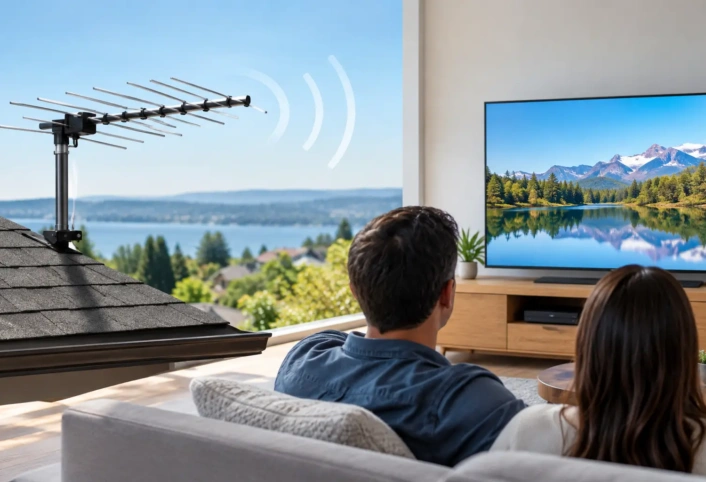
A television antenna receives broadcast signals sent through the air by local stations. With the right antenna, placement, and signal conditions, you can watch major network affiliates, local news, weather coverage, public television, and other available channels in high definition. There is no app to open and no internet connection required for the broadcast signal to reach your TV.
Streaming sends programming through your home internet service. It can include live TV services, individual network apps, on-demand libraries, movies, documentaries, and content that is not available from local broadcasters. It is flexible, but every household needs enough reliable internet capacity for the number of people and devices watching at once.
The practical distinction is simple. An antenna is built around free local live TV. Streaming is built around choice, convenience, and on-demand entertainment. A household that watches local news every morning has different needs from one that mainly watches original series after the kids are asleep.
What an Antenna Does Especially Well
For viewers who want local programming, a professionally installed antenna can be the foundation of a reliable cord-cutting setup. Local affiliates often carry major network shows, live events, national sports, local sports coverage, election coverage, weather alerts, and community information. These broadcasts are commonly available in crisp HD, often with picture quality that compares very well with compressed internet video.
An antenna also keeps television available when an internet outage affects streaming. That does not mean every part of your home entertainment system will work without internet, but a properly connected antenna can still provide access to live broadcast channels. For Florida households, dependable local weather reporting can be especially valuable during severe weather.
There is also a simplicity many viewers appreciate. Turn on the television, select the channel, and watch. No passwords, app updates, loading screens, or questions about which service carries a particular local station. For family members who prefer a traditional channel guide experience, that ease matters.
Still, antenna reception is not identical from one home to another. Distance from broadcast towers, terrain, nearby buildings, construction materials, roof height, and interference can all affect results. A retail antenna bought off the shelf may work well in one room and disappoint in another. Professional evaluation helps match the equipment and installation approach to the home rather than relying on packaging claims.
Reception Is About More Than the Antenna Itself
A strong antenna system depends on proper placement, quality connections, signal distribution, and TV setup. Mounting an antenna in the wrong location can leave available channels on the table. Splitting a signal across several televisions without the right equipment can also weaken performance.
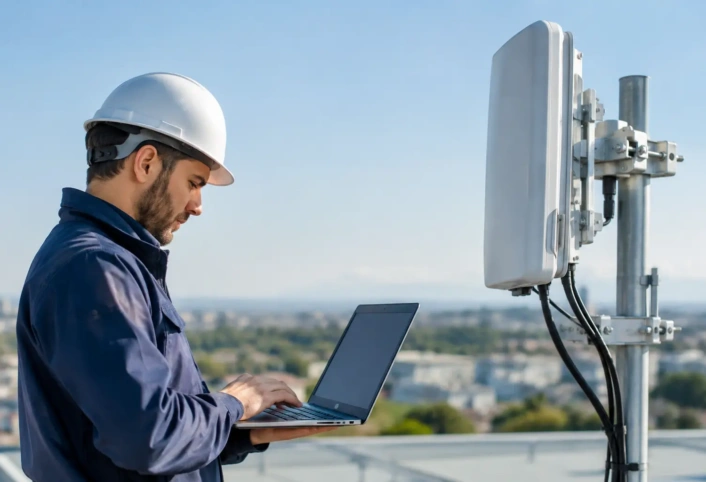
That is why a professional installation is useful for homeowners who want a clean setup and clear answers. A trained technician can assess signal conditions, recommend an appropriate solution, install the system safely, configure the televisions, and verify reception. Antenna Master helps households in Miami-Dade, Broward County, and Monroe County make that process more straightforward.
Where Streaming Has the Advantage
Streaming is hard to beat for on-demand viewing. If your household wants to watch a full season at its own pace, find a niche documentary, or keep up with shows that are not carried by local broadcast stations, streaming fills that gap. It also travels well between rooms and devices, giving viewers more control over where and when they watch.
Live streaming services can offer channels beyond what an antenna receives, including cable networks and specialty programming. This can be useful for fans of specific sports leagues, lifestyle channels, or national news networks. But channel lineups change, and access to local stations, live events, and regional sports can vary by service and location.
Streaming also depends on your internet connection behaving well at the moment you want to watch. A single stream may be easy for most connections to handle. Several simultaneous streams, video calls, gaming, smart devices, and downloads can create buffering or reduced picture quality. Households with heavy internet use should consider that reality before replacing every form of television reception with streaming alone.
The Hidden Trade-Offs to Consider
The question is not whether antenna TV or streaming is universally better. It is whether either option covers the programming your household actually watches.
Start with your local viewing habits. If live local news, network shows, weather coverage, and broadcast sports are regular parts of your week, an antenna deserves serious consideration. If most of your viewing is on-demand series, movies, and specialty content, streaming may be your primary tool. If both describe your home, a combination is often the most sensible answer.
Sports are a good example of why the details matter. Many major games appear on local broadcast networks and may be available with an antenna. Other games may require a particular cable channel, regional network, or streaming service. Before making a change, look at the sports and events you watch most often and confirm where they are carried.
Device compatibility matters too. Newer televisions usually include a tuner for over-the-air channels, but the antenna must be connected and the TV must scan for channels. Streaming requires compatible apps or a streaming device, current software, and dependable Wi-Fi or wired internet. Neither option is difficult when it is set up correctly, but each has its own technical requirements.
A Smarter Setup May Use Both
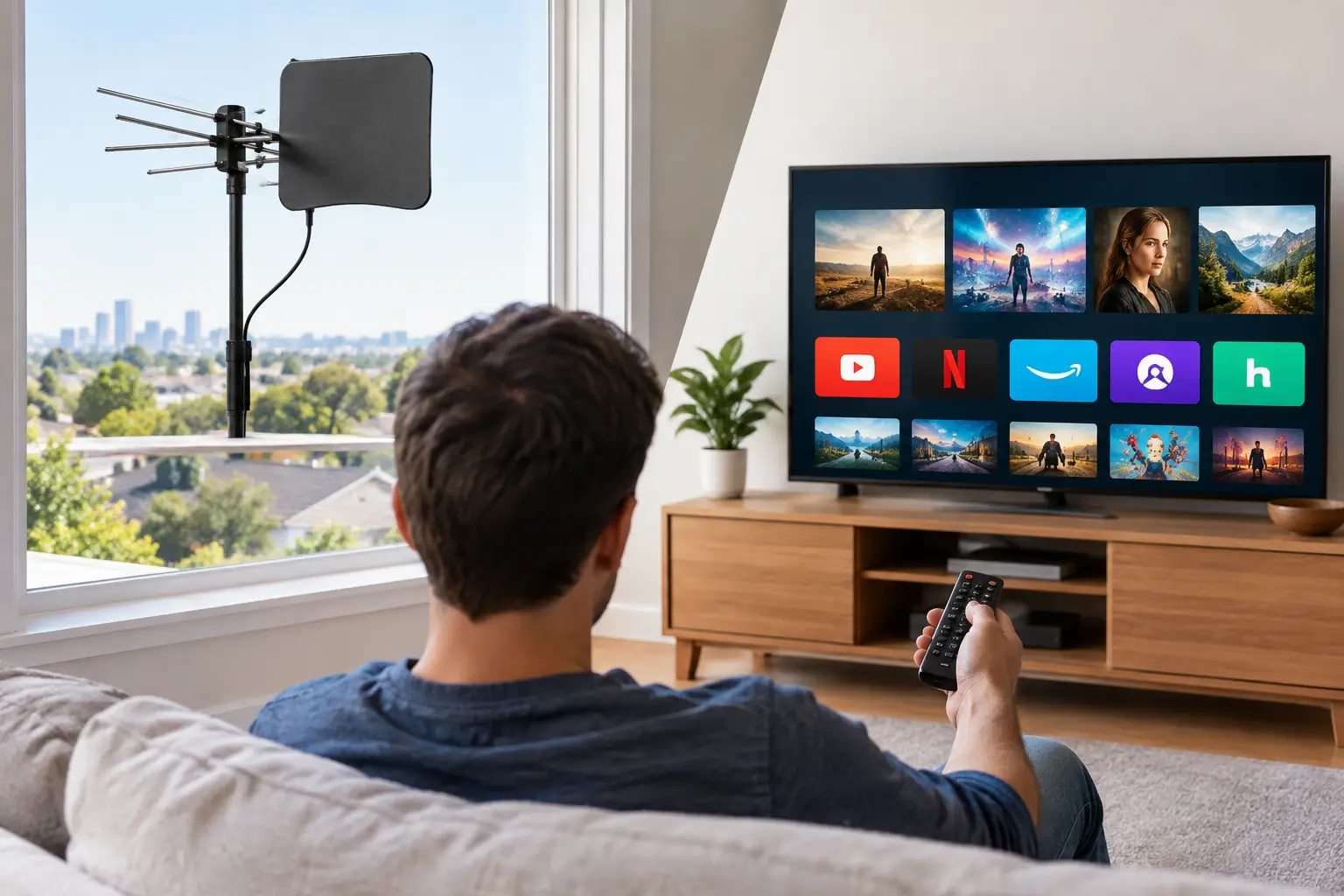
For many families, the strongest approach is to use an antenna for free local HD channels and add only the streaming services that serve a real purpose. That arrangement protects access to the live local programming people value while keeping on-demand entertainment available.
It also gives you more control. Instead of treating one large service as the answer to every viewing need, you can choose what belongs in your home. Watch the local morning news with an antenna. Stream a movie later. Keep a service during the season you use it most, then reconsider whether it still earns a place in your lineup.
This approach is especially helpful when different people in the household watch different things. One person may want live network programming and weather alerts, while another wants a favorite streaming series. A well-installed antenna system and a stable internet connection allow both habits to coexist without forcing an all-or-nothing decision.
How to Decide What Fits Your Home
Begin with a realistic one-week viewing check. Notice which channels, events, and programs your household turns on without thinking. Separate local live programming from on-demand entertainment. Then consider whether your home has a suitable path for receiving broadcast signals and how reliable your internet connection is during busy hours.
If antenna reception is a priority, avoid assuming that a small indoor unit will provide the same result as a customized installation. The right antenna and location are determined by your area and your home. A professional can remove the guesswork, help avoid unnecessary equipment, and make sure every television you want connected is considered from the start.
The right television setup should feel easy after installation, not like another project waiting for your weekend. Keep the channels that matter, use streaming where it adds value, and let your viewing habits guide the decision. A properly planned antenna system can make that choice feel less like giving something up and more like taking control of your entertainment.