An attic antenna can be a smart way to bring local HD channels into your home without putting equipment on the roof. But the antenna that works well in one attic can struggle in another just a few blocks away. Learning how to choose an attic antenna starts with your local broadcast signals, then accounts for what is between the antenna and the towers.
The goal is not simply to receive a channel during a quick test. It is to build a system that delivers reliable access to local news, network shows, live events, and sports when you want to watch them. A little planning upfront can help you avoid pixelation, missing stations, and repeated trips into a hot attic.
Start With Your Local Broadcast Signals
Every antenna decision begins with the stations available at your address. Broadcast towers may be in one main direction, spread across different directions, or located far enough away that your home needs a more focused setup. Distance matters, but it is only one part of the picture. Terrain, nearby buildings, mature trees, and the construction of your home can all affect reception.
Look for the channels you want most, especially local ABC, CBS, FOX, NBC, PBS, independent stations, and any local networks carrying the events your household watches. A signal report can show the direction of each transmitter and whether a station broadcasts on UHF, VHF, or both. This information is far more useful than choosing an antenna based on a large mileage claim printed on a box.
Do not rely on range claims alone
Antenna range is not a universal measurement. A stated range may assume a clear path between your home and a broadcast tower. Your attic creates obstacles that an outdoor antenna may not face, including roofing materials, insulation, wiring, ductwork, and framing.
Instead, focus on the expected signal strength at your address and the direction of the transmitters. If your preferred stations come from the same general area, an attic antenna has a better chance of delivering consistent results. If they are widely separated, antenna selection and placement become more critical.
How to Choose an Attic Antenna for Your Signal
For many homes, the biggest choice is between a directional antenna and a multidirectional model. A directional antenna is built to focus on signals from one primary direction. It can be a strong choice when most local towers are grouped together and you need better reach toward them.
A multidirectional antenna receives from a wider area. That flexibility can help when stations come from more than one direction, but it may not pull in weak or distant signals as effectively as a properly aimed directional model. More coverage is not automatically better. If your local towers are concentrated in one direction, a directional antenna often provides a cleaner, more stable result.
Make sure the antenna supports the right frequencies
Most current broadcast television channels use UHF frequencies, but some important local stations still transmit on high-VHF. Do not assume that a compact UHF-only antenna will receive every channel you want. If your signal check shows a desired station on VHF, choose an antenna designed to handle both UHF and VHF reception.
This detail can prevent a frustrating situation where most channels come in clearly but one major network does not. Reception issues are not always caused by distance or poor aiming. Sometimes the antenna simply is not built for the frequency carrying that station.
Choose enough antenna, not the largest antenna
A larger antenna can offer more gain, which may improve reception for weak signals. It also requires more attic space and more careful positioning. The right model depends on signal conditions, not on choosing the physically biggest option available.
An oversized antenna can be difficult to orient around rafters, pipes, and air-handling equipment. A compact antenna may fit neatly but lack the performance needed for fringe stations. The best choice matches the antenna’s capability to your reception needs and the physical limits of the attic.
Account for What Your Attic Is Made Of
Attics are not neutral spaces for TV signals. Standard asphalt shingles and wood framing may reduce signal strength somewhat, while metal roofs, foil-backed insulation, radiant barriers, solar equipment, and dense masonry can cause much greater signal loss. Metal surfaces can reflect signals and create multipath interference, where the tuner receives multiple versions of the same signal at slightly different times.
Homes in Miami-Dade, Broward, and Monroe counties may also have concrete construction, hurricane-rated building materials, and dense surrounding development that affect signal paths. A clear reception plan should account for these real-world conditions rather than treating the attic like open air.
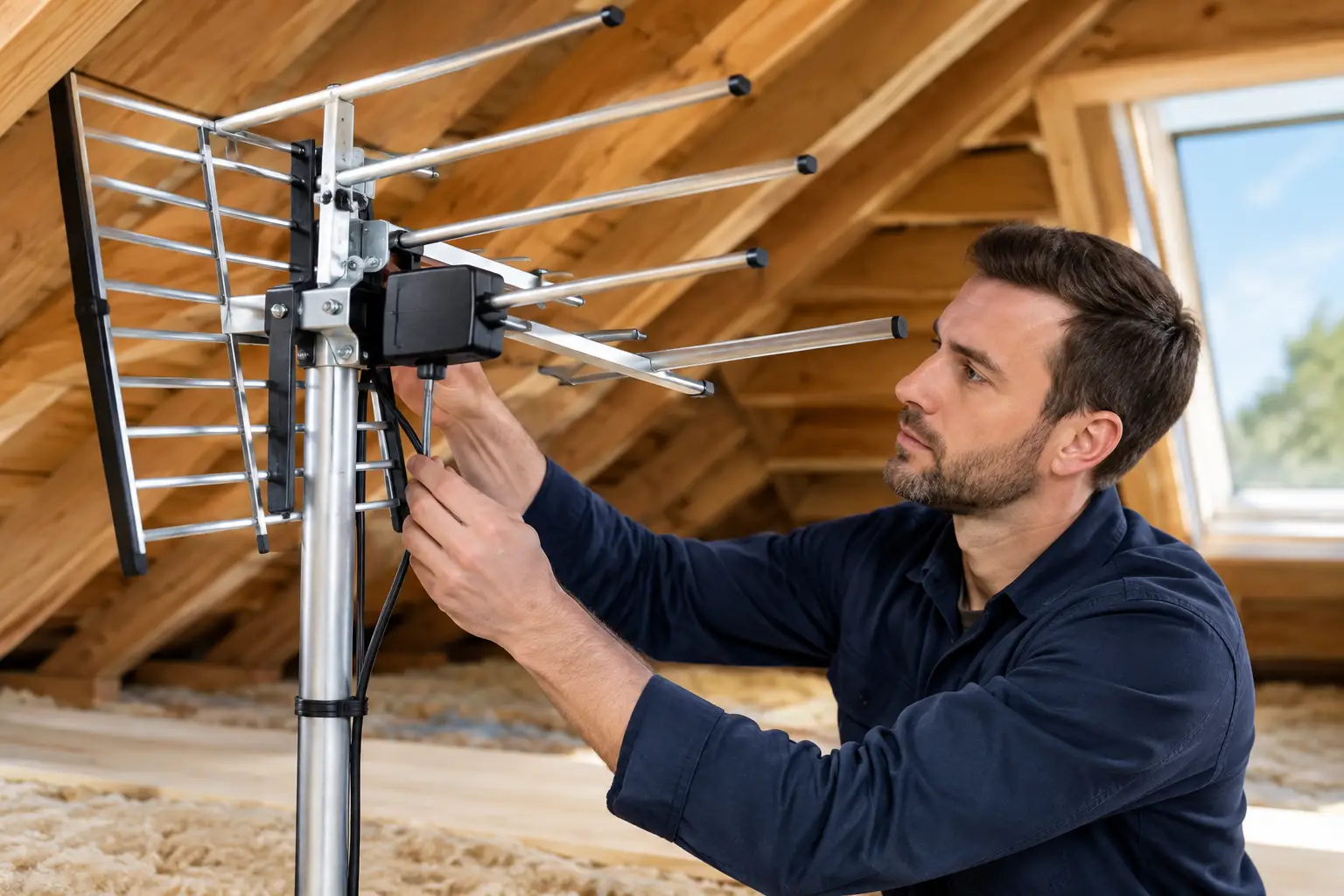
Placement within the attic matters as much as the antenna itself. Installers generally look for the highest practical point with a clear path toward the transmitters, while keeping the antenna away from metal ducts, large electrical equipment, and bundled wiring. Moving an antenna just a few feet can change reception significantly, so a single trial position should not be considered final.
Plan for Every TV You Want to Serve
An antenna system should be designed around the number of televisions that will use it. Running one TV from a short cable is relatively simple. Feeding several rooms involves longer cable runs, splitters, wall connections, and signal loss at every stage.
A quality coaxial cable path and correctly selected splitter help preserve the signal arriving from the antenna. Old cable, loose connectors, corroded fittings, or unused splitters left from a previous cable or satellite setup can weaken reception before the signal reaches your television.
An amplifier can help in the right situation, especially when a good antenna signal must travel through long cable runs or serve multiple TVs. It is not a cure for a poor signal at the antenna. Amplifying a weak or noisy signal can make the problem worse, and an amplifier can overload the tuner when local signals are already strong. Test the antenna signal first, then add amplification only when the system actually needs it.
Test, Aim, and Rescan Before Calling It Done
Television antennas require precise aiming. Once the antenna is positioned, run a channel scan on the TV or tuner and check the stations your household watches most. Do not judge performance by channel count alone. A system that finds many channels but drops a key local station during normal viewing still needs adjustment.
Check reception at different times and in different weather conditions. Signal conditions can shift due to atmospheric changes, moisture, and interference. If a channel appears intermittently, try small adjustments to the antenna’s height, direction, or location before changing equipment.
After any adjustment, run a fresh channel scan. Your television cannot display channels it has not added to its channel list, even when the antenna is receiving them clearly. This simple step is often overlooked during setup.
Know When an Attic Installation Is Not the Best Fit
An attic antenna offers practical advantages. It is protected from the elements, does not alter the exterior appearance of the home, and is easier to access than a roof-mounted system. Those benefits make it a strong option for many households.
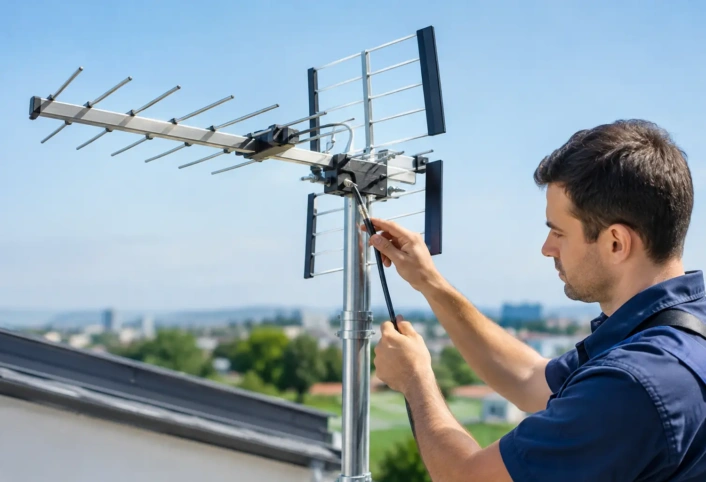
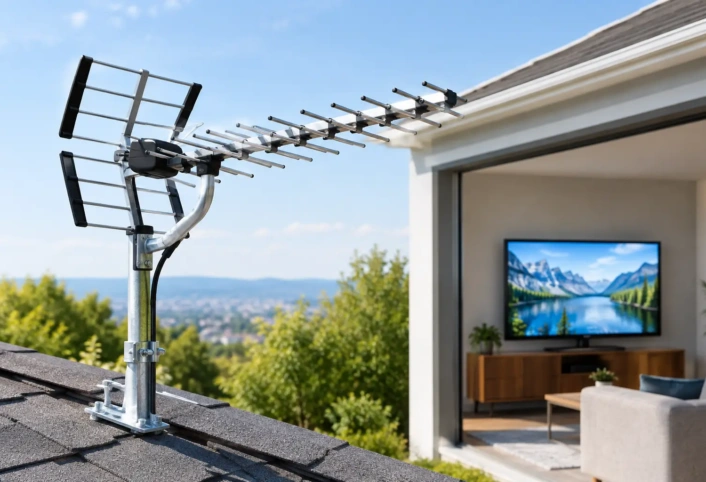
Still, an outdoor antenna may be the better choice when attic materials block too much signal, towers are distant, or must-have channels remain unreliable after careful placement. The roofline usually provides a clearer path to broadcast signals. The trade-off is that outdoor equipment must be mounted and protected correctly for lasting performance.
A trained technician can evaluate available signals, attic construction, antenna placement, cable distribution, and the option of outdoor mounting before installation. Antenna Master approaches the system as a complete reception solution, not just a piece of equipment placed in the attic.
The right attic antenna should disappear into your routine: turn on the TV, select a local channel, and enjoy clear broadcast programming without wondering whether the signal will hold. Start with the signals at your address, choose equipment that fits them, and give placement the attention it deserves.